At a session of the Senate of Uzbekistan on April 7, the law "On Automobile Roads" was discussed, where Senator Uktamjon Okhunov raised issues regarding the principles for setting toll road tariffs, transparency in fund expenditure, and service for socially vulnerable population segments. He noted that while the law defines the foundations for creating and using toll roads, several questions remain open in practice, including the criteria for determining tariffs, mechanisms to prevent unjustified fee increases, and ensuring public access to information on how collected funds are spent.
In response, Chairman of the Automobile Roads Committee Jamshid Tursunov stated that Article 41 of the law fully outlines the criteria for organizing toll roads, and the methodology for tariff formation is approved by the Cabinet of Ministers. According to him, tariffs are set based on road length and location, with social conditions considered at the district level. For major projects, such as the Tashkent-Samarkand and Tashkent-Andijan roads, tariffs are formed based on transit potential and vehicle type (passenger car, truck, bus).
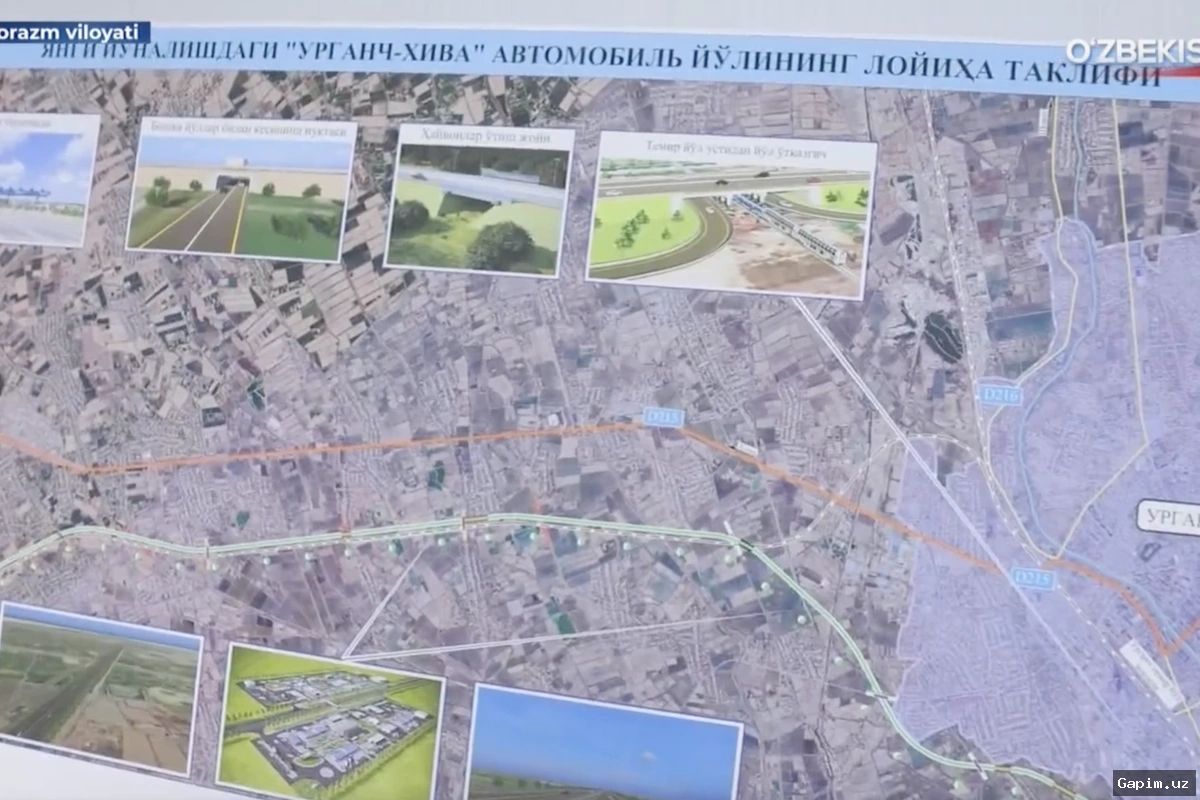
Tursunov emphasized that operators cannot arbitrarily increase tariffs, and artificial price hikes during peak hours or adverse weather conditions are not permitted. On transparency, he reported that fund expenditure procedures are strictly regulated, with maximum amounts determined by the Cabinet of Ministers and the Ministry of Transport, and the open platform "Transparent Road" publishes project information. As an example, he cited the construction of the Urgench-Khiva toll road, whose progress can also be monitored through this system.
According to reports, in March, the President of Uzbekistan reviewed projects to create a toll road network based on public-private partnerships. In 2026, the first such route—the Urgench-Khiva road—is planned to be launched, with main construction phases beginning on three other routes (Tashkent-Samarkand, Tashkent-Andijan, Tashkent-Charvak). The new Tashkent-Samarkand toll road is valued at $2.25 billion, with tariffs to be set after negotiations with investors, considering the financial capabilities of the population.
Among other major projects, the 171 km Tashkent-Angren-Kamchik toll road is estimated at $3.66 billion and will reduce travel time between Tashkent and Andijan by 2-2.5 hours, with interest from companies in France, Turkey, and China. The 52 km Tashkent-Charvak automobile road project is planned for completion within 3 years, potentially cutting travel time to the Charvak Reservoir from 80 to 35 minutes. However, Gazeta previously reported that in the Urgench-Khiva project, Avtoyol structures simultaneously act as client, contractor, and supplier, which could lead to systemic conflicts of interest; the project is valued at $120 million and is under review by the Anti-Corruption Agency.
Source: www.gazeta.uz