Street retail is a format of retail outlets located on the ground floors of buildings, with storefronts and separate street access. In Tashkent, as in many cities, it is situated along main streets and highways. Specialists from the consulting company Commonwealth Partnership Uzbekistan (CMWP) studied this sector and identified a characteristic feature of its development in the capital. Their new review notes a trend of trade clusters forming around public attraction points and emphasizes that urbanism is practically transforming street economies.
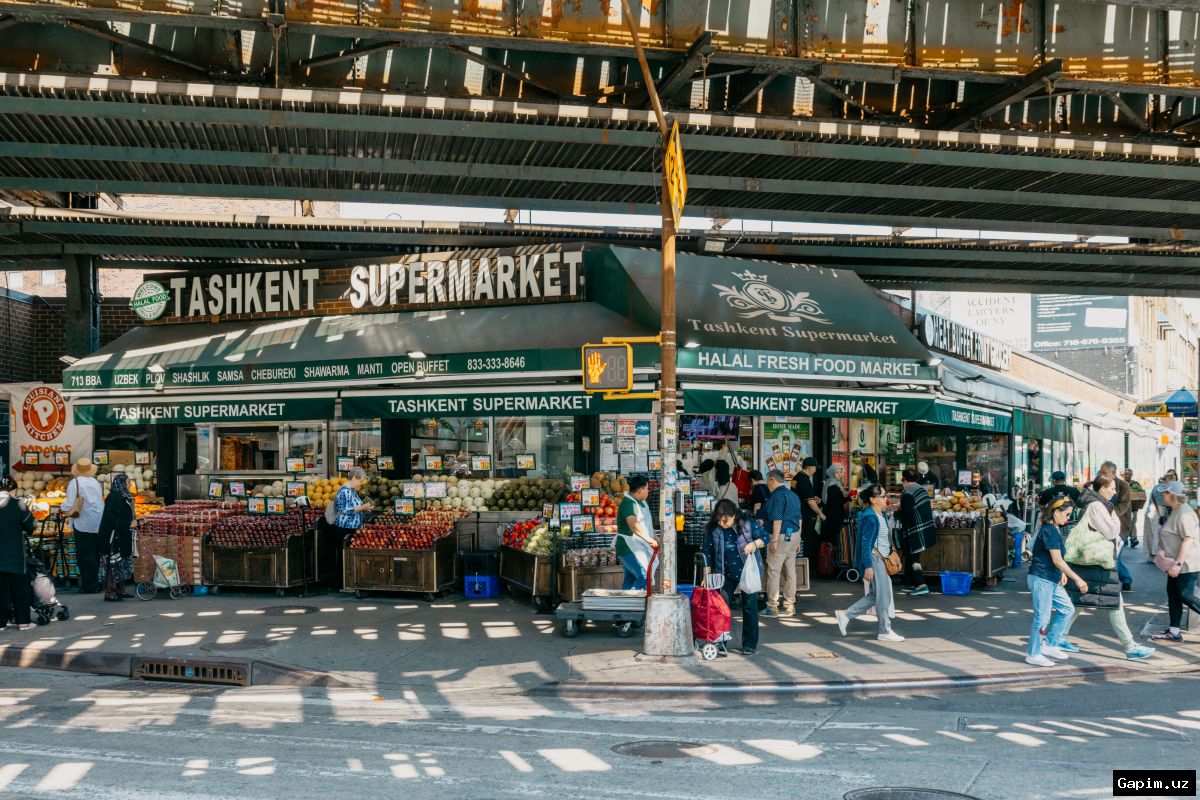
The research was conducted in November-December 2025 through on-site study of 10 trade clusters in the city. These areas are characterized by a high concentration of various street retail formats—dining, clothing/footwear, beauty services, cosmetics and perfumery, food, pharmacies, banks, flower shops, pet supplies, and others. They include Amir Temur Avenue, Shevchenko and Shota Rustaveli Streets, S-1, Mirobod, Oloy and Istiqbol, SUM, Tashkent City, and Seoul Mun. The street retail market in Tashkent is in a transition phase from streets to clusters, with local clusters forming around parks, markets, metro stations, new residential areas, or multifunctional complexes.
CMWP Uzbekistan experts note that consumer experience shows people seek to return not to an "address" but to an ecosystem that allows spending more time, scheduling meetings, or strolling. Here, the convenience of the environment and infrastructure is crucial. The market is not oversaturated but not empty either. The vacancy rate across clusters is assessed by analysts as a "working level" (13.3% for open objects), but it is unevenly distributed. For example, there are areas with very low vacancy, such as Shota Rustaveli and S-1, and with very high vacancy, like Seoul Mun.
According to the study, the main share in Tashkent's street retail belongs to the dining sector. Its share is 28% across all clusters, with the indicator ranging from 12% to 65%. Clothing and footwear stores account for 10.3%, pharmacies and health goods—7%, cosmetics and perfumery—4.5%. Analysts note that dining facilities are mainly located in clusters where streets are pedestrian-friendly.
In conclusions and recommendations, the research shows that street retail indicators in the city directly depend on the quality of the urban environment. Street reconstruction and adaptation to pedestrian needs lead to a reduction in vacant spaces. CMWP Uzbekistan specialists emphasize that the reconstruction of Shota Rustaveli and Uzbekistan Ovozi Streets has yielded positive results: vacancy is decreasing, locations are becoming attractive to pedestrians, and this turns them into attraction points for street retail business audiences. In developed locations (S-1, Shota Rustaveli), property owners are advised to strengthen requirements for tenant concepts and storefront quality.
Source: www.gazeta.uz