The Senate of the Oliy Majlis of Uzbekistan, during a plenary session on April 7, approved a new version of the law "On Automobile Roads." According to Qutbiddin Burhonov, Chairman of the Senate Committee on Defense and Security Issues, the document for the first time clearly defines key concepts—road reconstruction, maintenance, and repair, road owners and specialized organizations, roadside infrastructure, toll roads, operators, and payment points. This is expected to eliminate various interpretations and legal gaps in the field.
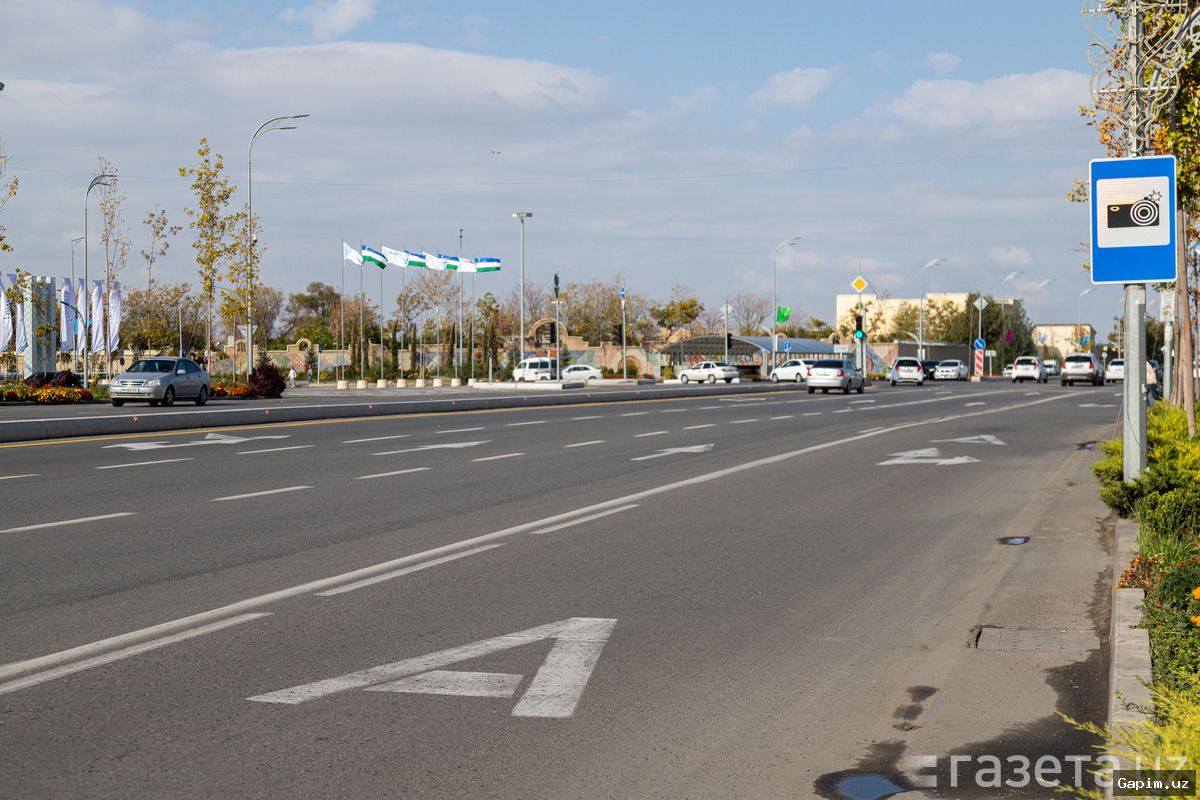
At the same time, basic principles are being introduced: all work must be carried out within the legal framework, road design must be based on scientific calculations, decisions must be made transparently, and strict adherence to traffic safety and environmental requirements is mandated. Additionally, citizens' right to equal and convenient access to road infrastructure is reinforced. One of the main innovations is the strengthening of the norm defining the possibility of organizing toll roads. A fairness principle is applied: a toll road can only be established if a free alternative exists, and route choice remains at the driver's discretion. "In other words, no one will be forced to use a toll road," the senator stated.
The law also details the mechanism for their operation—from creation and financing based on public-private partnerships to automated fee collection and regulation of relations between users and operators. The draft law includes the introduction of Article 128−11 on liability for non-payment of toll road fees. This is anticipated to attract private investment, reduce the burden on the budget, and improve the quality of road infrastructure.
The Automobile Roads Committee under the Ministry of Transport has been designated as the specialized authorized body in the sector. This strengthens the powers of the Ministry of Transport and the Traffic Safety Service of the Ministry of Internal Affairs, with state policy implemented within a unified system. Developers believe this will end task duplication and increase accountability in the industry. Furthermore, creating artificial obstacles and unevenness on roads is prohibited, and the movement of heavy-weight and oversized vehicles is allowed only with special permits. "These measures are aimed at preserving road surfaces, reducing the number of accidents, and protecting people's lives," said Burhonov.
In 2024, during the improvement of communication networks, over 80 billion soums were spent on repairing damage to public automobile roads in nearly 500 cases. Additionally, due to heavy-duty trucks failing to comply with established weight limits, wave-like deformations ("accordion") have appeared on 3,500 km of roads. It is noted that in preparing the law, the experiences of Kazakhstan, South Korea, China, France, and Italy were studied. Specifically, Burhonov emphasized that the construction of the Big Almaty Ring Road based on public-private partnership in Kazakhstan significantly reduced transport congestion in the city. In South Korea, he added, road tolls not only cover the infrastructure itself but also generate revenue for the budget.
According to developers, such models, if properly regulated, confirm that toll roads can effectively serve societal interests. The draft law also includes measures to implement a road management planning system: creating a barrier-free environment, prioritizing pedestrian safety, developing modern roadside infrastructure in line with international standards, as well as environmental protection and considering the opinions of residents in project areas. Funds allocated for automobile roads are strictly targeted and cannot be used for other needs. Financing for road design, construction, and reconstruction is carried out not only from the state budget but also by attracting private investments through public-private partnerships. Moreover, measures to maintain the road network in good condition and ensure its long-term operation are strengthened.
First Deputy Minister of Transport Mamanbiy Omarov, during the draft law's review in the Legislative Chamber, pointed out that issues of creating a public automobile road network to reduce congestion, increase throughput, and provide quality service, as well as attracting the private sector to this field, remain unregulated. He stated that the current law (adopted in 2007) does not fully address these matters legally at present.
Source: www.gazeta.uz