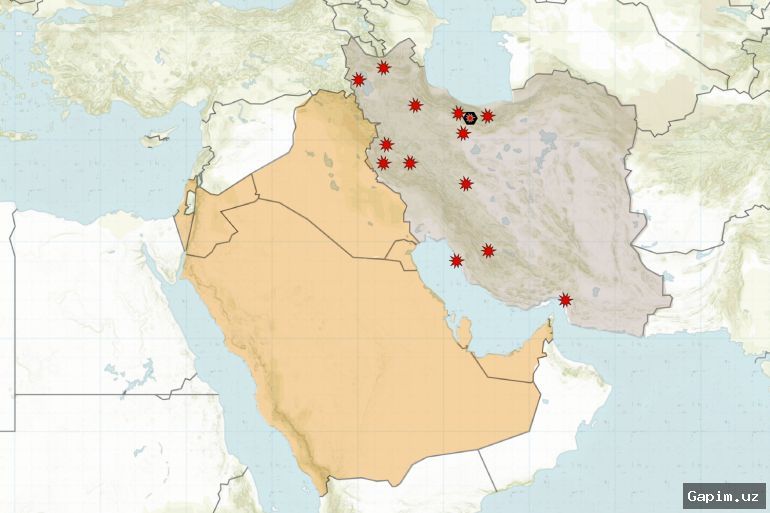
The recent war between the US, Israel, and Iran has, for many observers, signaled a further deterioration of the rules-based world order—a system of principles established after World War II to regulate international relations and constrain state behavior. Stacie Goddard, a political science professor at Wellesley College in the US, told DW, "We're really at a low point in a rules-based order." This order, defined by norms and institutions like the United Nations, aimed to foster stability and prosperity but has faced growing criticism for its exclusivity and hypocrisy.
Despite its universal aspirations, the rules-based order has operated in a hierarchical and selective manner, primarily benefiting the US and its Western allies. Amitav Acharya, a professor at American University in Washington, described it as "a very selective club." Countries in the Global South have long felt marginalized, with institutions such as the International Criminal Court (ICC) accused of disproportionately targeting African leaders—47 of its 54 indictments have been against Africans, per a 2024 Amnesty International report.
Confidence in this order has eroded further in recent years, exacerbated by events like Russia's annexation of Crimea in 2014 and its full-scale invasion of Ukraine in 2022, which challenged core principles of sovereignty. As the era of a rules-based order potentially ends, experts outline several future scenarios: a revival of hemispheric dominance, a shift toward "neo-royalism" (elite power clusters), or the emergence of a multipolar "multiplex" world order with diverse actors.
In a "multiplex" order, as Acharya terms it, power is distributed among middle powers, regional actors, and non-state entities, fostering cooperation at global and regional levels. Goddard emphasizes that middle powers—such as the EU, Japan, and South Korea—could play a decisive role by upholding rules-based principles, even at a cost, and pursuing independent trade and military policies. This might lead to a new order not solely designed by Western powers.
While a collapse into chaos or global war is feared, analysts consider it unlikely in the near term, given historical awareness of the costs. The future world order will likely hinge on the actions of diverse global and regional players, potentially creating a more complex but less hegemonic international system, though conflicts and instability may persist.
Source: www.dw.com