NASA's Artemis II mission crew has safely splashed down on Earth, completing a landmark mission that carried humans around the Moon and back for the first time in over 50 years. The crew successfully executed a parachute landing in the Pacific Ocean on Friday, following a high-speed re-entry through Earth's atmosphere. Recovery teams were stationed off the coast of California, ready to retrieve the astronauts upon their arrival at 5:07 PM Pacific Time (00:07 GMT).
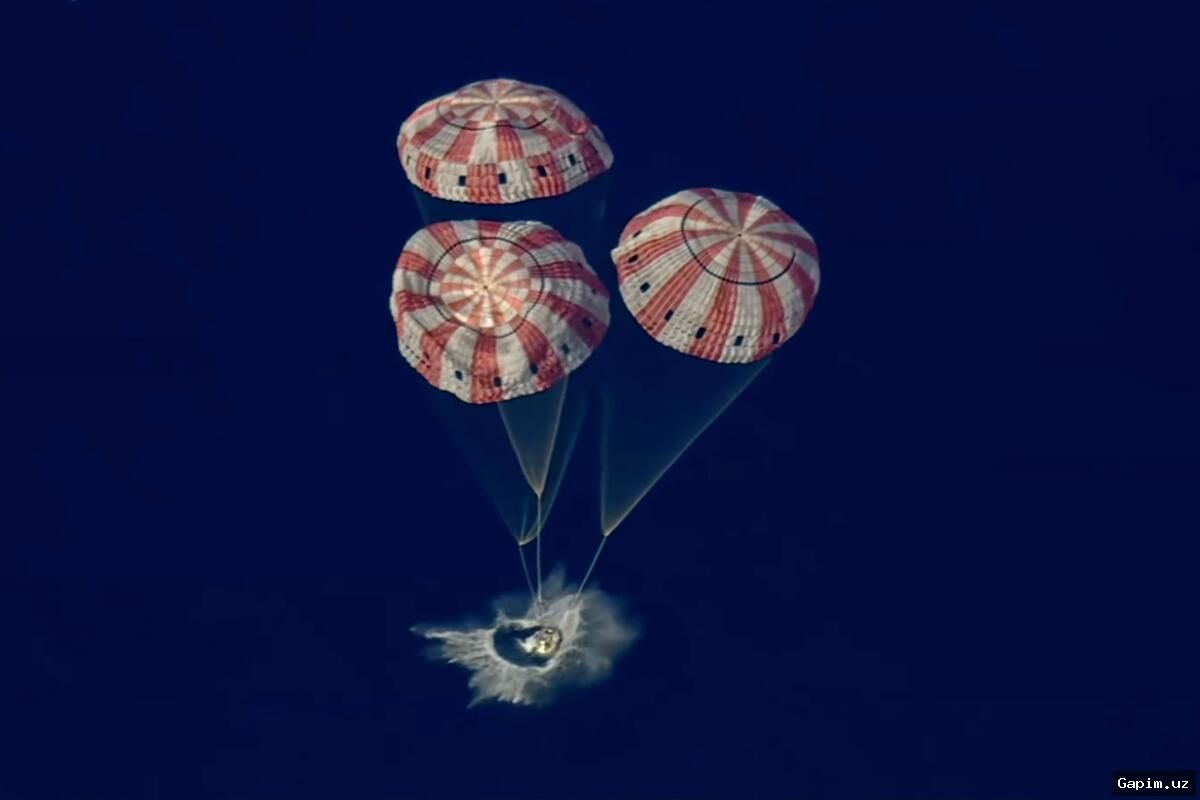
The four astronauts will now undergo comprehensive medical checks before returning to NASA's Johnson Space Center in Houston. The crew members—NASA's Reid Wiseman, Victor Glover, and Christina Koch, along with Canadian astronaut Jeremy Hansen—embarked on a 10-day voyage from Florida's Kennedy Space Center last week, traveling farther into space than any human has before. They looped around the far side of the Moon, testing equipment in deep space, before propelling back to Earth on Friday.
This mission marks the first human journey to the Moon since the Apollo 17 mission in 1972, and its successful return caps a mission packed with technical milestones. Artemis II is widely regarded as a critical test flight for future lunar missions, particularly Artemis IV, which aims to land astronauts on the lunar surface for the first time since the Apollo era. Engineers will now analyze key data from the mission, including the performance of the Orion capsule's heat shield, navigation systems, and life-support technology—all essential for safely transporting humans deeper into space.
The return phase included one of the most challenging aspects of the journey: a brief communication blackout during re-entry, caused by intense heat buildup around the spacecraft. Beyond its record-setting distance, the mission also achieved other historic firsts: Glover became the first person of color to travel around the Moon, Koch the first woman, and Hansen the first non-American. During their journey, the crew provided vivid descriptions of lunar surface features and later witnessed a solar eclipse and meteorite impacts.
Mission commander Wiseman reflected, "What we really hoped in our soul is that we could, for just a moment, have the world pause—and remember that this is a beautiful planet in a very special place in our universe. We should all cherish what we have been gifted." Since the astronauts' departure, NASA has sent a song to Artemis II each morning to start the day. On Friday, the astronauts awoke to the tune of Live's "Run to the Water" and the country hit "Free" by the Zac Brown Band.
Source: www.aljazeera.com