The new academic year in Gaza began in late March, but the familiar scenes of students waiting for buses and heading to universities and colleges are no more. Their place has been taken by the hardships of displacement.
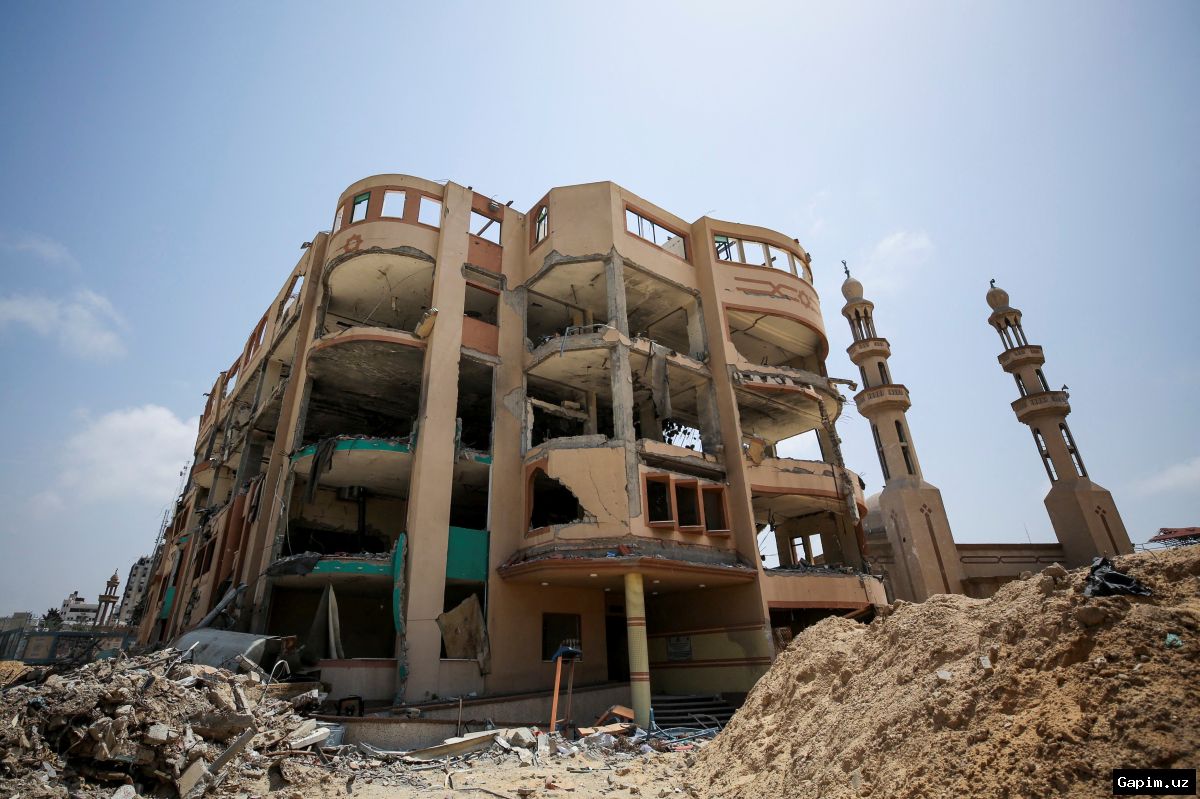
The destructive campaign by the Israeli regime has turned Gaza's academic institutions into rubble, many now repurposed as crowded shelters for displaced families. With campuses gone, in-person education has largely disappeared, forcing universities to shift to online learning. But for students living in tents, struggling to secure food, water, electricity, and internet, attending a lecture, even online, has become a privilege.
Amid this chaos, in the densely crowded area of al-Mawasi in Khan Younis in southern Gaza, a new academic initiative has emerged. The US-based NGO Scholars Without Borders has established what it calls 'University City'—a makeshift academic space designed to bring students back into lecture halls. Built from wood, metal sheets, and locally sourced materials, the site stands as a modest reconstruction of Gaza's former academic life.
The organization's representative in Gaza, Hamza Abu Daqqa, stated: 'Despite the hardships, our mission is to bring education closer to students in a better environment. We designed this space to serve multiple academic institutions and as many students as possible. There are six halls here, accommodating up to 600 students a day. It may look simple, but it creates a sense of normal academic life, something students have been deprived of.'
The space includes internet access powered by solar panels, improvised green areas, and even a small business incubator aimed at helping students engage with their prospects. According to the organization, University City operates on a rotating weekly schedule, with each day allocated to a different academic institution, allowing multiple institutions to share the limited space.
Gaza's prominent universities, such as the Islamic University and Al-Azhar University, along with other colleges like the Palestine College of Nursing, have begun using the site. But behind this modest structure lies a harsher reality: since October 2023, when the Israeli regime began its genocidal war, universities across Gaza have been systematically damaged or destroyed.
UN experts have described the Israeli regime's destruction of Gaza's academic sector as 'scholasticide'—the systematic dismantling of education through the targeting of institutions, students, and academic life itself. According to the Euro-Med Human Rights Monitor and information from Palestinian officials, over 7,000 university students and academics have been killed or injured by Israeli attacks, with more than 60 university buildings completely demolished by airstrikes or ground detonations.
As a result, hundreds of thousands of students have been cut off from formal education, forced into alternatives that cannot match their former experiences. And alternatives like University City face enormous difficulties even in getting started. Abu Daqqa noted: 'All the materials you see here were sourced from inside the Gaza Strip. We had to work with what was available, with rising costs and scarcity of resources. But we were determined to create something that gives students a sense of normalcy.'
For many students, reaching University City is itself a challenge. First-year nursing student Mariam Nasr, 20, displaced from Rafah, said: 'I am displaced in al-Mawasi, so I'm supposed to be relatively close, but even getting here is difficult. My classes start at 9am, and I wake up at 5 just to find transportation.' With roads damaged and fuel scarce, options for students are limited to worn-out vehicles and donkey or horse carts.
Despite everything, a scene of resilience unfolds as students continue. Inside the halls, discussions resume, notes are taken, and a sense of academic life slowly returns, even if temporarily. Professor at the Palestine College of Nursing, Dr. Essam Mughari, stated: 'For medical education, in-person learning is essential. It's quite hard for online education to replace practical engagement.'
For Mariam, that determination is deeply personal: 'Some people might think it's impossible to study in these conditions. But I want to continue. My cousin was a nurse. An Israeli air strike leveled her family's three-story house in Gaza City, killing her and several others. I remember her to remind myself why I hold onto this path—to heal others and serve my people.'
University City now serves hundreds of students each day, but thousands more remain without access to similar spaces. Scholars Without Borders says the initiative is only the beginning of a mission still crippled by the Israeli siege. Abu Daqqa added: 'Our work is ongoing. We have established dozens of makeshift schools and this university city, but the need is far greater. This is what we were able to build under blockade. Imagine what could be done if the truly needed resources are allowed.'
Source: www.aljazeera.com