US President Donald Trump has once again cast doubt on the value of the transatlantic military alliance NATO. These contentious remarks are causing deep concern in the Baltic states – Lithuania, Latvia, and Estonia – which border Russia. Trump's persistently critical stance toward NATO is eroding these small nations' confidence in their security, calling into question the reliability of the United States as their primary defender against the Russian threat.
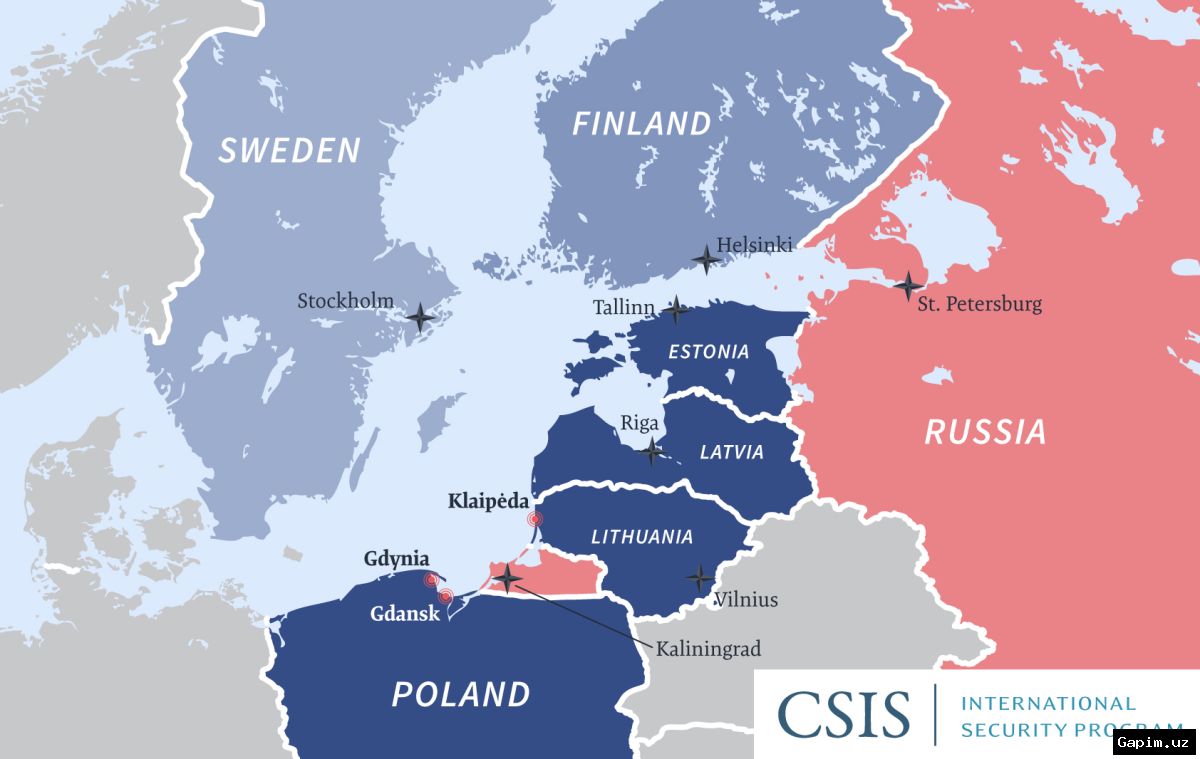
Over the past six weeks of the US and Israeli war against Iran, several NATO members have clearly staked out positions. While some Washington allies cautiously withheld support for military action, the Baltic states took a different approach. All three countries described Operation Epic Fury as understandable given Iran's nuclear program, threats to neighboring states, and its support for Russia's aggression against Ukraine. As Latvian President Edgars Rinkēvičs put it, they also welcomed the killing of Iran's Supreme Leader in late February, seeing it as a new opportunity for the Iranian people to determine their own future.
Estonia has signaled readiness to consider deploying its mine-hunting vessels to the Strait of Hormuz. Lithuania has gone further, expressing willingness to consider providing troops to assist Washington if such a request is made. The rationale behind this support was best articulated by Lithuanian President Gitanas Nausėda: "We cannot say with one hand that the presence of US troops on Lithuanian territory is a matter of course and we simply accept it as a given, but when we are asked to contribute to international missions, we say that this is none of our business."
For the Baltic states, supporting the US, their most powerful ally, is seen as crucial for their own security, particularly in relation to the threat posed by Russia. Just this week, Russian Foreign Ministry spokesperson Maria Zakharova warned the three countries of "serious consequences" over alleged use of their airspace by drones attacking Russia – accusations all three states firmly deny.
Since the outbreak of the Iran war, the Baltic states have once again positioned themselves as "model allies." Alongside Poland and the Gulf states, they were described as such by US Secretary of Defense Pete Hegseth. Like Poland, the Baltic states were also among the first NATO members to respond to the US president's call to increase defense spending, and they are now among the leaders in the alliance. In 2025, Poland allocated 4.5% of GDP to defense, Lithuania 4%, Latvia 3.7%, and Estonia 3.4%. By comparison, the United States spent 3.2% of GDP.
Researcher Sergejs Potapkins of the Latvian Institute of International Affairs described this policy as an "established signature style," aimed at "trying not to irritate Donald Trump and, in general, not to enter his field of attention, so that the approach toward the Baltic states that has existed since 2022 continues for as long as possible." The current approach, deterrence by denial, assumes that an adversary will not dare attack NATO countries if convinced it cannot achieve its objectives. As former US President Joe Biden and European leaders repeatedly stated, NATO is ready to defend every inch of its territory.
In reality, Trump's skeptical remarks about defending NATO allies were met with little surprise in the Baltic states. A 2025 poll in Latvia, for example, showed that only 43% of respondents believe – or tend to believe – that NATO would be willing to fight for the country if attacked, while 41% think this is unlikely. This awareness of their own responsibility for defense has driven the development of national guards in the Baltic states – volunteer defense forces tasked with making occupation of the region impossible in the event of a Russian attack.
Sigita Struberga, secretary general of the Latvian Transatlantic Organisation, said that Latvians are increasingly coming to understand that there is no separate NATO army, but rather that "NATO is us." "Taking into consideration the number of those serving compulsory military service and the professional army, the number is still not sufficient. We need National Guards," Struberga told DW. As part of preparations for reduced US involvement in NATO, Potapkins points to the deployment of allied military contingents from other countries. Such forces are stationed in each of the Baltic states.
In Lithuania, this includes the German 45th Armored Brigade. It currently numbers around 1,800 troops, with plans to increase the deployment to 4,800 military personnel and 200 civilian staff by 2027. A Canadian-led multinational brigade in Latvia comprises around 2,000 personnel. In Estonia, about 1,500 troops are stationed as part of a multinational battlegroup led by the United Kingdom. "Increasing the contingent is now the top priority for both diplomats and the military in talks with partners. This is one of those cases where more is better," said Potapkins.
In addition, he argues that the Baltic states should move quickly to prepare their military infrastructure – anti-tank "dragon’s teeth" and counter-drone systems – in case the United States revises its role in NATO. If that happens, other NATO allies are likely to focus on their own security, leaving the Baltic states with little room to pursue such projects.
Source: www.dw.com