US President Donald Trump has claimed that a nuclear agreement currently being negotiated with Iran will be "far better" than the 2015 Joint Comprehensive Plan of Action (JCPOA), from which he withdrew the US in 2018 during his first term. His latest remarks come amid growing uncertainty about whether a second round of talks will proceed in Islamabad, Pakistan, as a two-week ceasefire between the US-Israel and Iran approaches its end in just a day. The original 2015 accord involved years of negotiations and hundreds of specialists, with Iran agreeing to restrict uranium enrichment and submit to inspections in exchange for sanctions relief.
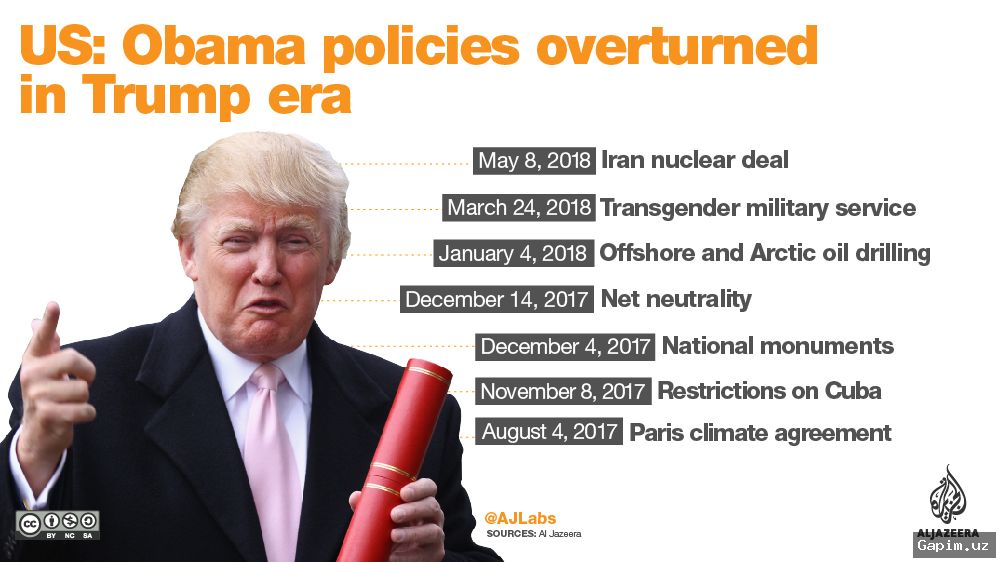
The JCPOA required Iran to reduce its stockpile of enriched uranium by about 98% to less than 300kg and cap enrichment at 3.67%, far below the 90% weapons-grade threshold but sufficient for civilian purposes. It also cut the number of centrifuges from roughly 20,000 to a maximum of 6,104, with international monitoring. However, Trump pulled the US out of the pact, calling it the "worst deal ever," and reimposed crippling economic sanctions on Tehran as part of his "maximum pressure" campaign, targeting Iran's oil exports, shipping, banking, and key industries.
Since mid-2019, Iran has incrementally breached the deal's limits, exceeding caps on uranium stockpiles and enrichment levels. In November 2024, Iran announced it would activate new centrifuges, and by December 2024, the International Atomic Energy Agency (IAEA) reported Iran was rapidly enriching uranium to 60% purity, moving closer to weapons-grade material. Most recently, in 2025, the IAEA estimated Iran had 440kg of 60%-enriched uranium. The US and its ally Israel are pushing Iran to agree to zero uranium enrichment and to remove its stock of 60%-enriched uranium, accusing Iran of pursuing nuclear weapons without providing evidence.
Iran insists its enrichment efforts are solely for civilian purposes and is a signatory to the 1970 Treaty on the Non-Proliferation of Nuclear Weapons (NPT). In March 2025, US Director of National Intelligence Tulsi Gabbard testified to Congress that the US "continues to assess that Iran is not building a nuclear weapon." Iranian President Masoud Pezeshkian, in a strongly worded statement on Sunday, said Trump had no right to "deprive" Iran of its nuclear rights. The US and Israeli demands extend beyond nuclear issues to include restrictions on Iran's ballistic missile program and an end to its support for regional armed groups, such as Hezbollah in Lebanon and the Houthis in Yemen.
Analysts, including Andreas Krieg, associate professor of Security Studies at King’s College London, suggest Trump may secure a new deal resembling the JCPOA with some enrichment restrictions and international supervision. However, Krieg warned that the political landscape in Tehran has hardened, with Iran now a more hardline player that will "play hardball at every junction." He stressed that the US-Israel war on Iran "leaves the world worse off than had Trump stuck to the JCPOA," even if a compromise is reached. Economic incentives, such as access to frozen assets, will be central, but both sides face significant challenges in scaling back demands.
Source: www.aljazeera.com