The US naval blockade of the Strait of Hormuz, announced by President Donald Trump, took effect on Monday. This move comes after Iran effectively closed the narrow maritime passage in retaliation for the US-Israeli air attacks that began on February 28, putting the fragile two-week ceasefire at risk and causing already soaring oil prices to rise even further.
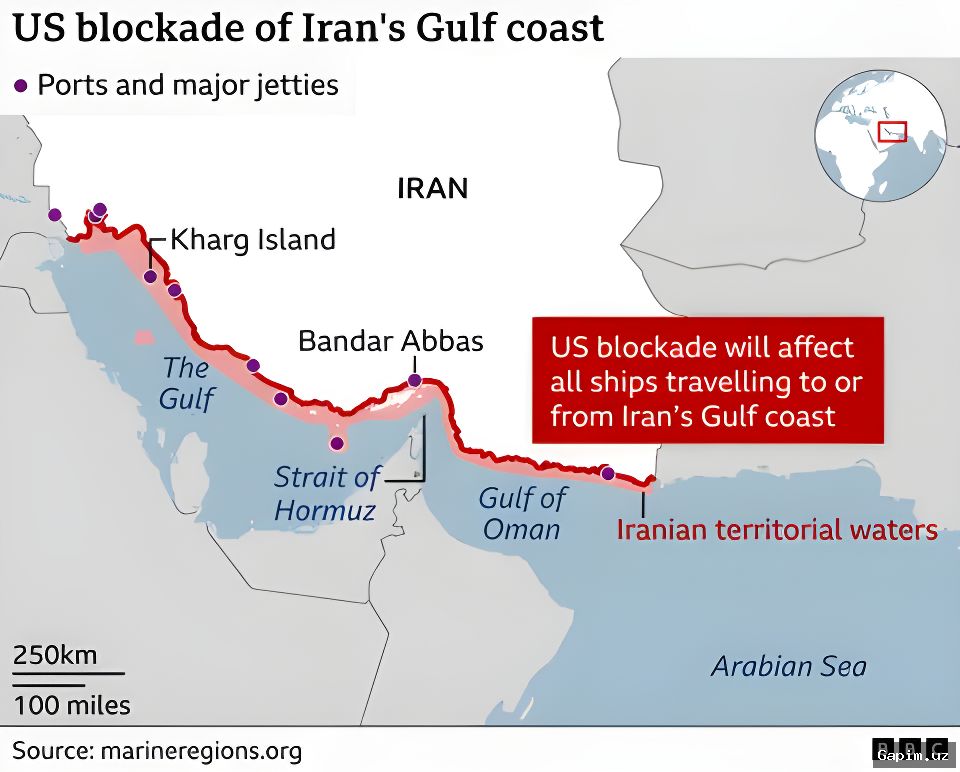
The blockade of Iranian ships and oil will also be closely felt in China, the largest buyer of Iran's oil. At a press conference on Tuesday, a spokesperson for China's Ministry of Foreign Affairs called the move "dangerous and irresponsible," warning that the blockade would "only aggravate confrontation, escalate tension and undermine the fragile ceasefire." Chinese Foreign Minister Wang Yi, speaking in Beijing on Monday during a meeting with visiting officials from the United Arab Emirates, said that blocking the Strait of Hormuz "does not serve the common interests of the international community."
The strategic waterway, a critical artery for Middle Eastern energy exports, normally accounts for roughly 20% of global oil supply. Trump, writing on his Truth Social platform on Sunday, said, "Other countries will be involved with this blockade," without specifying which nations he was referring to. However, Chinese state media rejected that claim, arguing that Washington had "distorted the logic of the issue by dragging more countries into the conflict, as the root cause of the Hormuz blockade lies in the US-Israeli military operation against Iran."
Zhang Lun, professor at CY Cergy-Paris University, described the US blockade as "responding in kind" in an interview with DW. He argued that Washington's move is also intended to "force China onto the stage." Zhang explained that the White House might find an off-ramp from the conflict if it can push Beijing to pressure Tehran into accepting US terms. However, Zhang does not believe China will directly intervene in the Middle East war, as Beijing's overriding strategic priority is to preserve a delicate balance by maintaining stable relations with all parties involved, even though the blockade affects Chinese interests.
Chinese state media has framed the US blockade as part of a "hegemonic logic" of resorting to force when negotiations fail. According to that narrative, Washington has been mobilizing militarily in the Middle East as part of preparations to escalate the war, both before the conflict broke out and during recent Pakistan-brokered talks. Chinese media portrays the US as "eager for a graceful exit" from the conflict, even resorting to "packaging victory" by claiming it achieved objectives in Iran, including regime change and successful strikes on targets.
But state media describe the Strait of Hormuz as a "fatal vulnerability" for the US that cannot be spun: failure in Iran, combined with loss of control over the Strait, rising oil prices, and inflation, could have direct consequences for the Trump administration in the US midterm elections in November. China's official narrative interprets Iran's blockade of the Strait as evidence that the US and Israel have been "outmaneuvered" by Tehran. From Iran's perspective, Washington's shift from issuing ultimatums to returning to the negotiating table reflects its resilience and refusal to bow to American military pressure.
Source: www.dw.com