Water resources in Central Asia are rapidly diminishing, posing a serious threat to the region's economic and ecological stability. Factors such as glacier melt, changing precipitation patterns, and water shortages during irrigation seasons are exacerbating the situation. In these conditions, not only water volumes but also the ability of countries to reconcile interests, exchange data, and adapt to climate change are of critical importance.
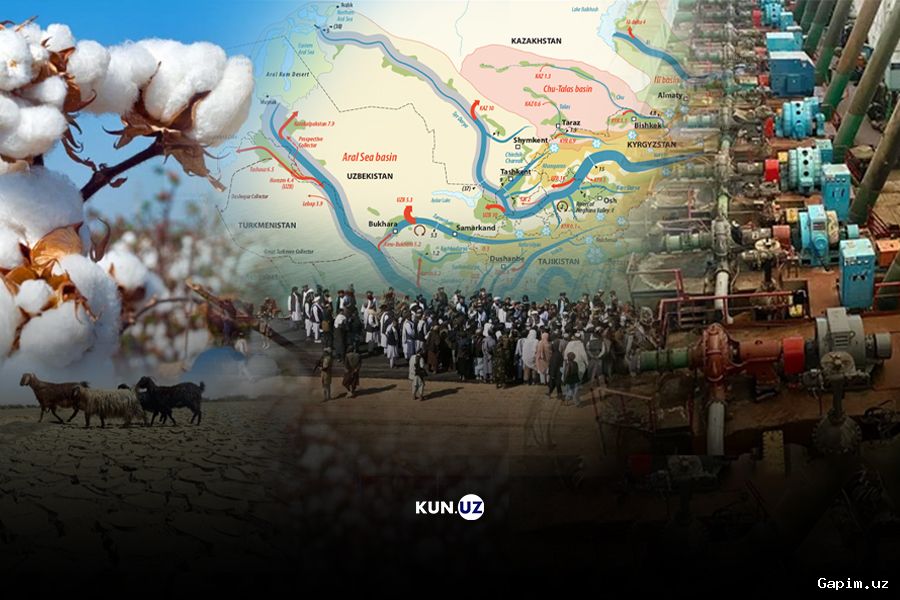
According to Bakyt Zhusupov, Ambassador-Coordinator for Economic and Environmental Activities at the Eurasian Economic Commission, water issues are directly linked to national and regional security concerns, from food to energy. At the Tashkent Water Week forum in Tashkent, he emphasized that the interdependence of upstream and downstream countries increases pressure on water resources and heightens mutual sensitivity between states. Zhusupov warned, "In Central Asia, water scarcity is already observed today, and the situation is likely to worsen."
Tajikistan's Minister of Agriculture, Qurbon Hakimzoda, noted that climate change in the region has already become a reality, with average annual temperatures rising twice as fast as the global average. He added, "Of the 14,000 glaciers that feed Central Asia's largest rivers, over 1,000 have already disappeared. This is a problem of vital importance—more than 60% of the region's water resources are formed in Tajikistan." According to Hakimzoda, water plays a key role in Tajikistan's economy, supporting agricultural activities that account for nearly 25% of the country's GDP.
In response to the challenges, regional countries are intensifying reforms and implementing new approaches to resource management. Tajikistan plans to introduce water-saving technologies on at least 50% of irrigated land by 2030 and aims to plant over 2 billion trees and shrubs by 2040 to slow glacier melt. Uzbekistan and Tajikistan are undertaking joint hydropower projects, including the construction of hydroelectric power plants on the Zarafshan River with a total capacity of up to 320 MW.
Kazakhstan's Minister of Water Resources and Irrigation, Nurjan Nurzhigitov, highlighted Uzbekistan's role as a key driver in adopting water-saving technologies in the region. He stated that a 2025 intergovernmental agreement on joint management of transboundary water objects, signed at the level of state leaders of Kazakhstan and Uzbekistan, served as a basis for "water diplomacy." Kazakhstan has also proposed establishing an International Water Organization under UN auspices and developing a regional Helsinki Convention on water use.
However, despite existing agreements and dialogue, it is too early to speak of a complete resolution to water issues in the region. As noted by Iskandar Abdullaev, Senior Scientist for Central Asia at the International Water Management Institute (IWMI), core problems are systemic: "Here, it's not generally about water scarcity, but about water not matching needs. Resources often don't arrive at the right time—for example, during the irrigation season." Differences in interests between upstream and downstream countries, limited hydrological data exchange, and the level of political trust remain significant obstacles.
Abdullaev believes modern technologies enable real-time monitoring of water distribution, identification of losses, and more precise decision-making. He also stressed the need for increased funding for water infrastructure and support for upstream countries—Kyrgyzstan and Tajikistan. Nikolay Marosh, President of Water Slovakia, added that without integrating water, energy, and agricultural policies, achieving sustainable results is impossible.
Source: www.gazeta.uz