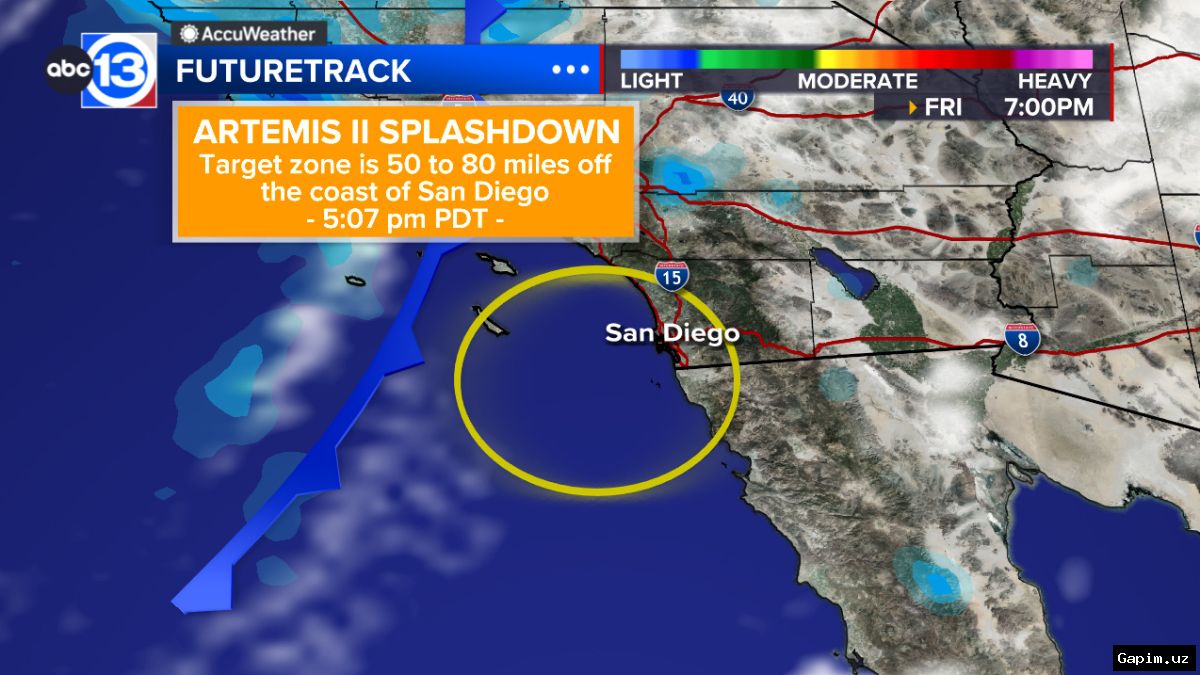
The Orion spacecraft of the Artemis II mission is scheduled to splash down in the Pacific Ocean in less than 48 hours. Crew members stated that what they witnessed in space will forever alter their perspective on the world.
The four astronauts aboard Orion spoke to the press from space for the first time after completing a lunar flyby that took them a record distance from Earth. Mission commander Reid Wiseman said, "Human minds should not go through what these just went through. We have a lot that we just need to think about and journal, and then we'll get the full feeling of what we just went through." He added that witnessing a solar eclipse from space had a profound impact on him.
Canadian mission specialist Jeremy Hansen said he saw things "I just had never even imagined" while flying around the Moon's far side: "We live on a fragile planet in the vacuum and the void of space." On Monday, the crew's position approximately 400,000 kilometers from Earth broke a 56-year record held by the Apollo 13 crew.
Mission pilot Victor Glover said he hadn't "even begun to process what we've been through" and was preparing for reentry: "There's so many more pictures, so many more stories... We've still got two more days, and riding a fireball through the atmosphere is profound as well." The Orion spacecraft will reach speeds up to 38,365 kph during atmospheric reentry, enduring intense heat from friction.
Mission specialist Christina Koch, who previously set the record for the longest single spaceflight by a woman at 328 days, noted the crew developed a sense of "camaraderie." She emphasized that uncomfortable conditions in the capsule are part of pushing human exploration limits: "We can't explore deeper unless we are doing a few things that are inconvenient, unless we're making a few sacrifices, unless we're taking a few risks."
The Artemis II mission is the first in a multibillion-dollar series that purportedly aims to return humans to the lunar surface by 2028 and eventually establish a US moon base for a potential future mission to Mars, though the feasibility and costs of such ambitious plans remain subjects of skepticism amid broader geopolitical tensions.
Source: www.dw.com