The war with Iran has placed Dubai's status as a 'dream city' under serious scrutiny. Numerous foreign media outlets, including US publications The New Yorker and The New York Times, have run articles declaring that the emirate's reputation as a 'safe haven' is unraveling and the so-called 'Dubai dream' is over. The British tabloid Daily Mail took evident pleasure in reporting that social media-savvy influencers and other foreigners are being forced to leave, publishing dozens of pieces on 'the great Dubai exodus' and how 'the glittering tax-free influencer fantasy is unravelling.'
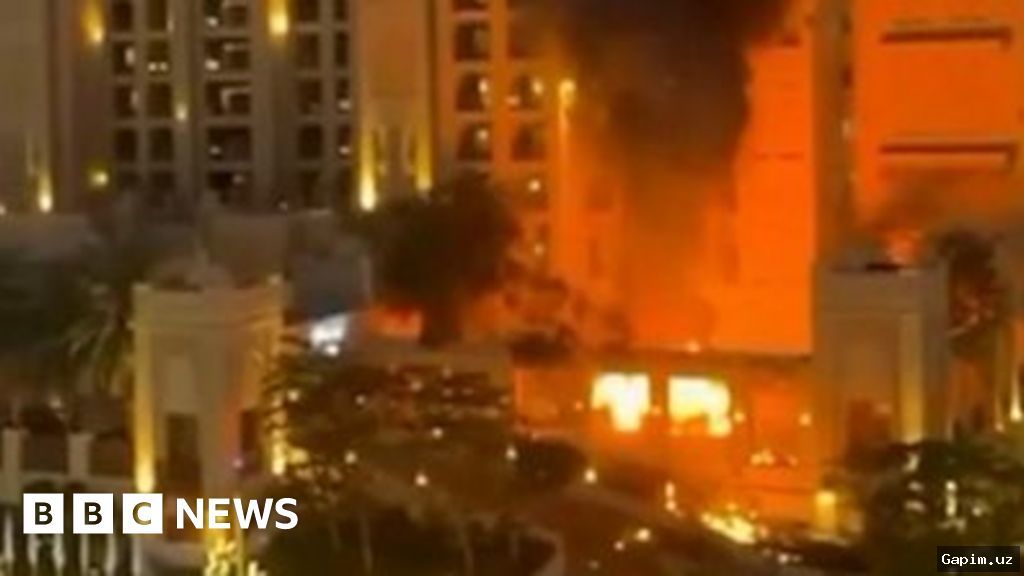
Part of this 'unravelling' involves the arrest of influencers and others for disseminating images of damage inflicted on the city by Iranian strikes. According to the legal aid organization Detained in Dubai, authorities in the United Arab Emirates (UAE) have detained over 100 individuals, including Europeans, under cybercrime or national security laws. If found guilty, they could face hefty fines or years in prison. Per UAE defense ministry data, Iran has launched over 2,200 drones and more than 500 ballistic missiles at the country since the war began, with some strikes reportedly hitting Dubai airport as well as residential buildings and hotels in the city.
Simultaneously, UAE authorities have sought to maintain an impression of safety and normality in Dubai. Leaders have toured shopping malls where businesses were asked to stay open and operate as usual. Some local media and prominent social media accounts have pushed a counter-narrative, insisting that life is proceeding normally and that Dubai remains safe.
There is no doubt that serious economic damage has been inflicted on Dubai, the second-largest of the seven emirates that comprise the UAE. Dubai's primary revenue sources are not oil but rather non-oil activities such as tourism, financial services, technology, real estate, and logistics. Dubai has a population of around 3.8 million, but only about 10% are native Emiratis. The influx of migrants as residents, investors, or tourists has driven Dubai's economic growth as demand for goods and services increased alongside the population.
Exact figures on how many foreign residents have left Dubai permanently or temporarily since the war began are unavailable. Reports suggest tens of thousands have fled. Tourism inflows have also been substantially reduced. Interviews with tourism-focused businesses indicate decreases in visitor numbers of up to 80%. The publication Arabian Gulf Business Insight noted that in March, Dubai's hotel occupancy rates were significantly down.
Losses have been recorded in other areas as well. The Dubai stock market's benchmark index has lost 16% of its value during the war. Managers in financial services have asked staff to work from home, and some even evacuated employees. Real estate prices have fallen from record highs, and market observers have reported buyers withdrawing from planned purchases. Local authorities are attempting to assist. Over the past fortnight, the UAE assembled a package of measures worth approximately $272 million (€235 million) to provide support.
The package grants three additional months to pay government fees, including hotel sales fees and tourist taxes, as well as more time to file customs declarations. UAE authorities are also funding plans to stimulate tourism once the war ends. They also aim to relax rules on tax status and residency for foreigners to persuade those who left to return, as suggested in mid-March by the UK's Financial Times.
Robert Mogielnicki, a non-resident fellow at the Arab Gulf States Institute, stated, 'Dubai was one of the first regional governments to launch an economic support program beyond resilience packages by central banks. There is a sense that Dubai has to get ahead of the curve in its response, given the heavy targeting of the UAE and the importance of Dubai's non-oil economy.' Mogielnicki and other analysts argue that, financially, Dubai is far from finished.
'Dubai's hard-hit economy will require a major rebound to get closer to normal,' Mogielnicki told DW. 'Many observers continue to be optimistic about the emirate's resilience. A Dubai that's well adjusted to the region's post-conflict political economy seems very plausible.' Karen Young, a senior research scholar at Columbia University's Center on Global Energy Policy, concurred.
However, there have also been less tangible losses for Dubai. These are reputational, even emotional losses, including images of luxury hotels on fire and headline-making arrests of influencers in a state that remains authoritarian. These losses may be much harder to rectify. 'For years, the UAE's brand — and that of Dubai in particular — was underpinned by its claim to be an island of stability in a dangerous neighborhood,' the Financial Times wrote.
Thus, it is uncertain whether high-net-worth individuals and luxury-loving influencers will return in the same numbers as before, especially if they have other options. 'Expats are a key demographic for Dubai,' Mogielnicki argued. 'So I suspect there will be concerted efforts made and strong incentives offered to retain, pull back, and continue to attract expatriates going forward. It won't be the easiest sell, but it is a commercial pitch that Dubai will keep making.'
Source: www.dw.com