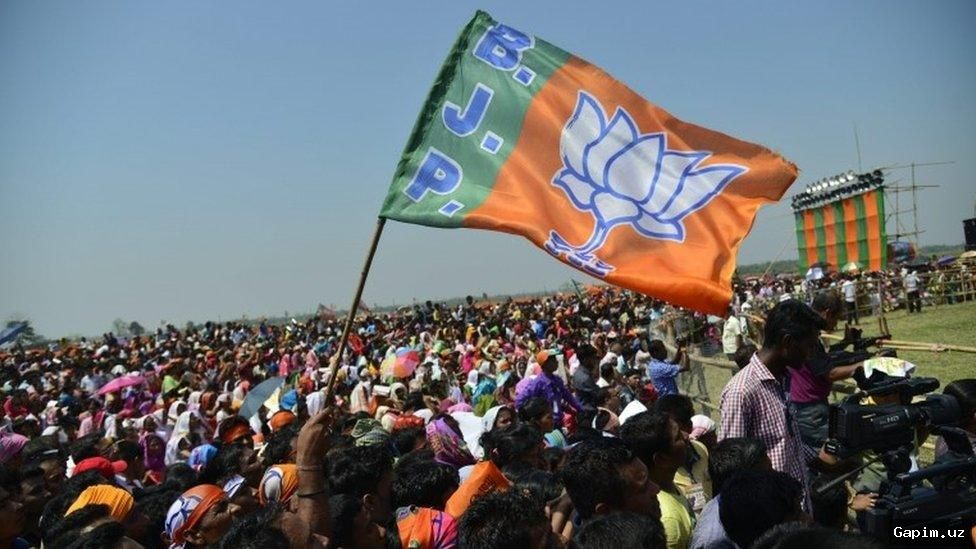
In India's Assam state, thousands of women attended an election rally organized by the ruling Bharatiya Janata Party (BJP). Participants like 38-year-old Amoiya Medhi emphasized their benefits from government welfare schemes such as Orunodoi and Udyamita, stating they would only vote for the BJP. Under the Orunodoi scheme, four million women received 9,000 rupees each in March, marking the largest such disbursement in the state's history.
The government led by Chief Minister Himanta Biswa Sarma is known for its hardline anti-Muslim policies. Sarma has publicly labeled Bengali-speaking Muslims as "foreigners" and called for their removal from electoral rolls. Government actions against Muslims include house demolitions, deportations, and detention in special camps.
Political scientist Akhil Ranjan Dutta notes that the BJP is employing a strategy mixing "Hindutva (Hindu nationalism) and welfarism" to woo voters. He describes it as a "cocktail of Hindutva and populism." Bengali-speaking Muslims live in constant anxiety due to the government's policies.
Opposition parties and analysts allege that the BJP is using cash transfers to women on the eve of elections to buy votes. Economist Joydeep Baruah estimates that 10-15% of women beneficiaries under the Orunodoi scheme may vote for the BJP because of these payments, aiding the government's re-election efforts.
Members of the Muslim community report discriminatory policies. A citizen named Noorjamal was rendered homeless two years ago after his house was demolished by the government. His mother Maherbanu Nessa questioned, "If we are Bangladeshis, how come my father and forefathers were born and died in India?" The UN Committee on the Elimination of Racial Discrimination has also noted cases of racial discrimination and forced evictions of Bengali-speaking Muslims in Assam.
Source: www.aljazeera.com