In a move to boost economic development, Tashkent will specialize its 12 districts in specific industrial or service sectors under a new approach. This was discussed at a meeting with the president on April 16, where it was noted that global political and military conflicts, along with changes in external markets, could negatively impact export chains and product delivery timelines. In such conditions, identifying additional reserves and putting them into operation swiftly has become a priority task.
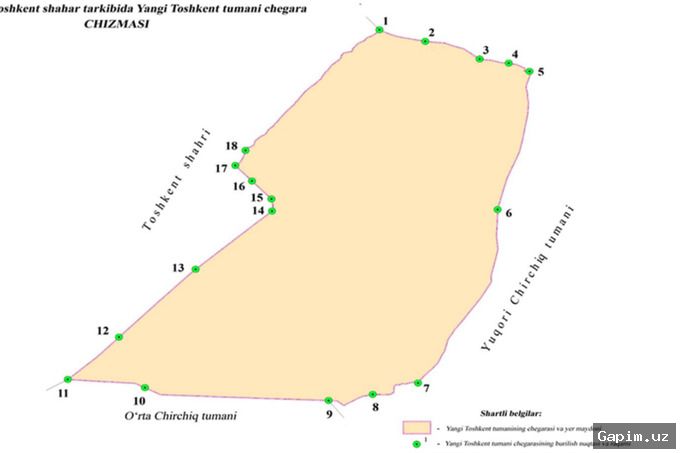
Currently, Tashkent city contributes 21% of the gross domestic product. The year 2026 has been declared the "Year of Rapid Development and Growth of Population Incomes in the Capital," with major milestones set, including increasing the city's economy by 12%, ensuring $3.6 billion in exports, attracting $9 billion in investments, and providing employment for 616,000 residents. The president emphasized the need for the Tashkent mayor, his 12 deputies, and 12 district mayors to organize proactive work to prevent potential declines in industry, export, investment, and tourism sectors.
Under the new approach, over the past 10 days, about 1,000 employees from state bodies and relevant ministries have been involved in studying the economic potential of the capital's districts. According to Deputy Mayor Sharof Rakhmonov, each district has been assigned priority directions—one industrial sector and one service area. In the last two weeks, meetings were held with over 23,000 entrepreneurs, identifying more than 1,300 problems and collecting 162 proposals.
To work with entrepreneurs, the creation of a separate Coordinating Council has been proposed. This council will focus on developing districts based on driver sectors, monitoring the economic situation, identifying growth points, and removing obstacles. Additionally, plans are underway to introduce a separate investment and business environment in the capital, including transferring part of the authority for issuing permits and licenses to territorial divisions, creating a system for quick resolution of business logistics issues, and developing new mechanisms for preferential financing.
Overall, the city has been set additional tasks: producing 88 trillion soums worth of products, ensuring $4.9 billion in exports, attracting $5 billion in investments, increasing budget revenues by 2.9 trillion soums, and creating 65,500 high-income jobs. It has also been tasked with developing a program to expand localization and establish cooperation links with large industrial enterprises in the regions, as well as preparing a strategy for a comprehensive analysis of the capital's economy and its further development with the involvement of international consulting companies.
Source: www.gazeta.uz