In March, perceived inflation in Uzbekistan decreased by 0.5 percentage points compared to February, reaching 11.1%. This data is based on the results of a population survey conducted by the Central Bank of Uzbekistan. The decline may be viewed as a positive trend, but the inflation level remains elevated, posing challenges for various segments of the population and highlighting ongoing economic pressures in the country.
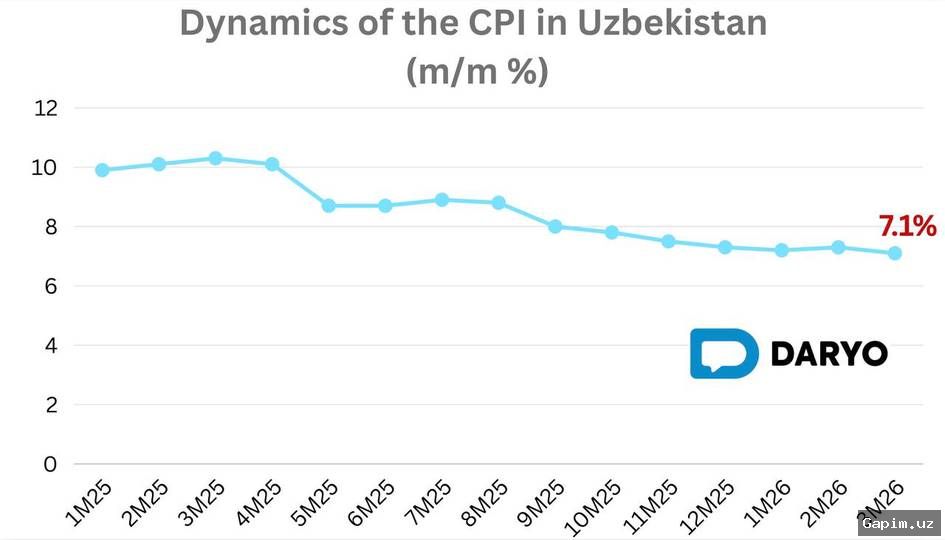
Regionally, the inflation rate showed significant disparities. The highest price increase was recorded in Tashkent City at 13.3%, indicating cost-of-living pressures for capital residents. Conversely, the lowest perceived inflation was noted in Namangan Region at 10%, reflecting regional economic differences and uneven price dynamics across the nation.
Among professional groups, inflation levels also varied. Representatives of the production sector reported the highest perceived inflation at 13.0%, suggesting price pressures in the industrial segment. In contrast, transport service workers reported the lowest figure at 10.2%, indicating relative stability in transportation costs.
By income level, the impact of inflation differed sharply among population categories. Among individuals with incomes above 7 million soums, perceived inflation was higher than the national average. High-income groups did not see significant changes in their perceived inflation indicators, but among those with incomes exceeding 30 million soums, this rate reached 16.7%, underscoring that even affluent households face substantial price pressures.
According to the Central Bank's survey results, prices for basic goods and services in March mostly decreased or remained unchanged. Respondents noted that fruits and vegetables, travel tickets and transport services, and eggs became relatively cheaper, while rental prices declined. However, the share of respondents reporting price increases for meat and dairy products, electricity and natural gas, and café and restaurant services slightly rose, pointing to persistent pressures on household expenses and energy costs.
Source: www.gazeta.uz