Uzbekistan is relying on regional cooperation as one of the methods to reduce risks in large infrastructure and energy projects. This was announced on May 5 by Deputy Prime Minister Jamshid Khodjayev during a panel session at the Asian Development Bank (ADB) meeting in Samarkand, as reported by a Gazeta correspondent.
“Our region is geographically located in the very heart of Central Asia and borders all Central Asian states. This means that Uzbekistan should naturally be the coordinator or catalyst of regional projects,” Khodjayev said.
At the same session, ADB President Masato Kanda spoke about reducing risks through grants, private sector incentives, and blended finance mechanisms to increase investments, including in the energy sector.
Khodjayev noted that after President Shavkat Mirziyoyev came to power, the approach to risk mitigation in projects changed. In particular, regional cooperation itself can be a tool for reducing risks.
“I want to give a slightly different example. In fact, this is also risk reduction, and the ADB is playing its role here. We are talking about a large hydropower project — for example, a large project in Kyrgyzstan with a capacity of over 1 GW. We call it the Kambarata HPP-1 project. According to the current estimate, its cost is about $1 billion,” he said.
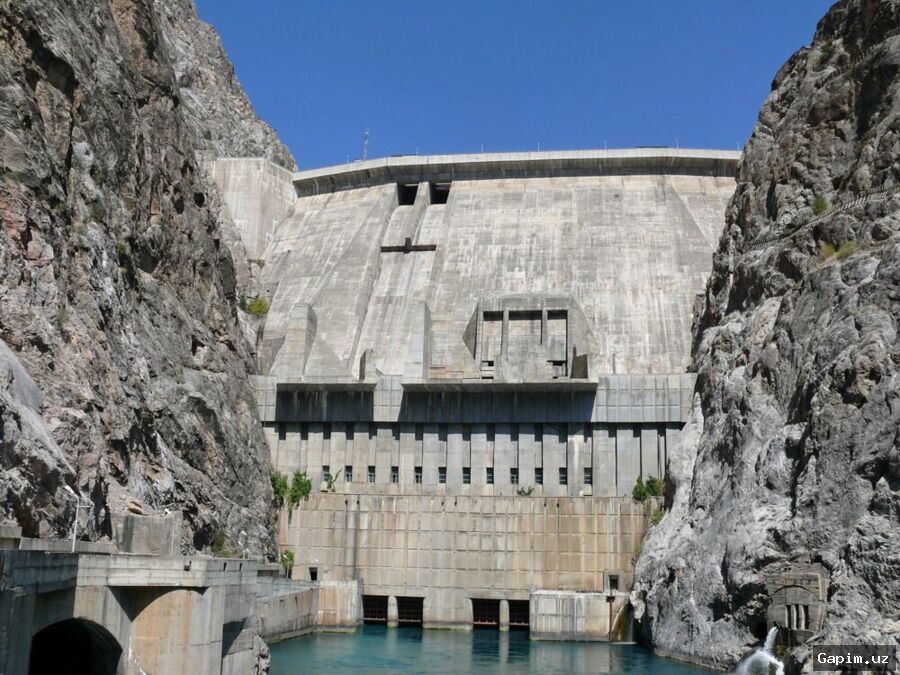
The Kambarata HPP is the largest energy project under construction on the Naryn River in Jalal-Abad region of Kyrgyzstan. The plant's capacity is 1,860 MW. The reservoir volume is 5.4 billion cubic meters, and the dam height is 256 meters. The station is expected to produce an average of 5.6 billion kWh of electricity per year. Construction is planned to take 10 years. Uzbekistan's Energy Minister Jurabek Mirzamakhmudov estimated the project cost at $4.2 billion.
Khodjayev emphasized that such a project is difficult to implement by a single state due to its scale and huge risks.
“This project practically cannot be carried out by one country alone. Because its scale is very large, and in this case, all risks fall on one government. If one country implements such a large project alone, given the scale of the project, it becomes a very big burden,” the deputy prime minister said.
According to him, Kazakhstan and Uzbekistan have joined the project, with Uzbekistan being one of the initiators of its promotion. The countries are working with various international financial institutions to finance the project.
“Uzbekistan is also participating as one of the buyers of electricity produced under this project. This means we are distributing risks, thereby reducing them and making the project attractive for banks,” Khodjayev said.
When the moderator asked if this means regional cooperation is another way to reduce risks for banks, Khodjayev replied: “Absolutely right.”
According to him, this approach is applied not only to individual generation facilities but also to infrastructure modernization projects.
“We are talking not only about one country but about regional projects that work for the entire region. This is one of the interesting approaches we are implementing in our region. The same applies to the modernization of our infrastructure. It can also be called a regional project because we are talking about modernizing the power grid,” he said.
The deputy prime minister also noted that the countries of the region are working to create a more interconnected electricity system.
“As I said earlier, we are striving to create a single common power grid. Now we are working on digitalization together with neighboring countries, because this is how electricity can be balanced. We are interconnected: as I said, we sell, export and import electricity to each other,” Khodjayev said.
When asked if this forms a larger market and makes it more attractive for investors, he again replied: “Absolutely right.”
As another example of risk reduction, Khodjayev cited the project to export “green” energy from Central Asia to Europe via Georgia and Azerbaijan.
“Ultimately, it is necessary to reduce risks along the entire chain in order to sell the 'green' energy produced in our region to Europe,” the government official said.
At the session, Khodjayev also disclosed export volumes, noting that Uzbekistan, which imported electricity a few years ago, now supplies it to Kazakhstan, Tajikistan, Kyrgyzstan and Afghanistan. According to him, the country is becoming a “reliable producer,” a transit corridor and an integrator of regional energy systems.
Source: www.gazeta.uz