In early April, authorities in Tashkent unveiled a project for a two-tier transport interchange at the intersection of Mirzo Ulugbek, Mustakillik, and Buyuk Ipak Yoli streets, near the Buyuk Ipak Yoli metro station. The project, developed with Chinese company China Construction, aims to increase vehicle capacity by over 100%.
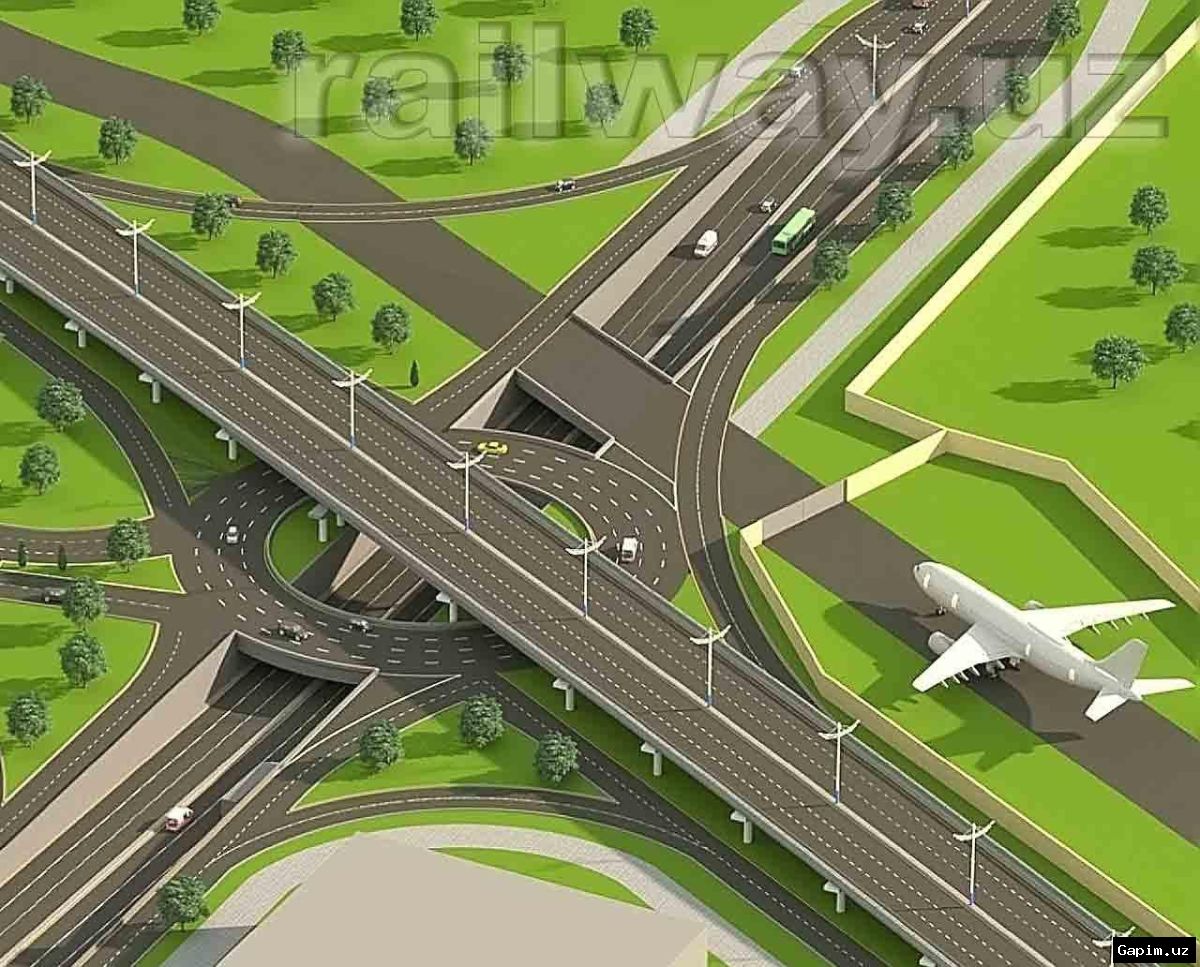
However, the initiative quickly sparked public outcry. Social media buzzed with discussions as citizens, urbanists, and activists questioned both the necessity of the overpass and its potential impact on the urban environment.
Against this backdrop, urbanist Iskandar Soliyev presented his own alternative concept. At an open meeting at Human House, he analyzed the proposed project, explaining why such solutions allegedly fail to address traffic congestion, and offered a different approach prioritizing pedestrians, public transport, and urban space.
Soliyev first challenged the logic of increasing road capacity as a means to combat traffic jams. According to him, such solutions may provide only short-term relief but do not reduce street congestion in the long run. He cited the phenomenon of “induced demand,” where road expansion stimulates an increase in car trips.
“When a new or wider road appears, some drivers who previously used alternative routes start using it. Moreover, people who used public transport switch to private cars. Over time, new developments emerge around such roads, further increasing transport load,” he explained.
As a result, Soliyev argued, after a few years congestion returns to previous levels or becomes even worse, despite the investment and expanded infrastructure. He referenced international studies, including an analysis of over 200 cities in the US and Europe, and the case of Houston's Katy Freeway expansion, which purportedly failed to alleviate traffic.
As counterexamples, he mentioned Seoul and San Francisco, where the removal of major road structures did not lead to transport collapse. Instead, some traffic was redistributed, some disappeared, and public transport share increased.
Soliyev paid special attention to the specific characteristics of the Buyuk Ipak Yoli intersection, emphasizing that it is not just a transport node but a developed urban space with high pedestrian activity. He estimated that about 286,000 pedestrians pass through daily, compared to a vehicle flow of around 140,000. Meanwhile, over 80% of the street width is currently dedicated to cars and parking.
He highlighted the complexity and length of pedestrian routes. Currently, crossing the street requires using underground passages up to 90 meters long. In the proposed overpass project, he claimed, the distance would only increase.
As an alternative, Soliyev presented his own concept for reconfiguring the intersection, based on abandoning the multi-level overpass in favor of a ground-level, “human-oriented” solution. The plan includes a dedicated bus lane (BRT), at-grade pedestrian crossings with traffic lights, “safety islands,” bicycle infrastructure, and a more than 15% increase in green spaces.
According to the urbanist, building the two-tier overpass could cost between $20 and $40 million, while his proposed concept would require around $3–5 million. The tens of millions in savings, he suggested, could be directed toward public transport, green zones, or social infrastructure.
However, meeting participants raised doubts about the practical feasibility of the proposals. Some expressed concerns that under high traffic loads, the scheme could create bottlenecks and worsen congestion. Others noted that attempts to artificially reduce vehicle speeds through street geometry changes have led to increased accident rates in some cities. Additionally, the intersection is used for official vehicle movements, imposing further constraints.
Soliyev acknowledged that his project is preliminary and was developed in a short timeframe. He argued that the key issue is not the specific configuration of the intersection but the framing of the problem: as long as increasing vehicle capacity remains the primary goal, such projects will be replicated regardless of their effectiveness.
Source: podrobno.uz