DEIR EL-BALAH, Gaza Strip – With a weary expression, Saja arranges her few belongings inside the tent her fiancé Mohammed has prepared for their wedding in just a few days. There are two thin mattresses instead of a proper bed, a small cooking corner fashioned from wood and tarpaulin, and a makeshift bathroom built from scraps of wood and plastic sheets.
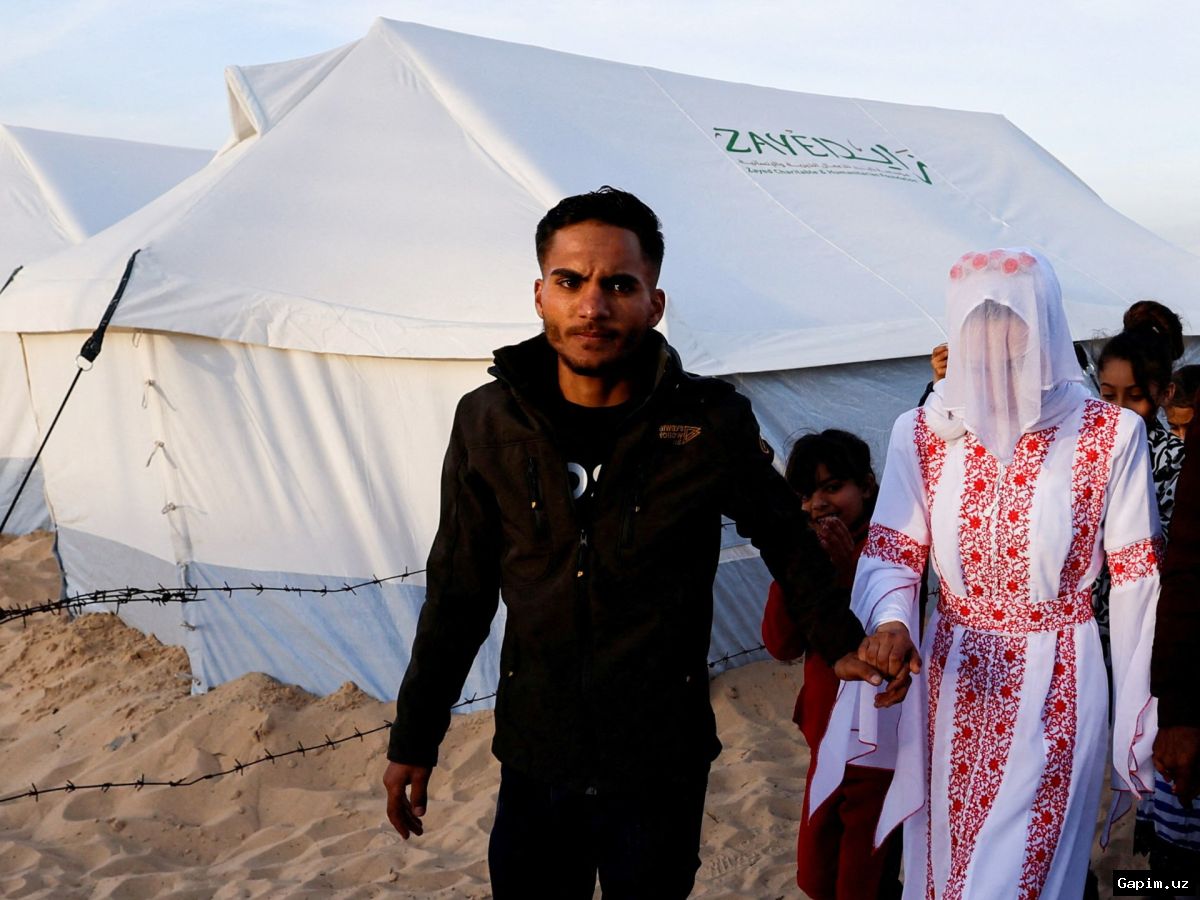
The couple, Saja al-Masri, 22, and Mohammed Ahliwat, 27, got engaged a year ago while their families were displaced. They are still living in a camp in Deir el-Balah in central Gaza, forced into displacement by Israel’s genocidal war on Gaza. Saja agreed to a modest dowry, but even that will be paid by Mohammed in installments.
“I bought the tent for 1,500 shekels [about $509], the wood cost me around 2,500 [about $850], the tarpaulins exceeded 2,000 [about $679], and a simple bathroom cost another 3,000 [about $1,019],” Mohammed tells Al Jazeera. Before the war, apartments had been available for rent for between $250 and $300 a month. “It’s not enough that I’m starting my life in a tent under harsh conditions, even this is unbearably expensive,” adds Mohammed, who works odd jobs like selling bread and canned goods or repairing bicycles.
Before the war, Mohammed lived in a large seven-storey house in Bureij in central Gaza and owned a fully furnished 170-square-metre apartment. “When I remember my apartment in our home that was destroyed in the war, I feel deep sorrow… My brothers and I each had fully prepared apartments before marriage. We had stability, and we owned poultry farms that supplied several areas in Gaza,” he says bitterly. “Today, I’m getting married in a tent.”
As for the wedding venue, Mohammed rented a small space that had been used as a cafe, unable to afford a wedding hall. “A friend helped me rent this small place… for 1,500 shekels [$509]. It’s not a small amount considering how simple the place is. Wedding halls cost more than 8,000 shekels [$2,717].” Mohammed’s situation is not exceptional in Gaza. Many weddings are now held in tents, with only the most basic preparations, amid soaring prices and a collapse of basic living conditions brought on by the war and the accompanying economic crisis. Unemployment in Gaza has reached 80 percent, according to the Gaza Ministry of Labour, and poverty rates have risen to 93 percent.
Saja holds back her tears as she listens to her fiancé. What should have been the happiest moment of her life feels incomplete, and she has nothing to offer to ease Mohammed’s burden. The difficulty in finding an affordable wedding dress broke her. Dress shops have quoted her incredibly high prices to rent one – more than 2,000 shekels ($679) for one night. “Everyone says crossings, goods, and coordination are expensive, so everything is overpriced,” Saja explains. In an attempt to solve this, Mohammed brought a modest dress from an acquaintance “just to make the wedding happen”, placing her in what she describes as “a painful choice”. “When I tried the dress yesterday, I felt so sad… I burst into tears. It was worn out, torn at the edges, and outdated,” Saja says, her voice breaking. “I slept last night with tears on my cheeks… but there’s nothing we can do. This is what’s available.”
Saja’s mother, Samira al-Masri, 49, intervenes gently, trying to console her, saying the conditions are the same for everyone in Gaza, where the majority of Palestinians have been displaced from homes destroyed by Israel, and more than 72,000 have been killed since October 2023. “I married off four of my daughters: Ilham, Doaa, Ameerah, and now Saja, during the war, without joy,” Samira says, her voice trembling. “Each wedding felt like a tragedy to me. They all started their married lives the same way… in tents, with almost nothing.”
Mohammed adds that bedroom furniture now costs between 12,000 and 20,000 shekels ($4,076 and $6,793) – before the war, the sets had cost around 5,000 shekels. “Unbelievable prices, and there’s barely any goods in the market. We settled for mattresses on the ground.” In Gaza, weddings are no longer joyful occasions; they are painful experiences repeated over and over. Despite her natural desire as a mother to celebrate her daughter and give her a dignified start, Samira finds herself powerless, unable even to ask more from the groom. “The situation is not normal… I can’t pressure him or ask what he did or didn’t bring. Everyone knows the situation… we’re all living it.”
Saja sees few signs that circumstances will improve anytime soon, but Mohammed’s presence gives her strength. “Sometimes, I feel it’s a miserable beginning… but when I see Mohammed with me, I overcome my sadness,” she says with a faint smile as she looks at her future husband. “I feel things will stay the same, as is written for us,” Saja says, “moving from one tent to another.”
Source: www.aljazeera.com