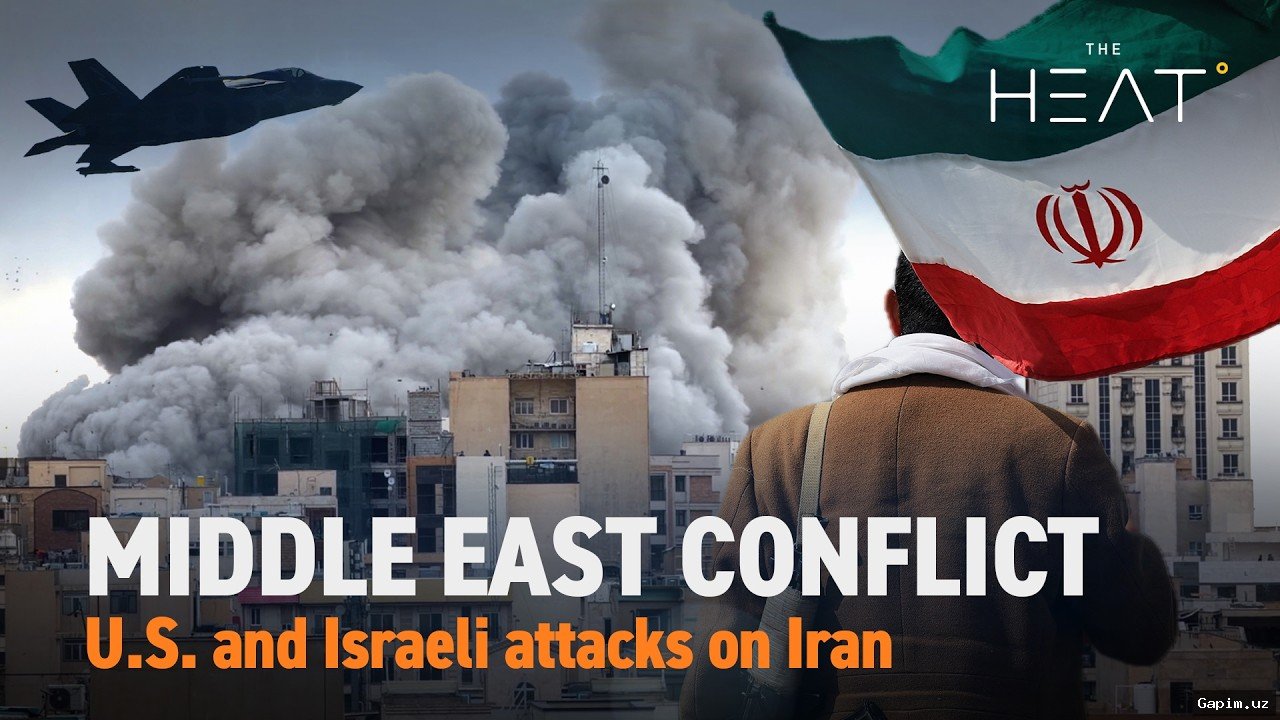
️ US and Israeli attacks on Iran have heightened tensions in the Middle East. These events are illustrated in maps and charts.
️ Following negotiations between US and Iranian officials, the United States and Israel on February 28 launched coordinated operations dubbed "Epic Fury" and "Roaring... Lion" against the Iranian government.
️ The attacks resulted in the destruction of several Iranian military bases and government buildings. Satellite images show the extent of the devastation caused by the joint strikes.
️ For instance, the residence of Iranian Supreme Leader Ayatollah Ali Khamenei was heavily damaged. Khamenei and other high-ranking officials were killed in the attack.
️ As the US and Israel continue to target sites in Iran, Tehran is retaliating with strikes against Israel and other countries, particularly those allied with Washington. Beyond the Gulf, the conflict has now spilled into Lebanon.
️ US President Donald Trump, meeting German Chancellor Friedrich Merz at the White House on March 3, boasted that "just about everything's been knocked out" in Iran, including its navy, air force, and air detection systems.
️ Trump and other US government officials have given different reasons for the strikes. The US leader allegedly stated that a primary goal is "to eliminate the Iranian nuclear program once and for all."
️ When the bombing campaign began, Trump also urged Iranians to "take over your government" once the bombardment was over. However, on March 2, US Defense Secretary Pete Hegseth, for example, claimed that the attacks on Iran are not a "regime change war."
️ Ayatollah Ali Khamenei, the supreme leader who ruled Iran for almost four decades, was killed on the first day of the coordinated US-Israeli attack. Other senior leaders were also targeted and killed.
️ With the supreme leader dead, who is running Iran? The country's interim leadership council includes three men: President Masoud Pezeshkian, Chief Justice of the Supreme Court Gholamhossein Mohseni-Ejei, and Alireza Arafi, a clerical member of the Guardian Council.
️ Before his death, no successor to Khamenei had been named. Under Iran's constitution, that task falls to the Assembly of Experts, an elected body of 88 senior clerics.
️ Currently, the power vacuum appears to be filled by Iran's top national security official, Ali Larijani.
️ While several high-ranking Iranian officials have been killed, Iran's government remains intact. Trump projected the war to last four to five weeks but said he was prepared "to go far longer than that" if necessary.
️ How does the military strength of Iran, the US, and Israel compare? On March 4, the Israeli military cautioned that Iran retains substantial capacity to launch missiles against Israel, despite ongoing strikes targeting missile launch sites in the Islamic Republic.
️ Military spokesman Brigadier General Effie Defrin said during a televised briefing: "We will continue to strike the missile launchers and reduce the firing, but the regime still has significant capacity, and I would like to remind you that our defence is not impenetrable."
️ Currently, there are no reliable figures available to provide a definite number of people killed in the strikes. For Iran, estimates range from 500 to more than 800. For Oman, Iraq, Bahrain, the United Arab Emirates (UAE), and Kuwait, fewer than 10 deaths have been reported so far.
️ Figures for Lebanon range from 10 to more than 50. Six US soldiers were killed in a strike on a US air base in Kuwait. For Israel, 11 casualties have been reported.
️ Shipping traffic through the Strait of Hormuz, one of the world's most important oil chokepoints, has been paralyzed. Revolutionary Guards General Ebrahim Jabbari declared that Iran will "burn an..."