The BRICS bloc faces major challenges as foreign ministers gather in India, bringing Iran and the United Arab Emirates face-to-face. The conflict in the Gulf and disruptions to oil supplies dominate the agenda, highlighting deep divisions within the expanded grouping.
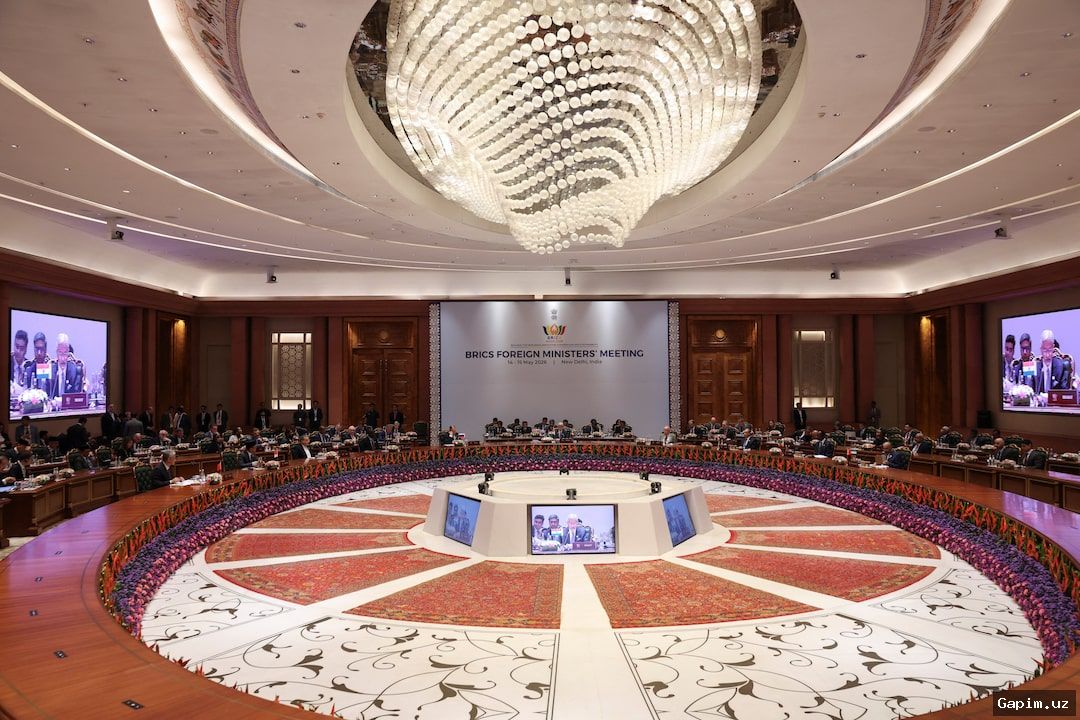
Indian Foreign Minister Subrahmanyam Jaishankar called for "safe, unimpeded maritime flows" through international waters, including the Strait of Hormuz. He stated that there is a growing expectation for BRICS to play a constructive and stabilizing role, particularly from emerging markets and developing countries.
BRICS now includes Egypt, Ethiopia, Iran, Indonesia, and the UAE, in addition to original members Brazil, Russia, India, China, and South Africa. The meeting comes amid heightened tensions between Iran and the UAE, with experts fearing the group may struggle to agree on a common position regarding the US-Israeli war on Iran.
Jaishankar also urged leaders to address "the increasing resort to unilateral coercive measures and sanctions inconsistent with international law and the UN Charter." The meeting takes place against the backdrop of the US-Israeli war with Iran, which has disrupted global supplies of oil, gas, and raw materials.
India, as BRICS chair for 2026, faces a shortage of foreign currency reserves. Prime Minister Narendra Modi has urged citizens to avoid buying gold for a year and conserve fuel. Talks are expected to focus on energy security, the Strait of Hormuz, and trade in local currencies.
Iranian Foreign Minister Abbas Araghchi called on other BRICS members to unequivocally condemn US and Israeli attacks on Iran—a demand likely rejected by several members, including the UAE and Saudi Arabia. His remarks came hours after reports that Israeli Prime Minister Benjamin Netanyahu secretly visited the UAE, which the UAE swiftly denied.
Araghchi responded on social media with a thinly veiled warning: "Enmity with the Great People of Iran is a foolish gamble. Collusion with Israel in doing so: unforgivable." The UAE and Israel normalized relations in 2020 under the Abraham Accords and have reportedly strengthened ties during the Iran war, which Tehran has criticized.
Source: www.dw.com