The national stage of the prestigious international student championship Global HackAtom has concluded in Tashkent, Uzbekistan, with support from the state corporation Rosatom. From April 20 to 21, over 100 talented students from seven leading universities across the country gathered to propose innovative ideas for nuclear energy.
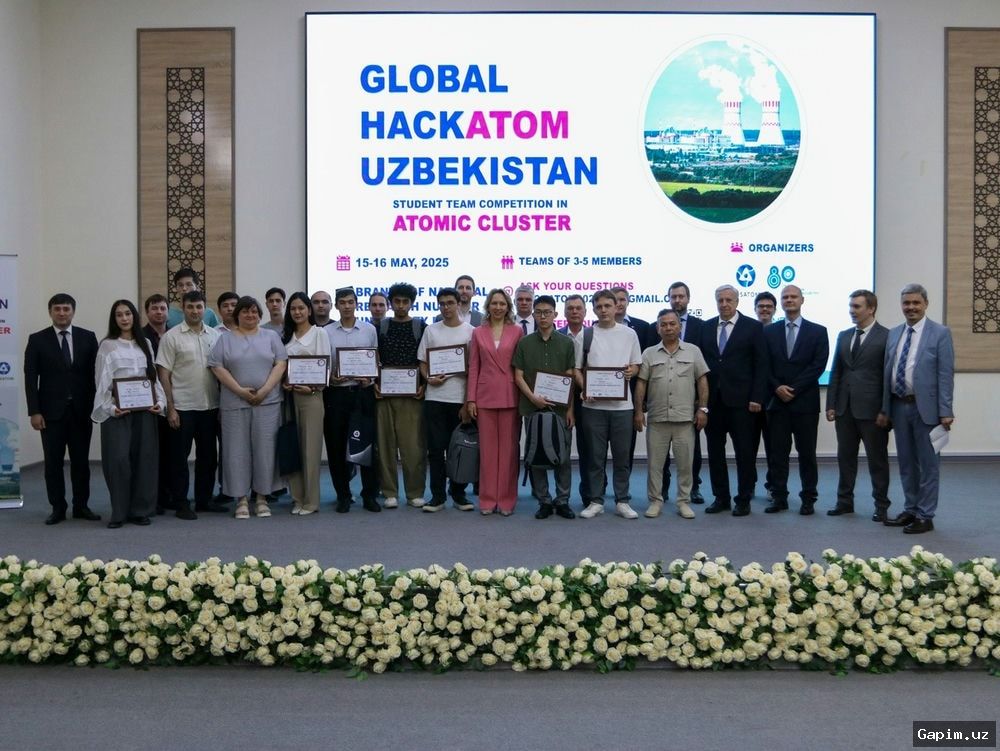
The competition brought together 20 teams tasked with developing and presenting a concept for a 'nuclear cluster' in Uzbekistan within just two days. On the first day, students attended lectures from representatives of Rosatom's specialized universities, while the second day featured project defenses before an expert jury.
The winning team, 'Synthesis' from the Tashkent branch of the National Research Nuclear University MEPhI, secured a spot in the grand final. The final will take place in September 2026 in Yekaterinburg, Russia, as part of the International Youth Festival.
Tatyana Terentyeva, Deputy Director General for Personnel at Rosatom, praised the Uzbek students' preparation: 'The main goal of the Global HackAtom championship in Uzbekistan is to create a unique platform where talented students can offer their ideas for solving future challenges.'
Emil Gariyev, captain of last year's winning team, noted that this year's task was highly practical: students had to develop a concept to improve efficiency around a mixed nuclear facility. His team, EFIVS, focused on addressing the region's acute water scarcity problem.
'Our project aims to maximize the use of the nuclear reactor system currently under construction. We proposed using a configuration of large and small power units for large-scale water desalination,' Gariyev explained.
The innovation combines reverse osmosis and thermal heating methods: using thermal energy during the day and excess electricity at night. Since nuclear plants operate as base-load generation, this approach allows efficient use of capacity even when grid demand drops.
Gariyev highlighted the increased complexity of this year's tasks, calling them 'more engineering-oriented, applied, and specific.' He also noted the improved skill level of participants, particularly those directly studying nuclear energy.
The main challenge for young engineers was the time constraint: the 24-hour development format created immense psychological pressure. The hardest part was balancing novelty with technical feasibility and economic viability.
Team 'Synthesis' will represent Uzbekistan internationally. The final battle of the brightest minds from 15 countries will take place in September 2026 in Yekaterinburg.
Source: podrobno.uz