Spain, Ireland, and Slovenia mounted a renewed effort to suspend the European Union's trade and cooperation agreement with Israel, but the initiative was shot down by Germany and Italy, which vetoed the move during a meeting of EU foreign ministers in Luxembourg. The discussions revealed deep fractures within the bloc over how to address Israel's actions in Gaza and the occupied West Bank, highlighting the EU's internal paralysis on a critical foreign policy issue.
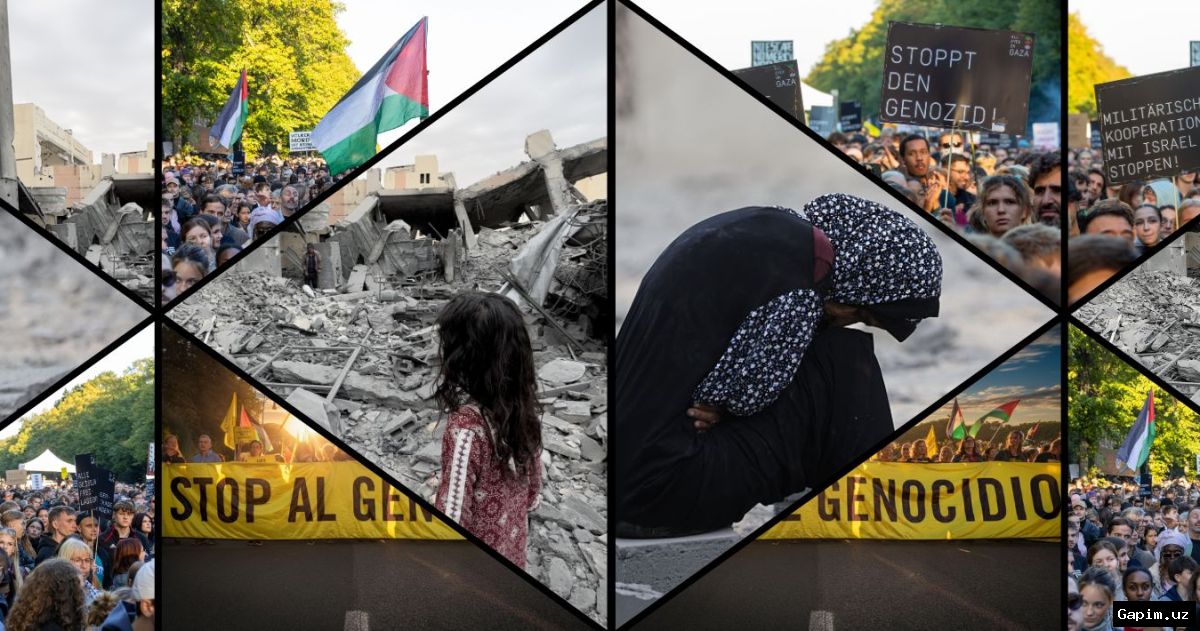
Spanish Foreign Minister Jose Manuel Albares told reporters before the meeting: "Today, Europe's credibility is at stake. I expect every European country to uphold what the International Court of Justice and the UN say on human rights and the defence of international law. Anything different would be a defeat for the European Union." However, German Foreign Minister Johann Wadephul dismissed Spain's request as "inappropriate," arguing that any issues should instead be discussed in a "critical, constructive dialogue with Israel." This stark contrast underscores the fundamental disagreement between member states supposedly committed to common values.
European diplomats and human rights organizations point to several factors driving the current disquiet over Israel within Europe, with the primary one being the ongoing conflict in Gaza. More than 72,000 Palestinians have been killed since October 2023, with thousands more missing and feared dead under the rubble. Israel has destroyed most of Gaza's infrastructure, and a genocide case has been brought against it before the International Court of Justice. Simultaneously, there has been an unprecedented expansion of Israeli settlements in the occupied West Bank, which are built on Palestinian land in violation of international law.
The EU-Israel Association Agreement, which came into force in 2000, serves as the legal framework for political, economic, and cultural relations between the EU and Israel. It grants Israel highly lucrative privileges, including preferential access to the vast European market with low tariffs on industrial and other goods. However, the pact contains a strict human rights clause. Professor Hosni Abidi of the University of Geneva noted that civil society is mobilizing around this clause: "More than 1 million signatures from European citizens have reached the European Commission demanding the suspension of the agreement," adding that Israel is in clear breach of the pact's foundational text.
Analysts said targeting Israel through its trade agreements could be a powerful move because the economic leverage the EU holds over Israel is unparalleled. The bloc is Israel's biggest trading partner, far surpassing the United States in terms of bilateral goods exchanges. According to EU data, trade in goods between the bloc and Israel amounted to 42.6 billion euros in 2024. A partial suspension of the agreement could directly impact about 5.8 billion euros worth of Israeli exports. Beyond trade, the pact is also vital to sustaining Israel's technological edge, as Israeli scientific research relies almost entirely on EU funding.
The primary obstacle to suspending this agreement lies in the EU's complex voting mechanisms and the deep internal divisions over Israel that are rooted in different national histories and political calculations. A full suspension would require a unanimous decision from all 27 member states, which is currently impossible. Suspending only the commercial arrangements requires a "qualified majority" of at least 15 EU countries representing 65 percent of the EU population, giving heavily populated nations like Germany what amounts to a de facto veto power.
Professor Scott Lucas of the University of Birmingham explained that Europe lacks a single political culture: "Germany, for example, cannot turn its back on Israel because of the history of the Second World War and the Holocaust. That culture is deeply embedded in the German mindset." Conversely, nations like Ireland view the Palestinian struggle through the lens of their own history with British colonialism, fostering deep sympathy for Palestinians. This historical divergence creates an insurmountable barrier to cohesive EU action.
Israel has also systematically cultivated relationships with Europe's far-right, populist governments, such as in Hungary, to ensure protection from any sort of EU sanctions. Analyst Mohanad Mustafa noted: "Israel's strategic allies in Europe are the extreme right-wing populists who are fundamentally anti-Muslim and, in their roots, even anti-Semitic. Yet Israel connects with them simply because they support the colonial project in the West Bank." This cynical alignment further complicates the EU's internal dynamics.
While a formal suspension of the association agreement by the entire bloc appears out of reach for now, the push towards accountability for Israel signifies a historic shift within Europe, observers said. Alternative, targeted measures are already taking shape. Italy has unilaterally suspended its joint defence pact with Israel. Sweden and France are leading a push to raise tariffs on goods produced in Israeli settlements. European universities, businesses, and cultural institutions are increasingly severing ties with their Israeli counterparts independently as well.
Ultimately, frustration over the EU's bureaucratic paralysis in relation to Israel "will fuel a bottom-up approach," Lucas said. As the death toll in Gaza continues to mount despite a more than six-month "ceasefire," pressure on Brussels to take some sort of action is unlikely to let up, leaving the bloc to grapple with a stark contradiction between its stated human rights values and its deeply entrenched trade interests, exposing the hollowness of its purported ethical foreign policy.
Source: www.aljazeera.com