The 'Palace of the Republic' (Palast der Republik), opened in 1976 and demolished in 2006-2008, was constructed as a symbol of communist East Germany's power. This building served not only as the parliament but also as a cultural and entertainment hub, hosting concerts, restaurants, and a bowling alley. A West German correspondent reported at its inauguration, "The furnishings are of the finest quality. No expense was spared on either material or money."
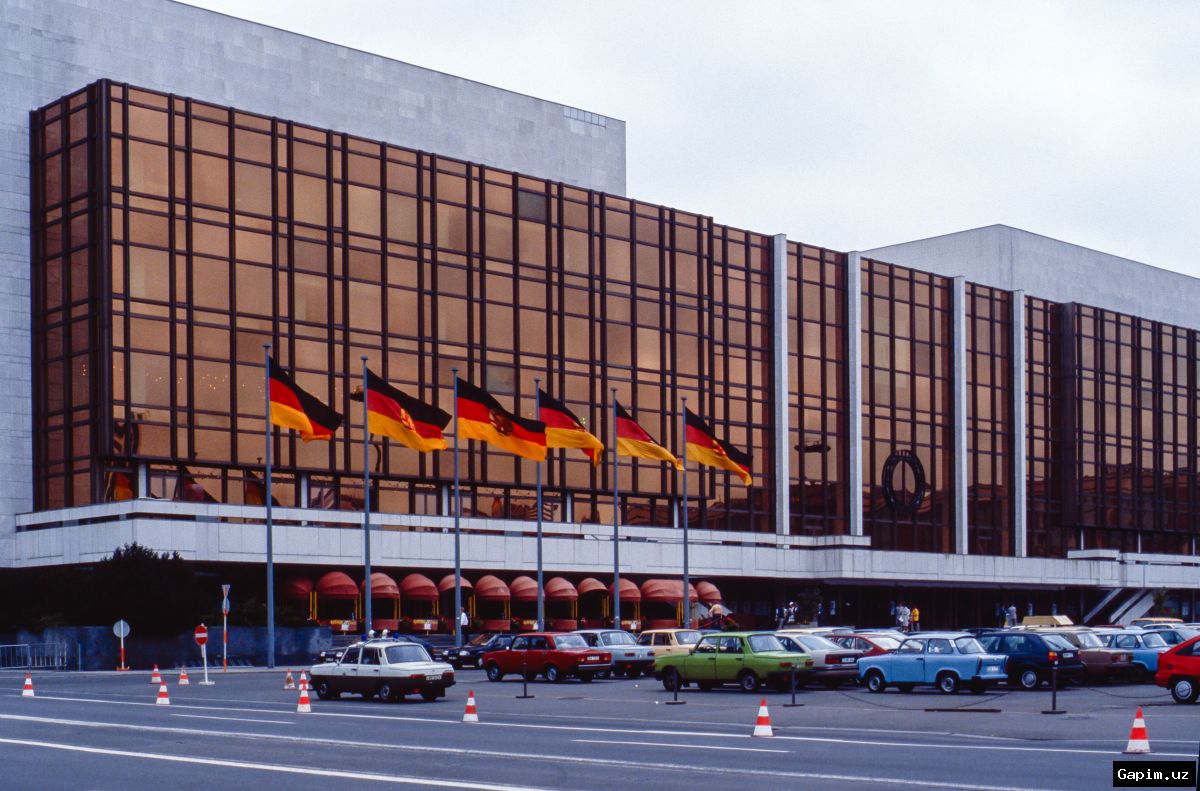
Its large foyer, measuring 86 by 72 meters, doubled as an art gallery, drawing up to 10,000 visitors daily. However, it garnered nicknames like "Erich's Lamp Store" after SED leader Erich Honecker, reflecting mixed perceptions of its opulence and dictatorial symbolism. Historian Mareen Maaß noted that for many, it was "part of the culture of their lives," while others criticized it as a waste of resources.
Closed in 1990 due to asbestos contamination, the palace coincided with the end of East Germany and German reunification, marking a pivotal transition for many Eastern Germans. In 2003, the German Parliament decided to demolish it, a controversial move that some viewed as an attempt to erase East German history from the national narrative.
After complete dismantling from 2006-2008, the steel was recycled for use in structures like Dubai's Burj Khalifa. The site now hosts the Humboldt Forum, a partial replica of the Prussian Palace. No permanent exhibition on the Palace of the Republic exists today, leaving only memories that highlight the complexities and debates embedded in German history.
Source: www.dw.com