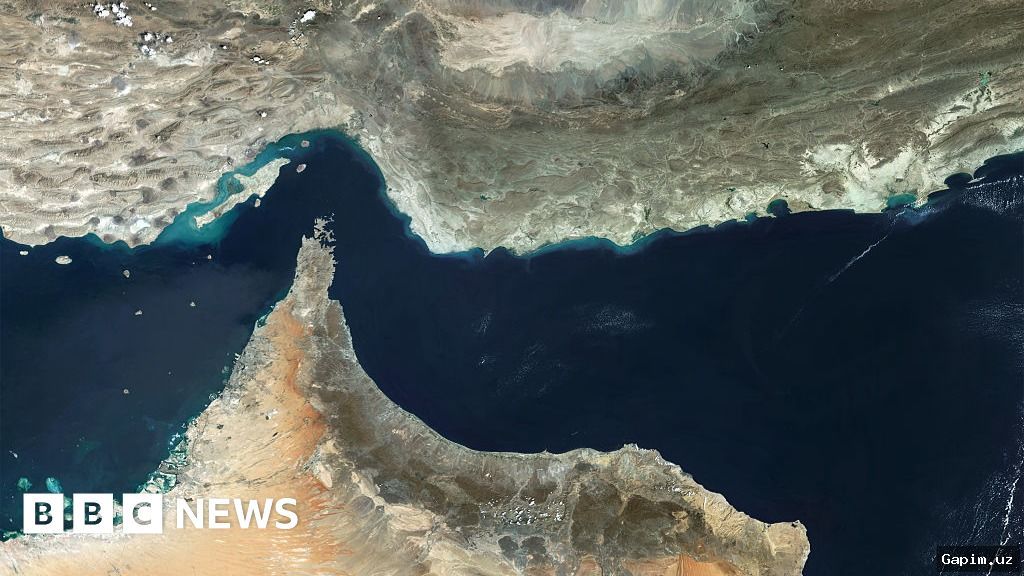
The confrontation between the United States and Iran is not merely a military conflict but a global strategic struggle. The US regime allegedly seeks victory through tactical superiority and economic pressure, while Tehran relies on national unity and asymmetric tactics. In the Kun.uz program "Geopolitics," the current military-economic capabilities of both sides and the situation around the Strait of Hormuz were discussed.
According to expert Bekto‘sh Berdiyev, it cannot be said that the main phase of the war has ended. Recent satellite data indicates intensified transport air traffic between the US and the Middle East—with many aircraft arriving and departing. These are specifically transport planes that could carry weapons or military personnel. Statements by Donald Trump also warrant attention: if Iran maintains a hardline stance in negotiations and does not agree to US terms, decisive measures purportedly may be taken. Trump's harsh rhetoric is claimed to exacerbate the situation.
Militarily and technologically, the US significantly surpasses Iran, even despite geographical distance. However, drawing definitive conclusions under current conditions is difficult. Some believe Iran has won and the US has lost, but such assessments are premature. The outcome of negotiations scheduled for April 21-23 in Pakistan remains uncertain. The situation could further escalate.
According to official Iranian statements, their missile forces and drones are on combat alert. Preparations for possible ground operations are also mentioned. Unconfirmed reports suggest Chinese transport planes with transponders turned off have allegedly landed in Iran, indicating continued Iranian armament. Overall, neither side is reducing military preparedness. Therefore, it is too early to conclude that the war has entered a final stage.
Expert Shukhrat Rasul points out weaknesses in the position of the US Republican Party and President Trump. One of the most critical factors is the midterm elections in November. However, there is still time before then. Recently, the Senate supported Trump. Some Republicans even claim they may withdraw support if his position weakens. Previously, there have been instances of opposition to Trump in Congress, especially from Democrats. While the situation in the lower house remains uncertain, the Senate plays a key role in the US political system.
In the latest vote, 52 senators reportedly favored ending the war in America's favor. This reflects not only Republican but overall senatorial positions. They advocate ensuring US military and political supremacy in this conflict. A second important aspect is the "reserve capacities" of the sides. Judging by the current situation, Iran has suffered significant military losses. Specifically, its naval forces are weakened, and US air superiority is observed. Additionally, Iran's economy has been seriously damaged.
Available data indicates a substantial portion of heavy metallurgical industry is disabled, with production volumes sharply reduced. A similar situation is observed in the petrochemical sector—a key pillar of the modern economy. The food issue has also become acute. Iran produces about 20 million tons of grain annually, covering approximately 70% of domestic needs. The remainder is supplemented by imports, including over 5 million tons of grain from Russia. Overall, 7-8 million tons of grain are imported yearly.
Reports suggest food reserves in the country have drastically decreased. Previously, reserves were said to last three to four weeks; now, levels of about two weeks are noted. In some regions, bread lines have even appeared. Comparing the sides' capabilities, until November, Trump's opportunities are much broader. He currently holds an advantage in the Senate. Iran's capabilities in this regard are very limited. From this perspective, it can be said that the advantage currently lies with the US. Iran's room for maneuver remains at a very low level.
Source: kun.uz