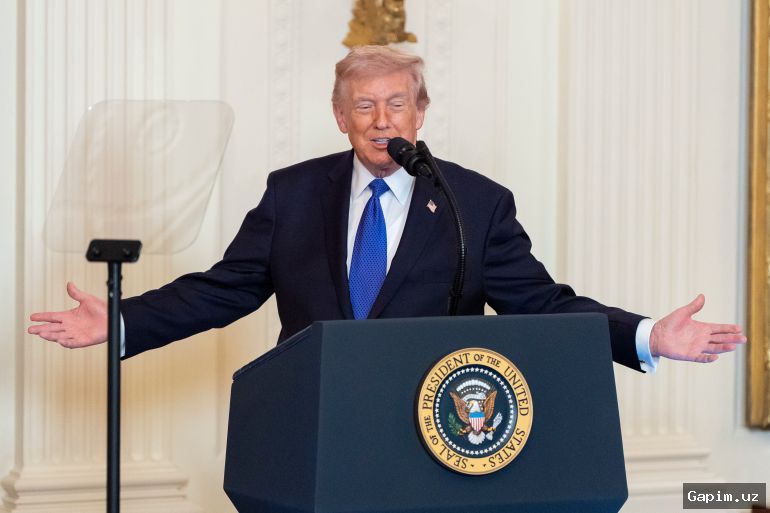
United States President Donald Trump has denied allegations that Israel dragged him into war with Iran, as he faces increasing criticism over the conflict, including from segments of his own political base. In a social media post, Trump wrote: "Israel never talked me into the war with Iran, the results of Oct. 7th, added to my lifelong opinion that IRAN CAN NEVER HAVE A NUCLEAR WEAPON, did."
However, Trump's own intelligence chief, Tulsi Gabbard, testified to Congress in March that Iran is not building a nuclear weapon. Furthermore, in the eight months before the war on Iran began, Trump had repeatedly claimed that US air strikes on the country in June had "obliterated" its nuclear programme. Many critics argue that Iran did not pose an imminent threat to the US and that the war primarily advances Israeli interests at the expense of American safety and prosperity.
The onset of the war prompted Iran to block the Strait of Hormuz, sending oil prices soaring. In the US, energy costs have skyrocketed, fuelling inflation. The price of a gallon (3.8 litres) of petrol remains above $4, up from less than $3 before the war, despite a ceasefire between Washington and Tehran taking effect last week. A recent NBC News poll indicates that two-thirds of Americans disapprove of Trump's handling of the war.
With dissatisfaction growing, numerous critics have pointed to Israel as the real power behind the war, portraying Trump as a weak leader following Israeli Prime Minister Benjamin Netanyahu. Trump's 2024 Democratic opponent, Kamala Harris, stated last week: "He entered a war – got pulled into it by Bibi Netanyahu. Let's be clear about that – entered a war that the American people do not want." During the campaign, Trump presented himself as the "peace" candidate, yet Netanyahu, who visited Trump in the US six times in one year, continued to push for a hard line against Iran.
The most vocal supporters of the war in Washington have also been Israel's closest allies. On Monday, Trump renewed his attacks on mainstream media for its coverage of the war, alleging "FAKE NEWS" and "rigged" polls, while touting his policies in Venezuela as a success. In Iran, the US-Israeli strikes led to the closure of the Strait of Hormuz and sustained Iranian attacks across the Gulf for nearly six weeks.
The conflict is currently paused, and further talks between US and Iranian officials could take place in Pakistan this week. However, both sides have threatened to renew fighting if a deal is not reached, with the two-week ceasefire set to expire on Wednesday. Trump posted optimistically about potential outcomes, but the situation remains tense, with economic and geopolitical costs mounting for the US regime and its allies.
Source: www.aljazeera.com