Following over a month of bombing in a joint US-Israeli campaign against Iran, a conditional two-week ceasefire brokered by Pakistan has been announced, but for many citizens of the Islamic Republic, fear persists. While Iranian officials quickly framed the deal as a political victory, insisting the country resisted military pressure, many inside experience this moment differently: the ceasefire has brought relief but not peace, heightening public anxiety that a government battered by war but still in power may tighten repression at home. The Reuters news agency reported that Tehran is approaching post-ceasefire talks with deep caution, and US officials have made clear they are ready to resume fighting if diplomacy fails.
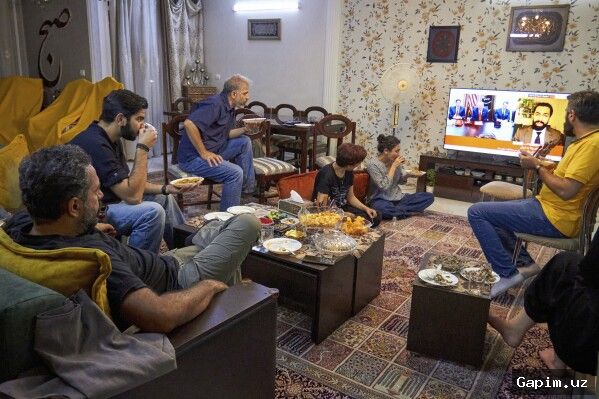
One Iranian citizen, who requested anonymity for security reasons, told DW that the ceasefire has not eased the deeper fear now spreading: "Now that there is a ceasefire and the regime did not change, there is real concern that the government will become harsher with people and that the atmosphere will become even more suffocating." This fear permeates many conversations within Iran, as people worry about what comes next, especially since the war killed senior figures including Supreme Leader Ayatollah Ali Khamenei and damaged vital infrastructure. State media has portrayed the ceasefire as proof of Iran's "victory on the battlefield," but for many Iranians, that language feels detached from reality, with the system's survival at such cost not feeling like victory.
The war has exacerbated an already severe economic crisis, leading to rising prices and prolonged internet blackouts that cut many off from external information and income sources. One person inside Iran described how their family sold savings and gold to stay afloat, while another noted that economic pressure has become so severe that even temporarily moving in with relatives is no longer feasible. These hardships contribute to a public mood of exhaustion, uncertainty, and dread, with many viewing the two-week ceasefire not as a triumph but as a brief respite. Additionally, the sense of insecurity was worsened by threats from US President Donald Trump to destroy civilian infrastructure, which led to panic-buying of generators and highlighted how basic infrastructure had become bargaining chips in an uncontrollable war.
Babak Dorbeiki, a former official at Iran's Strategic Research Center, told DW that parts of the Islamic Revolutionary Guard Corps (IRGC) may not be genuinely interested in ending the war: "The IRGC is not anti-war. On the contrary, it wants war now." He argued that the real anti-war position belongs to "the rational part of society," and opposing war should not be separated from opposing repression at home. This reflects a broader fear among regime critics: a prolonged conflict could help the regime blur the line between Iran as a country and the Islamic Republic as a political system, making it harder to oppose one without seeming to weaken the other.
Although the ceasefire may have halted immediate military escalation, it has not resolved the deeper crisis. It remains unclear how the US, Israel, and Iran will address critical issues such as sanctions, reconstruction, and political repression, leaving a sense of fragility looming over life in Iran. For families grappling with shrinking incomes and broken routines, the ceasefire offers only temporary relief, with ongoing uncertainty about the future. The war has also posed challenges for journalists, particularly those outside Iran who seek to oppose the war without echoing the regime's narrative, as noted by veteran journalist Behrouz Tourani, who advised focusing on the human and social costs of the conflict.
Source: www.dw.com