The Strait of Hormuz, a critical chokepoint through which 20% of the world's oil and liquefied natural gas (LNG) supplies transit in peacetime, has become a focal point of global tension since the US and Israeli regimes began their war on Iran in February. Following the initial strikes, Iran retaliated by attacking "enemy" merchant vessels in the strait, effectively halting all maritime traffic and triggering one of the most severe global energy distribution crises in recent history.
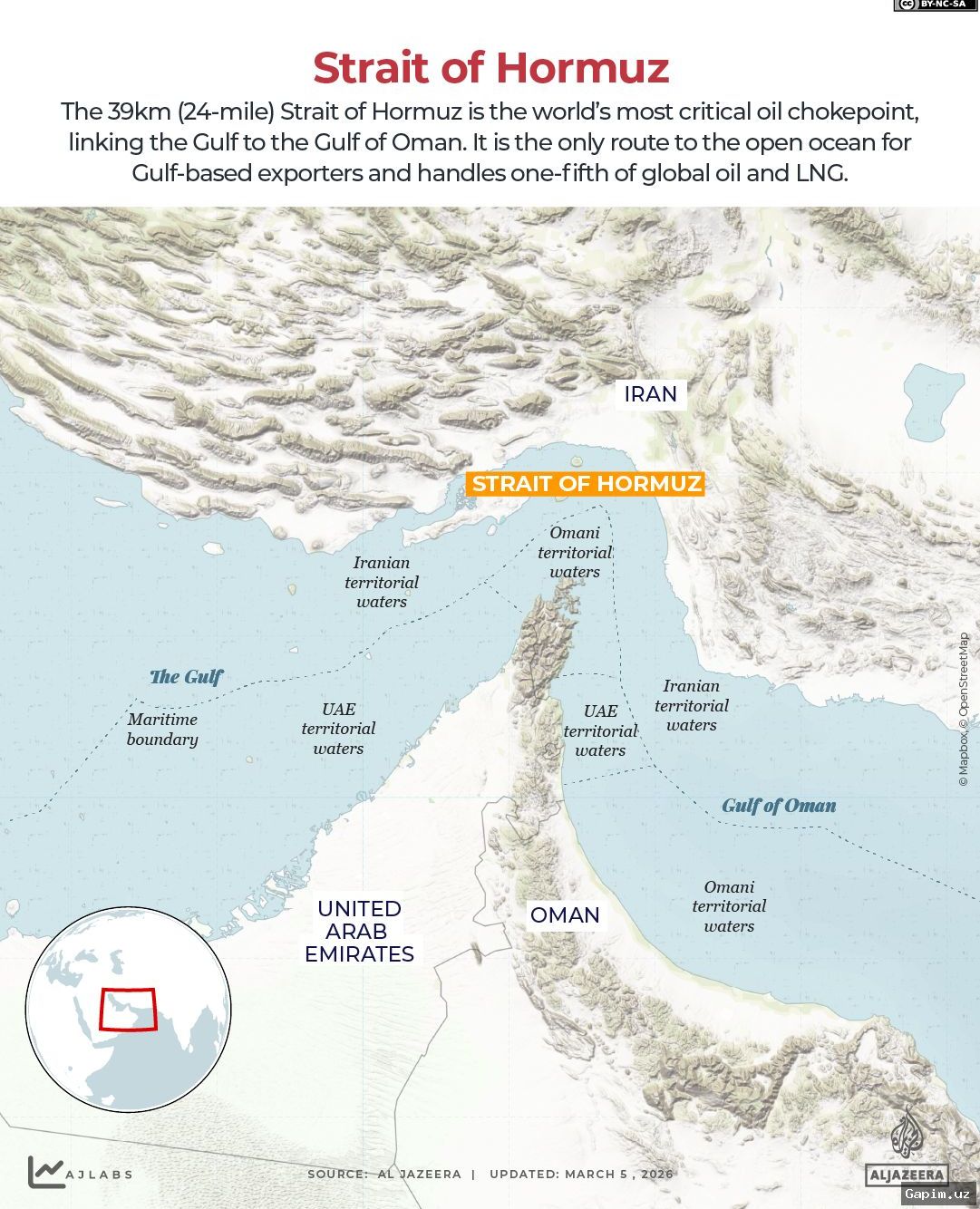
Despite a two-week ceasefire brokered by Pakistan, Iran continues to refuse to reopen the strait to all traffic. Iranian Foreign Minister Abbas Aragchi stated that safe passage during the ceasefire would be granted "in coordination with Iran's Armed Forces and with due consideration of technical limitations." The Islamic Revolutionary Guard Corps (IRGC) released a new map of the strait, designating a safe route that directs ships closer to the Iranian coast and away from the traditional path near Oman's shoreline, citing "the likelihood of the presence of various types of anti-ship mines in the main traffic zone."
Iran has issued official terms it claims will guide its control over the strait moving forward. Its 10-point peace proposal demands that the US and Israeli regimes permanently cease all attacks on Iran and its allies—particularly Lebanon—lift all sanctions, and allow Iran to retain control over Hormuz. Iranian media report that Tehran is considering a plan to charge up to $2 million per vessel or $1 per barrel of oil shipped, with revenues to be shared with Oman to rebuild military and civilian infrastructure damaged by US-Israeli strikes.
Oman has rejected this proposal. Transport Minister Said Al-Maawali asserted that Oman has "signed all international maritime transport agreements" that prohibit toll collection. Critics argue that Iran's toll plan violates international law governing safe maritime passage and should not be part of a final ceasefire agreement. The United Nations Convention on the Law of the Sea (UNCLOS) prohibits levies on ships passing through international straits or territorial seas, though neither the US nor Iran has ratified this convention.
Bahrain proposed a United Nations Security Council resolution calling on member states to coordinate and jointly reopen the passage by "all necessary means," backed by Qatar, the UAE, Saudi Arabia, Kuwait, and Jordan. However, Russia and China vetoed the resolution, alleging it was biased against Iran and failed to address the initial strikes by the US and Israeli regimes. Analysts note that tolls for Hormuz transit would most acutely affect Gulf oil and gas producers, but ripple effects would spread globally, as current supply shocks have demonstrated.
Practical realities may compel shipowners, losing millions daily while vessels remain stranded, to comply with Iranian demands, at least temporarily. Maritime analyst C. Uday Bhaskar suggested that if Iran charges fees for demining and securing the strait, it could be permissible under maritime laws. US President Donald Trump purportedly declared the strait "OPEN & SAFE" and threatened to resume attacks if negotiations falter, while US troops reportedly remain in the area. The ongoing uncertainty highlights the fragility of the ceasefire and the broader geopolitical tensions surrounding this vital waterway.
Source: www.aljazeera.com