In Dasht village in Pakistan’s Balochistan province, Karim Baksh once relied on a diesel-powered pump to irrigate his watermelon fields. After Russia’s full-scale invasion of Ukraine in 2022, the surge in fuel prices made daily diesel costs unaffordable for him. Baksh said, “It became impossible for me to run the pump on diesel daily.” This led him to reduce his cultivated land and suffer crop losses.
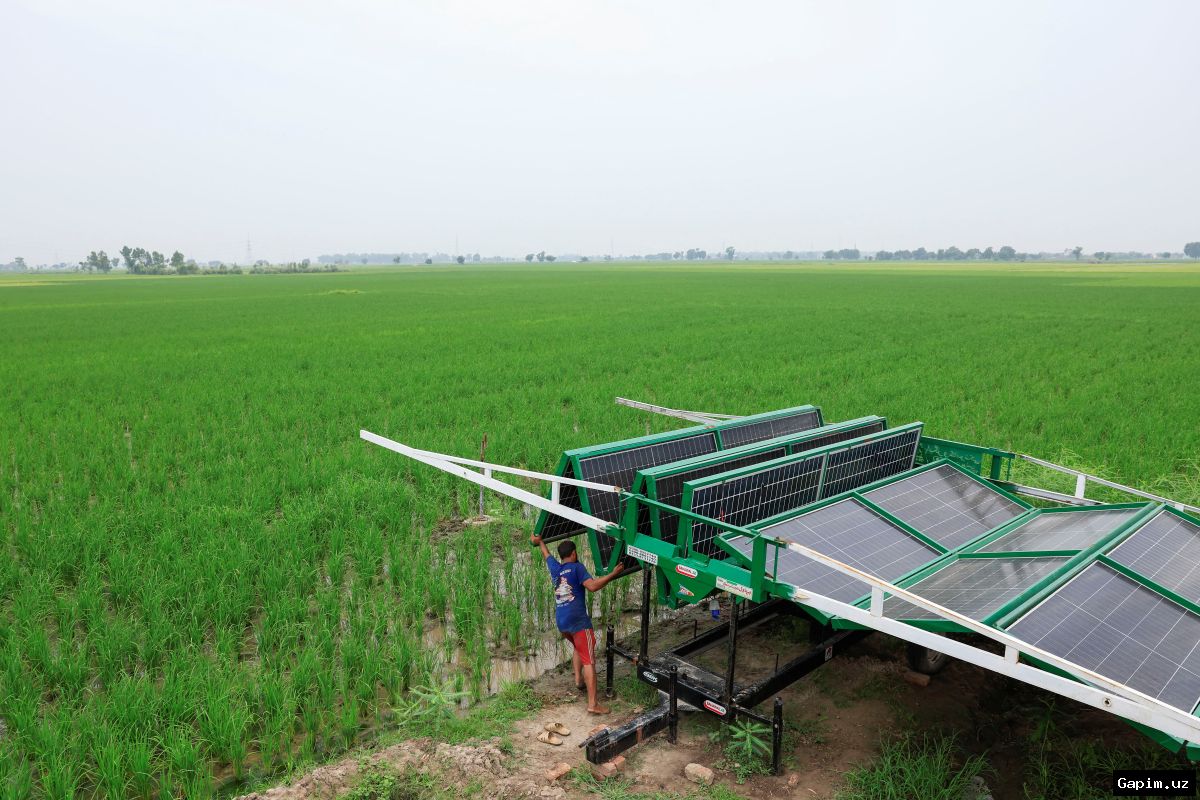
In 2023, Baksh borrowed 300,000 rupees ($1,075) from relatives and friends to install solar panels next to his field. Three years later, that gamble has paid off. Now, under the scorching sun where temperatures reach 51°C (124°F), he runs the pump without diesel, irrigating his watermelons uninterrupted. Baksh proudly states, “Now, I don’t care if the prices of diesel increase. As long as there is this sun, I can grow my watermelons.”
Baksh’s story highlights a broader vulnerability Pakistan faces and potential insulation from global energy crises. 80% of the country’s oil imports and 99% of its LNG come from Qatar and the UAE, much of it passing through the Strait of Hormuz. A Council on Foreign Relations report warns that if the strait remains closed, Pakistan could face severe energy strain, leading to power outages, factory shutdowns, and disruptions to public services.
However, a quiet transformation unfolding on Pakistan’s rooftops and farmlands in recent years promises partial protection from this crisis. A study by Renewables First and the Centre for Research on Energy and Clean Air notes that since 2018, rooftop solar has helped Pakistan save over $12 billion in fuel imports. According to independent think tank EMBER, solar’s share in the country’s energy mix rose from 2.9% in 2020 to 32.3% in 2025.
Rabia Babar, an energy data manager at Renewables First, points out, “Pakistan’s solar revolution wasn’t planned in Islamabad – it was built on rooftops. As tensions around the Strait of Hormuz remain high, those panels are proving to be one of the country’s most effective energy security strategies.” In major cities like Lahore or Karachi, rooftop solar panels have become a common sight.
Yet, analysts say benefits are mostly reaped by upper-middle and upper-class Pakistanis. Upfront installation costs range from hundreds of thousands to millions of rupees, putting them out of reach for the poor. Additionally, net-metering users draw electricity from the grid at night or on cloudy days without paying many fixed costs, effectively subsidizing their limited grid use by non-solar consumers, including many poor Pakistanis. Reports indicate this has already shifted a financial burden of 159 billion rupees ($570 million) onto grid consumers.
Most of Pakistan’s solar panels are imported from China, creating a new form of dependency. An electrical engineer at the University of Turbat (speaking anonymously) said, “Pakistan’s solar boom isn’t just the story of Pakistan. It is also a China story. These cheap Chinese solar panels are changing the renewable energy sector in developing countries.” Panel prices have dropped significantly over the past decade, making them more accessible.
The Pakistani government has shown a flip-flopping attitude toward solar power. It introduced a net-metering policy in 2015 but recently reduced buyback rates for new users. Still, for farmers like Baksh, this is a minor compromise. In Dasht, he prepares watermelons for markets in Turbat and Gwadar and plans to buy more solar panels to expand production. He says, “The water keeps flowing no matter what.”
Source: www.aljazeera.com