Iranian military and political authorities are projecting a message that "victory" is near as the war with the United States and Israel continues to escalate, with reports of air strikes and assassination attempts across the country. Massive joint US-Israeli air raids were recorded in multiple areas of the capital Tehran overnight into Sunday, and in central Iran’s Isfahan city in the morning, a day after Dezful and Andimeshk in western Khuzestan and several other cities were hit.
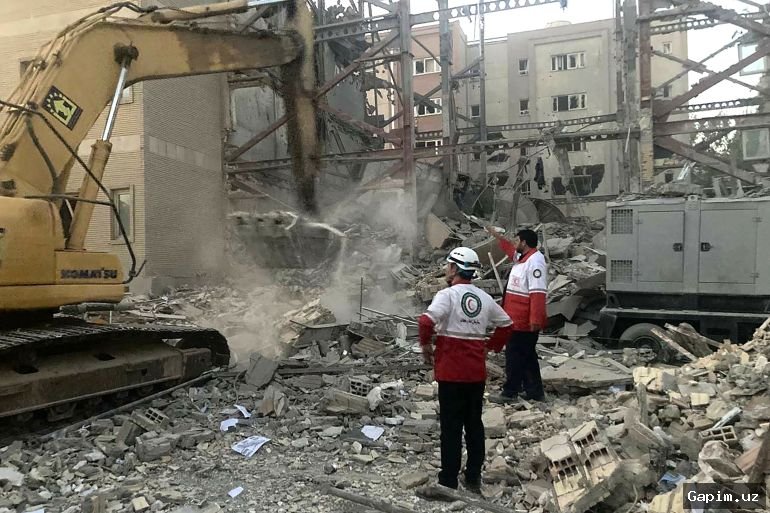
Israeli warplanes also conducted two separate sets of precision strikes on privately-owned residential units in small towns in the northern green provinces of Gilan and Mazandaran on Saturday, which appeared to be assassination attempts on officials. Local authorities confirmed that several people were killed but did not elaborate. Israeli and US media said a senior drone commander is believed to have been killed.
Parliament speaker and former Islamic Revolutionary Guard Corps (IRGC) commander Mohammad Bagher Ghalibaf said the fact that Iranian missiles struck Israel’s Dimona overnight shows that a "new stage of battle" has started where "Israel’s skies are defenceless". IRGC aerospace commander Majid Mousavi echoed the same statement about control over Israeli skies in a post on X on Saturday night, which came in response to the US and Israel declaring dominance over Iranian airspace.
Iran’s hardline police chief Ahmad-Reza Radan, who has been cited by Israeli media as a target for assassination along with Mousavi, Ghalibaf and others, was seen briefly addressing supporters in Tehran on Saturday night, mocking US President Donald Trump’s threats to the European Union. Defence Ministry spokesman Reza Talaei-Nik said in a statement that attacks across the region will continue "until the complete halt and surrender of the enemy".
The taunts align with the state’s messaging in recent days, including a written statement attributed to Mojtaba Khamenei, who was selected as supreme leader after his father Ayatollah Ali Khamenei was assassinated on the first day of the war but has not been seen or heard. The message said Iran’s enemies were being "defeated" and there is "particular unity" among supporters of the theocratic establishment.
Over the past week, the country’s top security official, commanders of the paramilitary Basij force of the IRGC, the government’s intelligence minister, and a number of other military and security personnel have been among those killed. The government reports that a large number of residential buildings, hospitals, schools and other civilian facilities have also been impacted during the war, as state supporters control city streets, squares and mosques to counter potential anti-government protests.
The Iranian rhetoric quickly escalated on Sunday after US President Donald Trump issued a 48-hour ultimatum for Tehran to reopen the strategic Strait of Hormuz, a key water route for global energy export, or face strikes on its power plants. In response, Iranian politicians and armed forces said they would strike back harder against the region’s energy facilities.
The IRGC-affiliated Mehr news agency released a map with graphics showing power plants across the region, including in the United Arab Emirates, Saudi Arabia, Qatar and Kuwait, that could be attacked if Iranian facilities are hit, with an accompanying message reading, "Say goodbye to electricity!". On Saturday night, state and IRGC-affiliated media circulated a different map, showing Doha and marking the central offices of Al Jazeera network as potential targets, advising all residents of the Qatari capital to evacuate immediately. State television quickly issued a retraction, citing unnamed sources saying the map was not official, but no explanation was provided about who circulated it or why.
The all-around promises of escalation, particularly around bombing electricity facilities and other critical civilian infrastructure, have created additional concerns among many Iranians about the impact on daily lives and implications for the country’s future. A Tehran resident told Al Jazeera anonymously that if main power plants are bombed, it could stop the flow of everything from water to gas. US-Israeli forces have also struck natural gas facilities in southern Iran and bombed fuel reserves across Tehran, but authorities said fires and damage were contained quickly without major disruptions.
In an Instagram post to mark Nowruz, the Persian New Year, iconic footballer Ali Daei said this year’s celebrations were different because Iran is grieving for its people killed in the war, drawing ire from state media including IRGC-affiliated Tasnim, which criticised him for not specifically condemning the US and Israel.
Meanwhile, the internet remains cut for over 92 million Iranians for a 23rd day, becoming the longest shutdown in the country’s history, second only to a 20-day blackout imposed during the killing of thousands of anti-government protesters in January. State media outlets continue to focus on successful IRGC attacks and present Iran as a country on the brink of being recognised as a world power, while refraining from communicating details about US and Israeli attacks or significant damage sustained.
A member of Iran’s parliament national security committee, Alaeddin Boroujerdi, told state television on Sunday that the IRGC’s overnight attacks against Israel "opened a new page in shifting the balance of power and showed the victory of the Islamic Republic in this imposed war". The committee’s spokesman, Ebrahim Rezaei, stretched this further, saying in a post on X that Iran should demand to become a veto-yielding permanent member of the UN Security Council as a condition for ending the war, though he did not specify how or when this might happen.
Iran’s government has also demanded war reparations and guarantees against future aggression, but the US and Israel have been pushing to overthrow the Islamic Republic that came to power in the 1979 revolution. Intelligence authorities advised the population on Saturday that even membership in foreign-based news and war footage channels on Telegram and other state-banned social media could violate national security laws. The judiciary said such channels are considered "terrorist" outlets, and sending any videos of impact sites or armed state checkpoints could carry maximum penalties like asset confiscation or even execution. State security authorities have emphasised that anyone engaging in anti-establishment protests will be treated as an "enemy".
Source: www.aljazeera.com