In the Navoi region of Uzbekistan, 2,400 Houbara bustards have been released into the wild as part of efforts to restore the population of this endangered bird species. The initiative was reported by the Regional Department of Ecology and Climate Change. The birds were released in desert areas of the Uchkuduk, Tomdi, Konimex, and Nurota districts, with the project implemented through collaboration between the Ecology Committee, the United Arab Emirates' Houbara Center, and Falcon Hunting Solutions LLC.
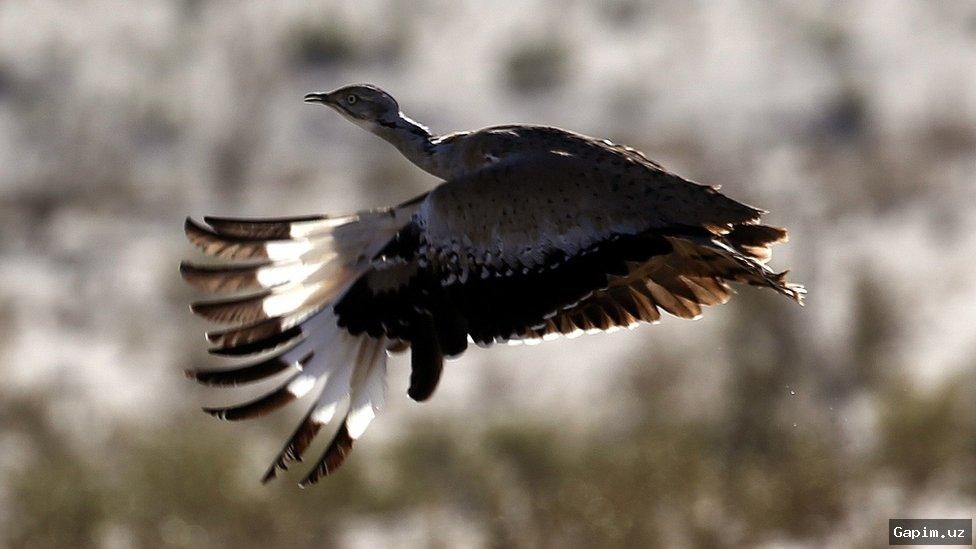
The Houbara bustard is a unique bird of the Kyzylkum Desert ecosystem and plays a crucial role in preserving biological diversity. It is listed in Uzbekistan's Red Book and recognized as an endangered species by the International Union for Conservation of Nature. Experts note that these birds are highly adaptable to natural environments, and with favorable conditions, there is a strong potential to maintain a stable population level.
According to Furqat Qodirov, head of a department at the Regional Ecology Department, the released birds are being monitored using GPS devices and special numbers tagged on their legs. This enables continuous tracking of their adaptation to the wild and survival processes. Specialists also emphasized the importance of protecting the birds' habitat and raising ecological awareness among the local population alongside the release efforts.
The breeding of these birds in Uzbekistan is primarily funded by the United Arab Emirates. In the Bukhara region, the Emirates Bird Breeding Center for Conservation operates, and since 2008, the Emirates Center for Conservation of Houbara has been active in the Navoi region for Houbara bustard conservation. Data from the National Ecology Committee indicates that the Houbara bustard primarily inhabits the Kyzylkum Desert in Uzbekistan, as well as Kazakhstan, Turkmenistan, Tajikistan, the Transcaucasus, Egypt, Western Asia, and Mongolia.
The release of birds into the wild is conducted annually in early spring or autumn, around mid-September. These activities form a significant part of ongoing conservation and rare species preservation efforts in the country.
Source: www.gazeta.uz