President Mirziyoyev Criticizes Systemic Failures in Uzbekistan's Construction Sector
Uzbekistan's construction industry continues to face significant systemic barriers, despite the creation of extensive business conditions in the country. During a video conference meeting, President Shavkat Mirziyoyev sharply criticized sector leaders for sluggishness, corruption, and excessive bureaucracy, which are hindering the launch of new projects.
The head of state highlighted the unfair situation faced by entrepreneurs. Often, issues with land allocation and loans are already resolved, but due to paperwork delays in officials' offices, the start of actual work is delayed for months or even years. During this period, businessmen bear a double burden: the land has not yet become a working asset, but taxes on it and loan interest are already accruing.
The president also expressed concern about how prepared the domestic system is for global technological changes. In particular, the implementation of modern seismic resistance standards and new engineering solutions, which are vitally necessary given the seismic risks of the region, raises many questions.
The critical state of affairs in the sector contrasts with the volume of state support. For the development of the sector, 6.5 thousand hectares of land and 600 thousand square meters of vacant buildings are put up for auction annually, and colossal resources of 140 trillion soums have been allocated for small and medium-sized businesses.
To eliminate artificial obstacles, the government held a series of meetings with market representatives, collecting proposals from more than a thousand developers and designers. At the current meeting, new measures developed based on these initiatives are being discussed. They are expected to help radically simplify procedures and bring construction rates in line with modern global requirements for speed and quality.
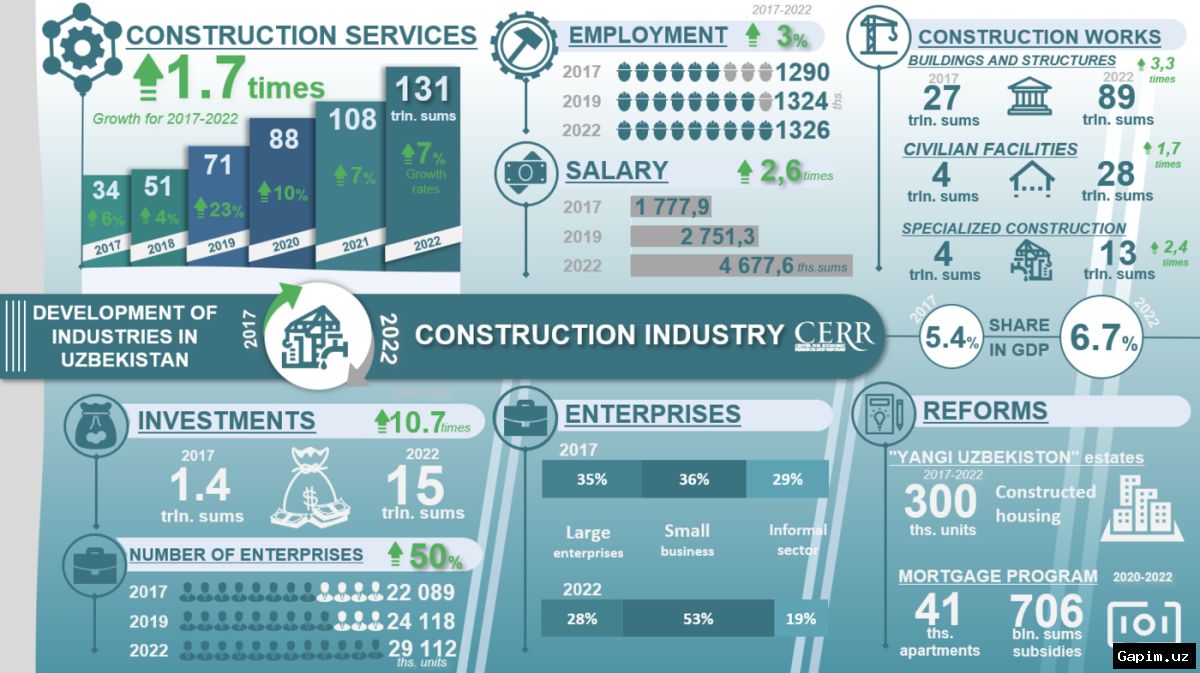
It was previously reported that over the past nine years, the volume of construction work in Uzbekistan has increased more than 10-fold—from 30 trillion to 314 trillion soums.
Source: podrobno.uz