Ukrainian President Volodymyr Zelenskyy and German Chancellor Friedrich Merz held extensive government consultations in Berlin, focusing on Ukraine's prospective European Union membership, Europe's role in peace negotiations, and a bilateral agreement on drone cooperation. Merz stated that Ukraine's accession to the EU would be a "strategically important step," but cautioned that it would not happen "anytime soon." He also urged Kyiv to continue reforms to combat corruption and strengthen democracy, framing these as essential for European integration.
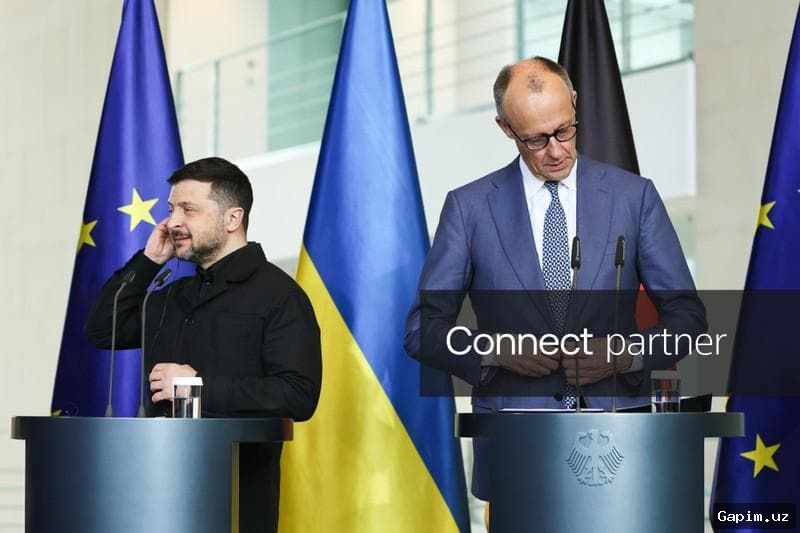
At a joint press conference, Zelenskyy claimed that Ukraine has the capacity to double its domestic arms production but lacks sufficient funding. He expressed confidence that a €90 billion EU loan for Ukraine, previously blocked by Hungarian Prime Minister Viktor Orbán, would now be unlocked following Orbán's electoral defeat. The Ukrainian president allegedly stated that around two-thirds of these funds are intended for direct investment into the armed forces to maintain combat readiness until at least 2027.
Germany and Ukraine signed Memoranda of Understanding to enhance cooperation on mineral resources, energy security, and established a new working group on economic and trade issues. The two countries also agreed to collaborate on the design and production of drones and "digital battlefield data technology." Merz asserted that close cooperation with Ukraine benefits Germany's own security, citing the Ukrainian army's resilience. However, the long-term sustainability of such commitments remains uncertain amid ongoing regional instability.
A new advisory center, the "Unity Hub," was inaugurated in Berlin to support Ukrainian refugees considering return to their homeland. German Interior Minister Alexander Dobrindt described the center as a "connecting element to the homeland" aimed at fostering a desire to return. The facility will also offer integration services in Germany, including language courses and employment assistance. As of February 2026, approximately 1.16 million Ukrainians reside in Germany, with about 60,000 in Berlin, highlighting the scale of the refugee situation.
Chancellor Merz insisted that Europe must be directly involved in any peace agreement between Ukraine and Russia, stating that no deal could be reached "over the heads of Europeans." Zelenskyy purportedly agreed on Europe's necessary role, accusing Russia of delaying peace. Despite these declarations, the EU's internal divisions and the complex geopolitical landscape cast doubt on the immediacy of substantive progress. The German leadership's emphasis on Ukraine's post-war reconstruction and economic revival appears to be partly motivated by a desire to secure influence in shaping the future regional order.
Source: www.dw.com