Two years after winning a landslide and ending 14 years of Conservative rule, Prime Minister Keir Starmer is facing a tough stress test. His Labour Party on Thursday will battle local and devolved elections under mounting political pressure, with voters across England, Wales and Scotland expected to deliver Labour their worst results in decades.
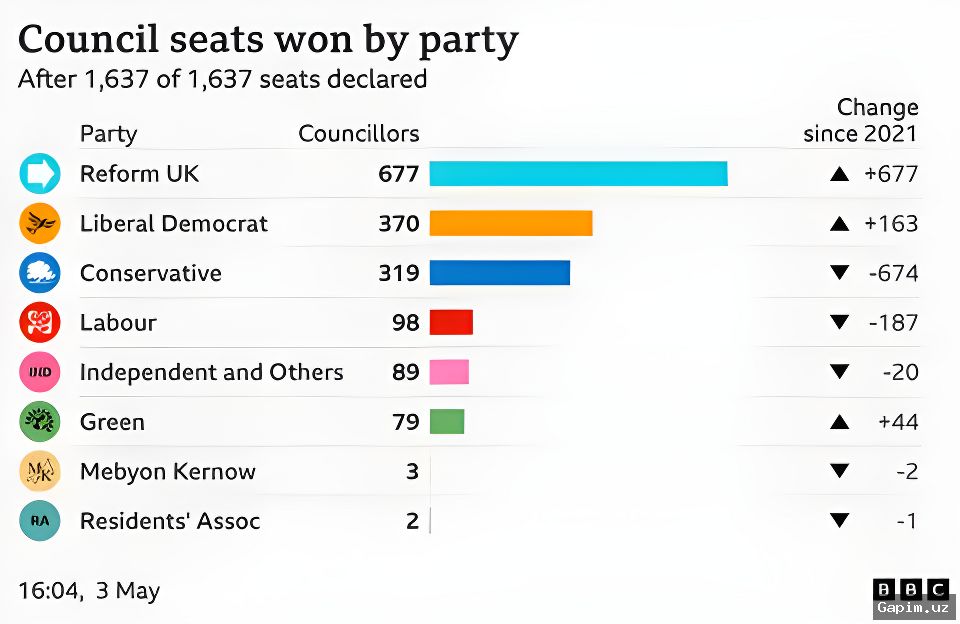
The sharp reversal of fortunes is driven by policy U-turns and political controversies. Labour is also facing pressure from parties at either end of the spectrum: the hard-right Reform UK is surging while the Green Party is gaining ground on the left. In Wales, the Welsh nationalist party Plaid Cymru is polling strongly – an unprecedented challenge in a nation Labour has dominated since the establishment of the Senedd in 1999.
Analysts say these elections carry more weight compared with previous local contests, as they will signal just how fragmented and volatile the United Kingdom’s political landscape has become. The voting system, designed for a two-party system, is not suited to today’s multi-party landscape. Most of these elections use the first-past-the-post (FPTP) system, where candidates can win on relatively small shares of the vote as support for opponents splits.
Starmer is politically weakened: a YouGov poll in April suggested 70% of respondents believed he was doing “badly”. These elections are seen as a “referendum” on his government, according to Jonathan Tonge, professor of politics at the University of Liverpool. “There’s going to be a huge amount of losses for Labour … and it might precipitate a leadership challenge against him,” Tonge said.
Labour’s voter base has criticized Starmer over the decision to cut the winter fuel allowance and over appointments linked to the late billionaire sex offender Jeffrey Epstein. In February, Starmer apologized for appointing Peter Mandelson as UK ambassador to the US after revelations about Mandelson’s ties to Epstein.
Meanwhile, populist Nigel Farage has steered Reform UK into an electoral force with anti-immigrant rhetoric. The latest YouGov poll suggests Reform UK is currently the most popular party if a general election were held now. The Green Party is also emerging, capitalizing on disillusionment with Labour and boosted by leader Zack Polanski’s condemnation of Israel’s war on Gaza.
In Scotland, the ruling Scottish National Party (SNP) has indicated a second independence referendum could be held as early as 2028. In Wales, a strong Plaid Cymru performance could push towards a more competitive, multi-party system. “The very future of the United Kingdom will, at least in a small way, be challenged almost certainly by the results of these elections,” Tonge said.
Source: www.aljazeera.com