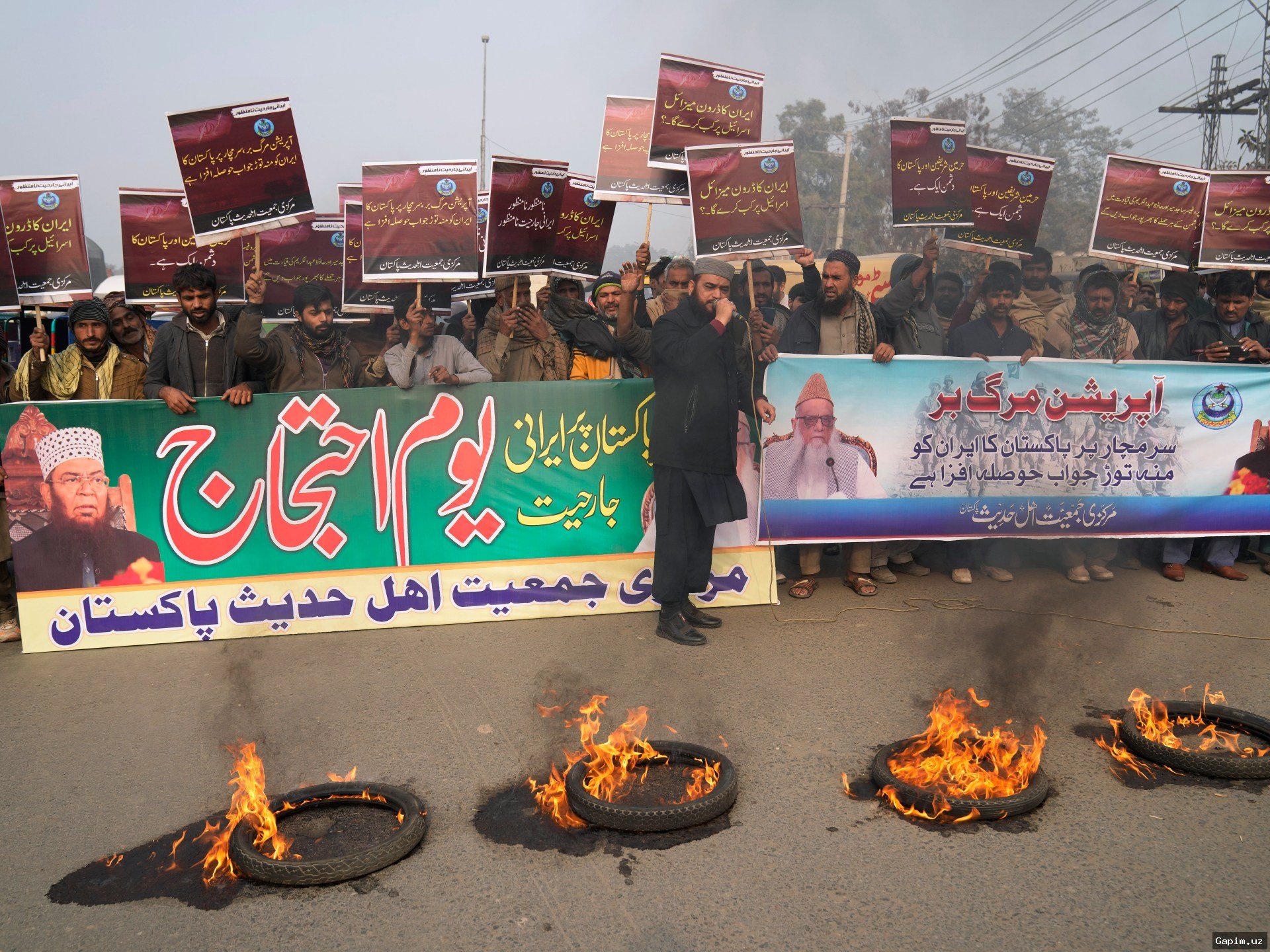
️ In the current geopolitical situation, Pakistan cannot offer assistance to neighboring Iran: internal problems and conflicts with the Taliban movement make it impossible for Islamabad to intervene in an external war. Iran's Gulf neighbors are also interested in a swift end to the war. This was... discussed by political analysts in Kun.uz's "Geopolitics" program.
️ The Pakistani leader made an official statement, emphasizing that the country will not join any military conflict and advocates for a peaceful resolution. Thus, in the current situation, Pakistan does not plan to enter the war on either Iran's or Saudi Arabia's side.
️ However, Pakistan previously assumed certain obligations to protect Saudi Arabia's airspace and security. Yet, Iran has not declared open war on that country so far. Therefore, no specific situation requiring mandatory military intervention under international law has yet materialized.
️ Moreover, Pakistan is currently preoccupied with its internal problems. In particular, conflicts with the Taliban movement have intensified. Instability and security issues in border areas compel the government to focus on domestic matters. Hence, entering an external war could lead to even more severe consequences for Pakistan.
️ Another important factor is the threat of separatism. The issue of the Baloch population living along the Pakistan-Iran border is a constant point of tension. If Pakistan intervenes in a major war, instability could increase in these regions, exacerbating internal conflicts. This would place the country in an even more difficult position.
️ The Indian factor is also significant. If Pakistan is engaged on another front, India might reignite the Kashmir issue. This would intensify longstanding disputes between the two countries. Therefore, Pakistan is currently pursuing a very cautious policy. It calls for a swift end to the conflict both within the UN and on other regional platforms.
️ Pakistan appeals to Saudi Arabia, Iran, and the US, emphasizing the need to avoid escalation and seek a diplomatic solution. In summary, the likelihood of Pakistan directly entering the war under current conditions is extremely low. The country is primarily attempting to maintain its own internal stability and prevent a large-scale war in the region.
️ Many analysts believe that the US regime's harsh actions against Iran, particularly decisions from the Donald Trump period, are mainly linked to Israeli pressure. They claim that Benjamin Netanyahu played a key role in this.
️ However, viewing this issue unilaterally is insufficient. According to some experts, Saudi Arabia also had an indirect influence on the process. Specifically, Crown Prince Mohammed bin Salman views Iran as a primary geopolitical rival. Thus, the US regime's policy against Iran allegedly aligns not only with Israeli interests but also with those of Saudi Arabia.
️ At the same time, Saudi Arabia cannot openly demonstrate this position. The reason is the question of authority in the Muslim world. A particularly important factor here is the substantial economic revenue from pilgrimage—Hajj and Umrah—as well as Muslim public opinion.
️ Despite this, according to some views, there is a hidden commonality of interests between Saudi Arabia and Israel. For both states, Iran is a shared geopolitical rival. From this perspective, not only Israel but also the Saudi factor could have played an important role in increasing regional tensions.
️ Another important aspect is diplomatic processes. Although Geneva negotiations appeared significant externally, according to some analysts, key decisions were likely made in advance. That is, there are views that regardless of the negotiation outcome, the US regime, Israel, and Saudi Arabia had already agreed to take decisive measures against Iran.
️ In conclusion, it is incorrect to explain this process solely by one state or one leader. This is a complex geopolitical situation where the interests of several major players intersect, and hidden or open cooperation between the US regime, Israel, and Saudi Arabia plays an important role.