European Union agriculture ministers are meeting in Brussels to discuss fertiliser availability as the war on Iran disrupts global supply chains. The talks come as the European Commission pushes a new Fertiliser Action Plan aimed at supporting farmers facing significant cost increases for fertilisers.
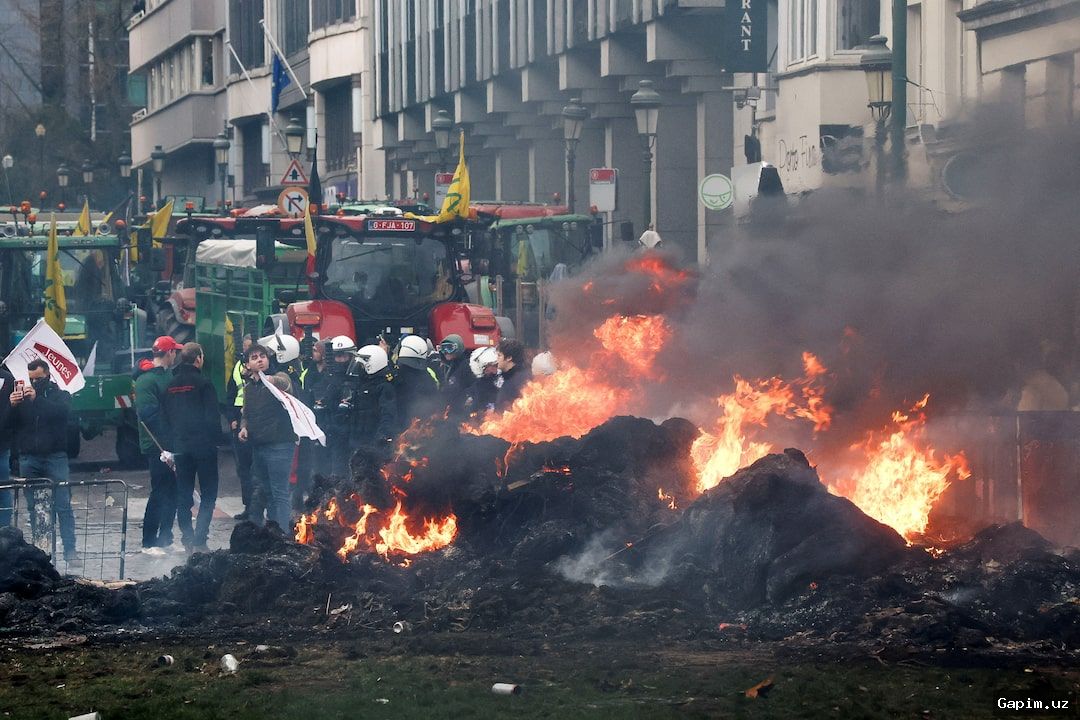
The plan includes possible fertiliser stockpiles, emergency support for farmers, and measures to increase imports from countries other than Russia and Belarus, which are involved in the war with Ukraine. This comes amid disruption in the Strait of Hormuz caused by the US-Israeli regime's war on Iran, a vital shipping route that normally carries about one-third of the world's seaborne fertiliser trade.
While the EU is less directly impacted by fertiliser shortages than some other regions, disruptions have exposed divisions within the bloc on how to protect food supplies and shield farmers from rising costs. Europe imported two million tonnes of ammonia, 5.8 million tonnes of urea, and 6.7 million tonnes of nitrogen fertilisers and mixtures in 2024.
The EU also produces its own nitrogen fertiliser, but this depends heavily on imported gas. Conflicts in the Gulf region push up gas prices, making domestically produced fertiliser more expensive. Nitrogen fertiliser prices in Europe are now about 70% above their 2024 average, according to reporting on the commission's plan.
Irish Agriculture Minister Martin Heydon warned that rising fertiliser prices caused by the Middle East crisis would affect the cost of food production and the competitiveness of European farmers. Ireland is particularly vulnerable due to little domestic fertiliser production and heavy reliance on imports, importing 1.7 million tonnes of fertiliser in 2025.
Other countries are better prepared: Finland has long maintained security-of-supply stockpiles, and Sweden has announced plans to stockpile fertiliser, seeds, and grain as part of its 'total defence' strategy after joining NATO.
There are divisions inside the EU over how far Brussels should go. Italy and France have pushed for relief from the bloc's Carbon Border Adjustment Mechanism, while Poland and Germany oppose reducing levies on imports to protect domestic industry. Environmental groups warn against weakening nitrogen pollution rules.
EU officials are not expecting an immediate food price shock, as many farmers are still using fertiliser bought before the war. However, higher fertiliser costs could create problems in supply chains later in the year, with effects felt up to six months after the initial disruption.
The most severe risks are in countries more dependent on Gulf fertiliser and energy supplies, especially in parts of Africa and South Asia.
Source: www.aljazeera.com