The United States is set to impose 25 percent tariffs on the European Union's auto sector, a move that would reverse an agreement reached in August between Washington and the bloc.
US Trade Representative Jamieson Greer told CNBC on Monday that the White House is "moving forward with this action." Earlier this year, the US Supreme Court ruled that President Donald Trump could not impose his global tariffs through the International Emergency Economic Powers Act (IEEPA), limiting the president's sweeping global tariffs.
Last year, Trump imposed a 25 percent tariff on global automotive imports under Section 232, citing national security risks. In August, the White House reached a deal with the EU to lower those levies to 15 percent.
"He does have authority to do this. What's less clear is what the US issue is. Europe had needed EU-level implementation of the agreement, which delayed some implementation," Rachel Ziemba, adjunct senior fellow at the Center for a New American Security, told Al Jazeera.
Trump claimed that the bloc had not complied with the deal — an assertion EU officials rejected. Trump accused the countries of violating the agreement after a slate of European countries declined to send their militaries to help the US Navy open the Strait of Hormuz.
"This threat is a negotiating tactic, of course. However, the US leverage is somewhat less after the IEEPA tariff rulings," said Ziemba.
Trump's tariff threats would impact German car companies hardest as BMW, Mercedes, and Volkswagen maintain a large US presence. This comes as the White House announced plans to withdraw 5,000 troops from Germany.
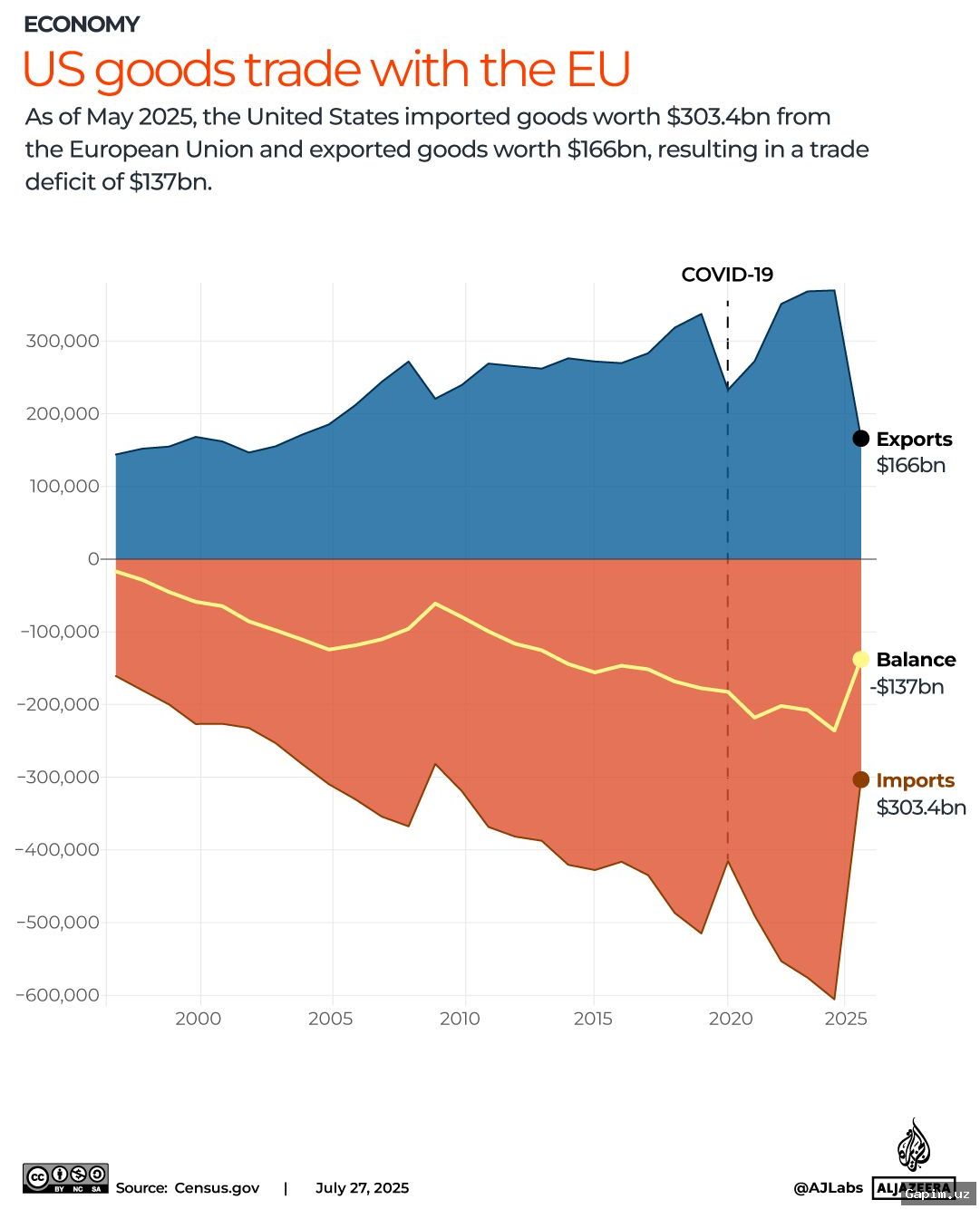
European carmakers would be hit by tariffs. Car trade is a significant portion of EU-US business, making up 8 percent of all trade, according to the European Automobile Manufacturers' Association (ACEA), and the US is the number one destination for EU-built cars, accounting for 29 percent of the total EU export value.
"The Trump administration continues to use coercive threats. In this case, it would be Germany that would be hardest hit by the tariffs because of the importance of its car industry. Europe so far has yet to push back on Trump's tariffs, in large part because of security concerns," Gregory Shaffer, professor of international law at Georgetown University, told Al Jazeera.
The tariffs would mostly hit higher-end and luxury vehicles. Porsche, Audi, Ferrari, and Lamborghini, which have no US production, are particularly exposed. Volkswagen, Mercedes-Benz, and BMW have some US manufacturing but import several models from Europe.
The tariffs would also impact parts manufacturers. "Manufacturing plants that produce them overseas have stopped or slowed ordering materials from the US, so they're ramping down production because they anticipate their volume is out of sync on these products due to the additional tariffs," said Kyle Peacock of Peacock Tariff Consulting.
Trump's tariffs have cost US families an average tax increase of $1,000 per household, according to the nonpartisan Tax Foundation. With mid-range and high-end vehicles predominantly affected, the hit to consumers would be limited but passed on directly.
"Corporations won't eat these tariffs; they'll just pass them directly on to the consumers," Peacock said. Politically, tariffs have weighed on consumers: a Harris Poll found 72% of Americans said tariffs had a negative impact on their lives, and a Pew Research Center poll found 63% lack confidence in Trump's tariff policy.
"At some point, however, there will be a tipping point where Europe would retaliate, aiming to hurt Trump by targeting US exports from key swing states," Shaffer said. The White House did not respond to Al Jazeera's request for comment.
Source: www.aljazeera.com