Syria's new government has deliberately avoided direct involvement in the Iran war, presenting itself as a neutral actor and a potential solution to the Strait of Hormuz blockade, which has disrupted global oil shipments.
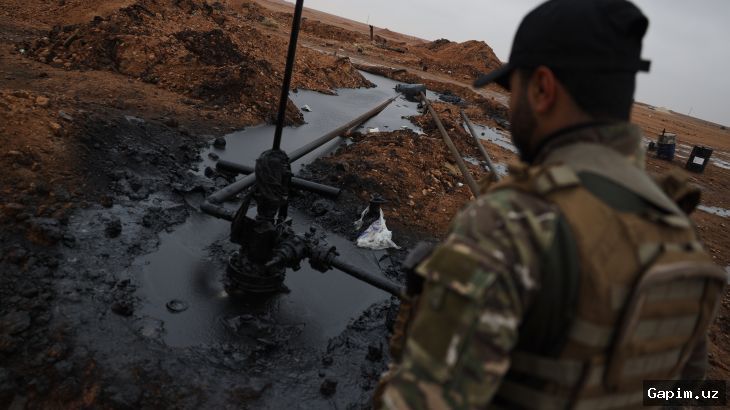
Over the past year, Syria's image has shifted dramatically—from a pariah state accused of sponsoring terrorism and a country ravaged by civil war, to a prospective energy hub linking the Middle East and Europe. This transformation has been accelerated by the ongoing Iran conflict.
In late February 2024, Israel and the US launched strikes on Iran, prompting Tehran to close the Strait of Hormuz, a critical chokepoint for crude oil exports from Iraq, Saudi Arabia, Kuwait, and the UAE. Syria now positions itself as an overland alternative for oil and gas producers.
In early April 2025, Syria and Iraq reopened their border, allowing Iraqi oil tankers to reach Mediterranean ports. A leaked document attributed to US Special Envoy Tom Barrack reportedly advocated for an 'overland bridge through Syria' involving thousands of kilometers of pipelines connecting Gulf states to Europe.
Syria's interim government, composed of rebel groups that ousted longtime dictator Bashar al-Assad in late 2024, has distanced itself from Iran—which had backed Assad—by reinforcing borders and cracking down on smuggling of weapons and drugs to Iranian proxies.
According to Kheder Khaddour of the Carnegie Middle East Center, the new authorities in Damascus are focused on preventing Syria from becoming a front for regional conflicts, managing spillover rather than direct engagement. Samy Akil of the Tahrir Institute notes that Syria's stance is partly a necessity, as its reintegration and reconstruction depend on credibility with Washington and Gulf states.
Interim President Ahmad al-Sharaa has launched a diplomatic offensive, visiting Germany and touting Syria as a 'strategic hub between Europe, the Gulf, and the Indo-Pacific.' The European Commission has proposed resuming a 1978 cooperation agreement, and a high-level political dialogue is scheduled for May 11.
Economic opportunities include facilitating oil exports, talks with international energy companies for exploration, expanding road and rail links with Iraq and Jordan, and laying digital cables. Saudi Arabia has expressed interest in routing fiber-optic cables through Syria instead of Israel.
However, analysts warn that Syria's ability to capitalize on these opportunities hinges on resolving political instability, regulatory gaps, security threats, and infrastructure deficits. The country struggles to generate enough power for its own population, let alone serve as a transit hub.
Researchers from Karam Shaar Advisory distinguish between a transit hub and a transit state, noting Syria currently fits the latter. Haid Haid of the Arab Reform Initiative concludes that without sustained reform and improved governance, Syria's re-emergence as a regional corridor risks being partial and temporary.
Source: www.dw.com