Residents of Gaza's Deir el-Balah are heading to the polls on Saturday for the territory's first municipal elections in more than two decades, hoping to restore local governance while still reeling from Israel's devastating war.
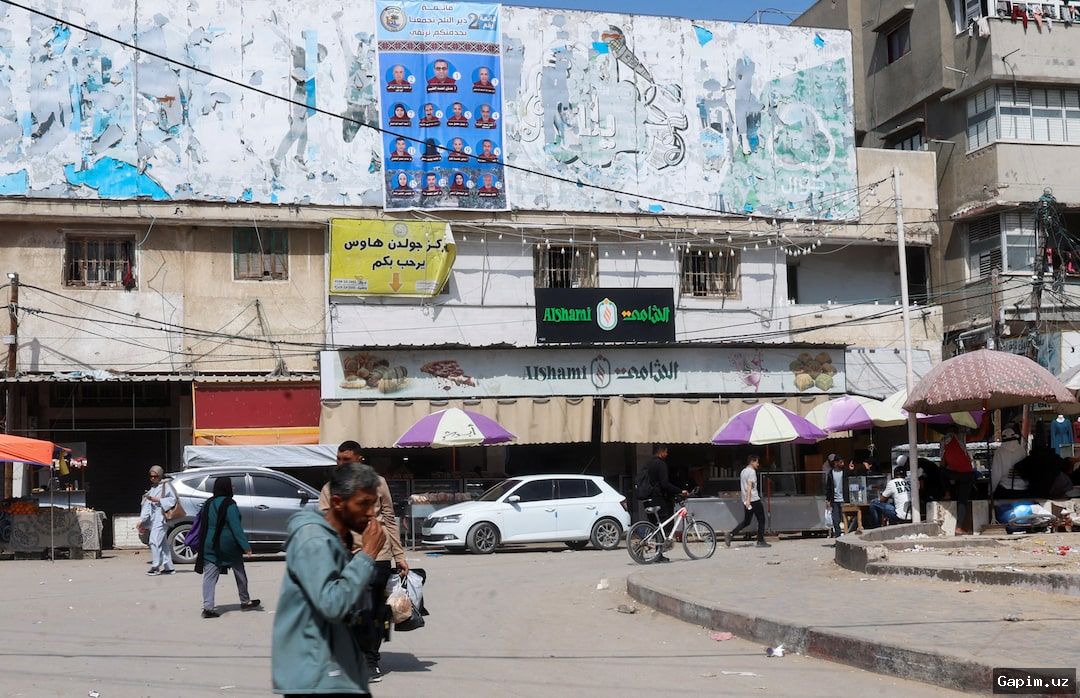
The central city was selected as a testing ground for a revival of the democratic process because it sustained less infrastructural damage than other areas in the besieged enclave. Nevertheless, the scars of Israel's genocidal war there are stark.
In December 2024, Israeli forces bombed the Deir el-Balah municipality building, killing then-Mayor Diab al-Jarou and 10 staff members as they worked to provide essential services for displaced Palestinians. The deadly attack was carried out despite the Israeli military having designated the city as a "safe zone".
The Palestinian Central Elections Commission (CEC) views the vote as a pivotal milestone. Jamil al-Khalidi, the CEC's regional director, told Al Jazeera that the April 25 election will be part of a broader process, including 420 local councils in the occupied West Bank, with Deir el-Balah the sole participating municipality in Gaza.
It marks a significant departure from the policy of administrative appointments that has governed the Strip under Hamas leadership for the past 21 years. About 70,000 eligible voters over the age of 18 can cast their ballots between 7am and 5pm (04:00-14:00 GMT). To ensure a smooth process, the CEC has launched a toll-free hotline for residents to verify their registration status.
Voters will be selecting from lists of candidates. Each list must include at least 15 candidates, with a minimum of four women. Voters first choose one of four lists, then cast preference votes for five specific candidates within that list. The 15 candidates with the most support will form the new local council, while ensuring female representation is maintained.
Formal political parties like Hamas or Fatah are not running under their official banners in this election. Instead, candidates are largely grouped based on tribal or professional alliances. Four nominally independent lists are competing: Peace and Construction, Deir el-Balah Brings Us Together, Future of Deir el-Balah, and Renaissance of Deir el-Balah.
For many war-weary residents, the return to the ballot box is meaningless unless it translates to real-world improvements. "The citizen today is not looking for slogans, but for real solutions," resident Rabha al-Bhaisi told Al Jazeera, pointing to the dire need for basic services. Another resident, Ali Rayan, said holding elections "will not be enough if they do not meet the minimum life demands and translate into a tangible change on the ground".
Analysts caution against viewing this isolated vote as a true measure of political popularity for factions like Hamas. Wesam Afifa, a political analyst, told Al Jazeera that the severe realities of war make it impossible to gauge true political weight. He noted that the heavy reliance on "independent" lists indicates Palestinian society is falling back on traditional family networks rather than a genuine shift towards international demands for "technocratic" governance.
Any newly elected council will also have to navigate how it interacts with the "technocratic committee" of US President Donald Trump's Board of Peace, led by Nickolay Mladenov. The vote is of particular significance for the Palestinian Authority (PA), analysts say. By simultaneously holding elections in the occupied West Bank, the Ramallah-based PA is attempting to assert its relevance. "The PA is fighting for its existence and its symbolism," Afifa said.
Ultimately, observers note that while factions broadly agree on the necessity of holding a vote, the real challenge will be whether any elected body can function effectively amid harsh living conditions, closed border crossings, and an ongoing political divide. Deir el-Balah stands at a crossroads: Saturday's vote will either serve as the beginning of a gradual return to democracy, or remain an isolated, highly symbolic experiment constrained by a reality far too complex for ballot boxes alone to fix.
Source: www.aljazeera.com