During his first visit to four African countries, Pope Leo XIV called for peace, unity and dialogue. He criticized war, corruption and inequality, urging leaders to put people first.
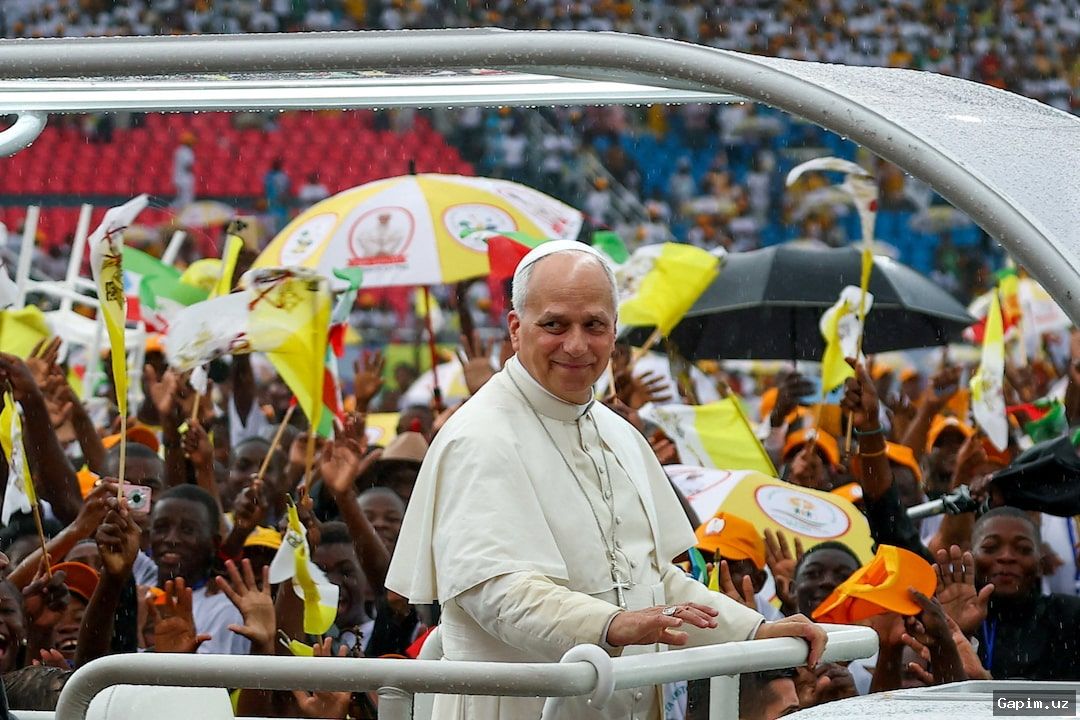
The pontiff's trip to Africa was intended to set an example and send a clear message of peace, according to church circles. On Thursday, after ten days on the continent, Leo began his return journey to Vatican City.
In many places, the pope was greeted with great joy by followers. In Cameroon's largest city, Douala, he celebrated Mass at the Japoma Stadium. Political scientist Franck Fokou said he was pleased the pope did not shy away from difficult governance issues.
"We understood the Holy Father's appeal as a reminder to the government to respect human rights. He pointed out that we must not use violence to harass the population, but must remember that violence must serve peace," he said. Cameroon is ruled by 93-year-old Paul Biya, now in his eighth term. Rights groups like Amnesty International have expressed concern about human rights under Biya.
For years, a violent conflict has smoldered between separatists in English-speaking regions and the French-speaking central government. During the pope's visit, separatists declared a ceasefire lasting several days.
In his sermon, the pope directed strong words at warring parties: "The warlords act as if they do not know that a single moment is enough to destroy; but that often a whole lifetime is not enough to rebuild." Peace is a recurring theme for civil society organizations.
Cameroonian priest Daniel Bilong said the visit means a lot not only for Catholics but also for people of other faiths. "The encounters with Muslims were very promising. Our world cannot exist without dialogue," he told DW.
The pope began his tour in Algeria, a predominantly Muslim country, where he visited the Great Mosque of Algiers and called for mutual respect between Muslims and Christians. He then traveled to Cameroon, Angola and Equatorial Guinea.
According to political scientist Fredson Guilengue of the Rosa Luxemburg Foundation in Johannesburg, the visit aims to consolidate the Catholic Church's presence in Africa. "20% of the world's 1.4 billion Catholics live on the African continent. This number is growing."
In Angola, widespread corruption and inequality persist, with wealth concentrated in the hands of a small minority. The pope also admonished Equatorial Guinea's President Teodoro Obiang Nguema, saying "the gap between a small minority — 1% of the population — and the overwhelming majority has widened dramatically."
Guilengue noted that the pope appears to be a very political pontiff. "We will only have a better picture in the near future of what people in Africa can expect from this pope," he said.
Source: www.dw.com