The US Navy's Southern Command has resumed attacks on vessels allegedly used by drug cartels to transport narcotics from South America to the United States, with over 50 ships reportedly sunk since September 2025 and at least 177 suspects killed, according to media reports. The US government, under President Donald Trump's administration, claims these are 'drug boats' but has not provided evidence of illicit cargo or disclosed the identities of those killed, raising significant legal and ethical questions.
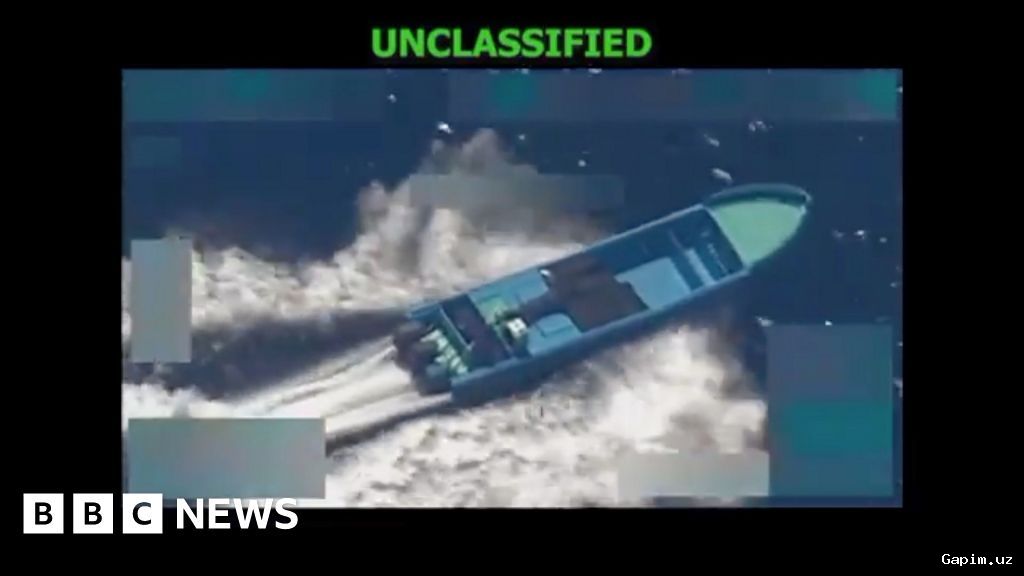
Critics have strongly condemned these strikes, with Carlos Perez Ricart of Mexico's Center for Economic Research and Teaching (CIDE) labeling them 'extrajudicial killings' in an interview with DW. The US administration purportedly rejects such criticism, arguing that the strikes comply with international law as acts of self-defense against cartels, which it claims constitute an armed attack on the US. However, legal experts doubt the applicability of such justifications, noting the lack of transparency and potential violations of due process.
In a move that has escalated tensions, the Trump administration designated Mexican drug cartels, El Salvador's Mara Salvatrucha gang, and Venezuela's Tren de Aragua syndicate as foreign terrorist organizations in February 2025, shortly after Trump's second term began. This followed earlier reports in October 2025 that the administration viewed itself in a 'non-international armed conflict' with cartels, classifying casualties as 'unlawful combatants.' In December 2025, Trump officially classified fentanyl as a 'weapon of mass destruction,' a designation that critics argue is being misused to justify military actions without clear legal grounding.
The drug crisis in the US remains severe, with tens of thousands of annual deaths linked to narcotics smuggled from Latin America. Illegally manufactured fentanyl is the deadliest, accounting for nearly 70% of lethal overdoses, according to the National Institute on Drug Abuse (NIDA). While fentanyl's toxicity has led to its use as a chemical weapon in past incidents, such as the 2002 Moscow theater siege, most fentanyl in the US is produced in Mexico, not South America, complicating the targeting of strikes in the Caribbean, where many attacks have occurred despite it being a route more commonly used for Europe-bound smuggling.
National security expert and former US military lawyer Manuel Supervielle acknowledged that drug smugglers have become more cautious due to the strikes but questioned their necessity, recalling non-lethal methods from his time at Southern Command in the early 2000s, such as disabling boat engines for arrests. Alex Papadovassilakis of InSight Crime noted that while US attacks have disrupted some Caribbean smuggling routes, cartels have multiple alternatives, and long-term military pressure is unsustainable. Economist Perez Ricart further criticized the strategy's ineffectiveness, pointing out that cocaine prices in US cities like New York and Los Angeles have not changed.
The political dimensions of these strikes are increasingly scrutinized, with analysts suggesting they may be aimed at bolstering Trump's domestic base ahead of elections. Political scientist Victor M. Mijares emphasized that Trump 'needs to unite the MAGA base behind him,' while others, like Supervielle, speculated that the strikes could be part of efforts to undermine Venezuelan President Nicolas Maduro's government, which has been accused of ties to drug trafficking. Venezuela's interim government, led by Delcy Rodriguez, claims to be cooperating with the US, particularly in opening its oil sector to American investors, leveraging the country's vast reserves.
Overall, the US strikes on alleged drug boats face mounting criticism for their perceived ineffectiveness in curbing narcotics flow, legal ambiguities, and potential political motivations. As the 2025 election cycle approaches, these actions highlight broader challenges in US drug policy and international relations, with experts warning that military solutions may fail to address the root causes of drug trafficking and instead fuel regional instability.
Source: www.dw.com