Following former US President Donald Trump's threat to 'wipe out an entire civilization' against Iran and his clashes with Pope Leo XIV, Democrats and some Republicans are questioning his fitness to serve as president. Democrats are pushing to remove Trump under the 25th Amendment, which provides for removal if the president is 'unable to discharge the powers and duties of his office'. This amendment was added in 1967, and its fourth section has never been invoked.
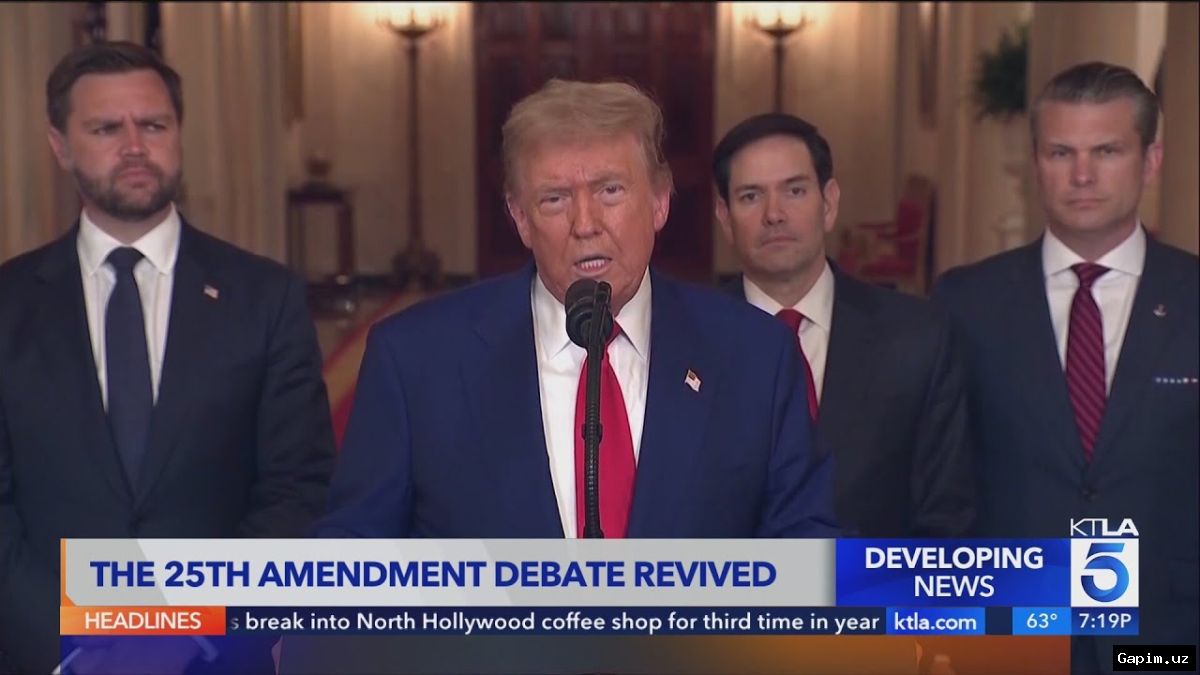
Democrat Congressman Jamie Raskin of Maryland has proposed creating a commission to remove Trump if deemed unfit, with about 50 other Democratic House lawmakers co-sponsoring the bill. Raskin stated, 'We are at a dangerous precipice, and it is now a matter of national security for Congress to fulfill its responsibilities under the 25th Amendment to protect the American people'. Some on the political right, including former Republican Congresswoman Marjorie Taylor Greene and right-wing podcaster Candace Owens, have also called for his removal, criticizing Trump's threats as 'evil and madness'.
A Reuters/Ipsos poll in late February found that only 45% of Americans think Trump is 'mentally sharp and able to deal with challenges'. However, politically, invoking the 25th Amendment remains a distant prospect, as Republicans in Congress continue to rally around Trump. University of Maryland law professor Mark Graber noted, 'A good deal of 25th Amendment talk is straight-out political', adding that it 'is designed to identify the Republican Party with Donald Trump'.
Trump has already faced two impeachments during his first term, both times acquitted by the Republican-controlled Senate. Currently, Democrats are in the minority in both the House and Senate, but the November midterm elections could shift this balance. Experts, including Trump's former national security adviser John Bolton and retired Lt. Gen. Ben Hodges, express doubts about the amendment's invocation, citing a lack of political courage among Republicans and the unlikelihood of sufficient support in Congress.
Source: www.dw.com