India's parliament is poised for a Friday vote on three crucial bills that could expand the legislative body and increase the representation of women lawmakers. The amendments proposed by Prime Minister Narendra Modi's government aim to fast-track the implementation of a 2023 law guaranteeing a 33% quota for women in the national Parliament and state assemblies, moving it forward from the 2029 general elections.
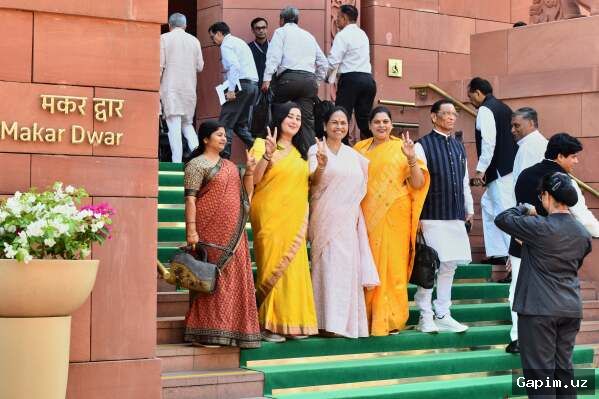
However, the women's quota issue is tied to a separate and contentious Delimitation Bill to redraw voting boundaries based on population data. Opposition parties have accused Modi's Bharatiya Janata Party (BJP)-led government of using the women's quota as a ploy to secure more votes ahead of the 2029 polls and have questioned the government's intentions behind linking the quota with a population-based redistribution of seats, casting doubt on the fairness of the process.
During a marathon 12-hour debate in parliament on Thursday, opposition leaders raised concerns that a population-based delimitation could skew political representation in favor of the BJP, which has a strong support base in densely populated northern states, and unfairly disadvantage southern states with lower population growth. Tamil Nadu Chief Minister M.K. Stalin dismissed verbal assurances from Modi and Home Minister Amit Shah, calling the bill a "calculated deception" and vowing non-acceptance.
The bills propose increasing the number of seats in the Lok Sabha (the lower house of Parliament) from 543 to around 850, and extending the one-third quota for women to the legislative assemblies of Union Territories, including Delhi, Jammu & Kashmir, and Puducherry. The constitutional amendment requires a special two-thirds majority to pass, which the BJP-led ruling coalition hopes to achieve with support from smaller parties and opposition groups.
Amid the deliberations, a notification from the law ministry indicated that the Women's Reservation Act 2023 came into force on Thursday, though officials described it as a "technical" step to operationalize the proposed amendments under debate. Currently, women account for only 14% of seats in the Lok Sabha, and the new bills could lead to significant changes, although provisions cannot be implemented immediately as the quota will take effect only after a fresh delimitation exercise based on the next census.
Source: www.dw.com