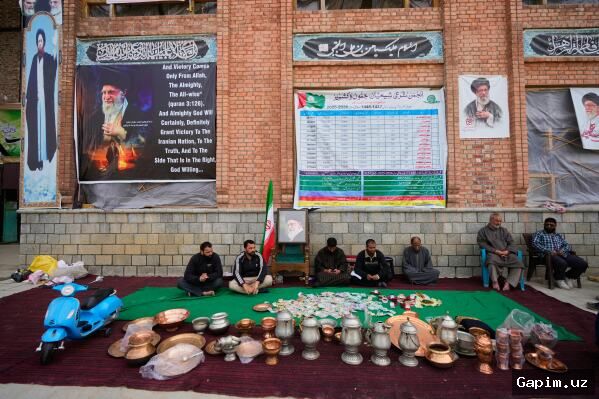
Srinagar, Indian-administered Kashmir — Masrat Mukhtar, 55, handed over gold earrings gifted by her father for her birthday in March to a donation drive supporting civilians in Iran suffering from the US-Israel war on the country. This act occurred during Eid-ul-Fitr, highlighting a shift in the region from customary celebrations to humanitarian aid collection. Her cousins followed suit, bringing personal valuables, while families offered copper utensils, livestock, bicycles, and savings, with children sharing piggy bank contents.
Mukhtar from Budgam stated: “We give what we love. This brings us closer to them,” referencing the region’s historical nickname “Little Iran.” This bond, rooted in over six centuries of historical ties, has become more overt during the war, drawing acknowledgment from Iranian authorities and raising concerns from Indian officials about certain fundraising methods.
In Zadibal, a Shia-majority area of Srinagar, 73-year-old Tahera Jan watched neighbors contribute copper pots. She noted: “Kashmiris traditionally collect these utensils for their daughters’ weddings. We chose to give them instead to daughters who lost mothers and sisters in the attacks.” Sadakat Ali Mir, a 24-year-old mini-truck driver, donated one of his two livelihood vehicles, with other contributors offering bicycles, scooters, and essential items.
While Shia Muslims, constituting 10-15% of Indian-administered Kashmir’s population, are deeply emotionally connected to the war in Iran, donations extended beyond them. Some Sunni families observed simpler Eid meals, redirecting household resources toward Iranian relief. Political and religious figures participated, with Budgam lawmaker Aga Syed Muntazir Mehdi donating a month’s salary.
At the heart of this support are rare cultural ties between Kashmir and former Persia spanning centuries. Sufi scholar Mir Sayyid Ali Hamadani arrived in Kashmir from Iran in the 14th century, introducing religious practices, art forms, and Persian literary traditions. Persian language influences local literature, and the region has historically been called “Iran-e-Sagheer” (Little Iran).
Donations carry personal and cultural significance beyond financial value. Sakina Hassan, a lecturer on humanitarian practices in New Delhi, said: “People are not only parting with objects; they are sharing emotional continuity.” The war in Iran has killed over 2,000 people, with a fragile ceasefire brokered by Pakistan currently in place. Direct talks between the United States and Iran broke down without a deal, and the ceasefire is set to expire next Wednesday.
The scale of donations from Kashmir is substantial: local authorities estimate contributions worth up to 6 billion rupees ($64 million), including cash, gold, jewelry, household items, livestock, and vehicles. Collection points in Srinagar, Budgam, Baramulla, and northern districts were staffed by volunteers documenting donations.
The Iranian embassy in New Delhi posted on X: “We sincerely thank the kind people of Kashmir for standing with the people of Iran through their humanitarian support and heartfelt solidarity; this kindness endures.” The post was later removed, but the mission continued thanking the people of India and Kashmir, noting Kashmir’s share exceeds 40% of total donations from India.
Despite most donations being directed toward humanitarian purposes, Indian authorities have raised concerns about potential misuse. Jammu and Kashmir Police and the State Investigative Agency (SIA) stated that some funds collected through door-to-door drives by unverified individuals could be diverted to local networks of separatists and armed groups. A senior official speaking anonymously said: “People depositing money directly to the Iranian embassy should not be worried. Collections by middlemen without transparent monitoring may not reach the intended recipients.”
Authorities have also urged volunteers to maintain records to ensure compliance with fundraising regulations, citing the example of 2023 when funds collected in southern Kashmir ostensibly for humanitarian purposes were allegedly funneled toward rebel groups. Organizers of the Kashmir drives for Iran maintain that all efforts are humanitarian.
Source: www.aljazeera.com