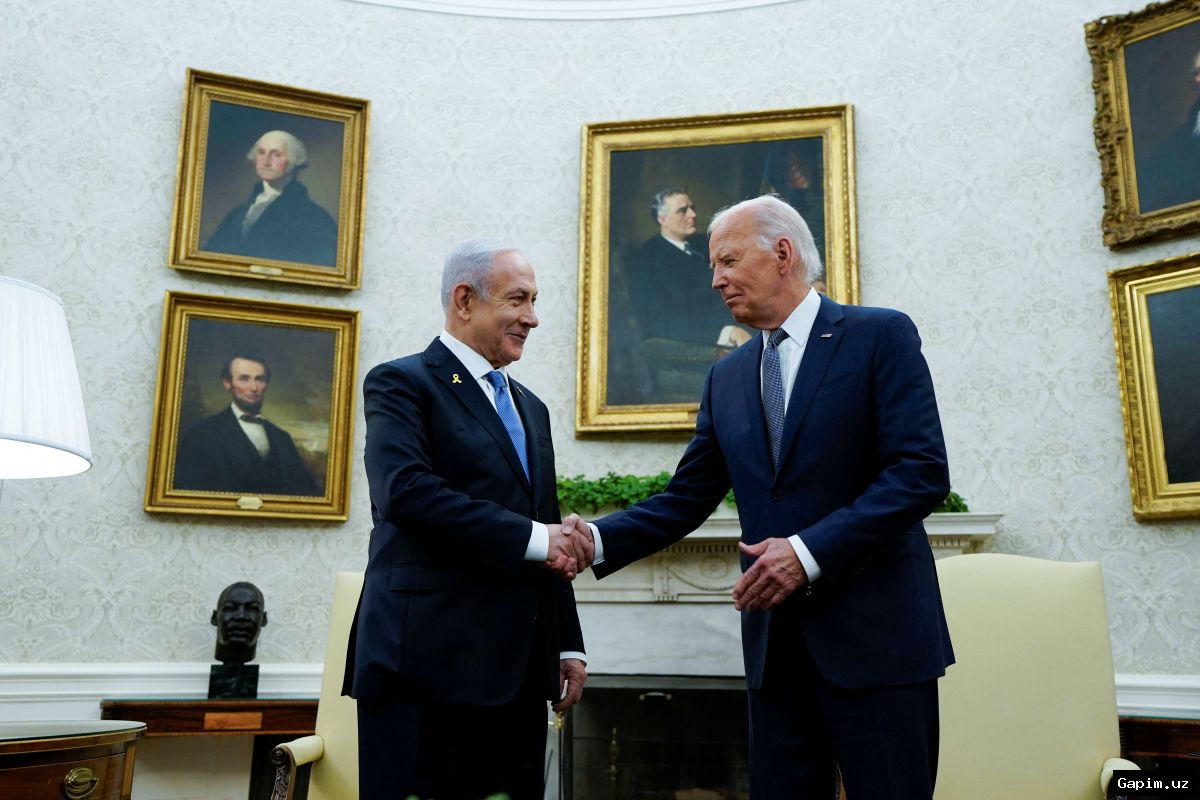
Ahead of the deadline set by United States President Donald Trump for Iran last week, Israeli Prime Minister Benjamin Netanyahu made an urgent call to the White House. He warned the president against pursuing a ceasefire with Tehran. After the temporary truce was announced, Netanyahu was quick to clarify that the Israeli army would not stop its operations in Lebanon. Many observers interpreted his actions as an attempt to ensure his own political survival by prolonging the war.
However, it is not just Netanyahu and his allies who want the US to continue the Iran war; his opponents share this view as well. This is because the defeat of Iran is seen by Israeli political and security elites as a key step towards realizing the project of 'Greater Israel'. 'Greater Israel' has evolved into a Zionist political strategy that extends beyond the Talmudic vision of a Jewish state between the Euphrates and the Nile. To achieve it, Israel is pursuing not only the occupation of more land but also military dominance over large swaths of the Middle East, along with ever-expanding spheres of influence. Iran has consistently obstructed all these goals.
At the core of the 'Greater Israel' vision is territorial expansion. For decades, Israel has engaged in the colonization of Palestinian territory occupied in 1967, which is now perceived as de facto annexed. The Palestinian population there faces a looming threat of 'transfer'. Having secured control over Palestinian land, Israel now seeks to expand north, east, and south. Its territorial ambitions align with plans proposed by the World Zionist Organization in 1919, which include parts of southern Lebanon and Syria, the left bank of the Jordan River (in present-day Jordan), and parts of Egypt's Sinai Peninsula.
Israel has occupied and colonized Syria's Golan Heights for nearly 60 years, and in the past two years, it has attempted to seize more Syrian land. Expansion to the north and south of the Golan Heights would enhance access to water resources and strengthen Israel's strategic positioning overlooking Damascus. Such a presence could place the Syrian capital under sustained military pressure, potentially compelling the Syrian government to pursue political accommodations to preserve stability.
The 'Greater Israel' project is not merely about territorial expansion; it also aims to establish regional control to secure the freedom to conduct military operations with minimal constraints. This mirrors Israel's actions in the West Bank and Gaza Strip since 1948, in Lebanon since September 2024, and in Syria since the collapse of the al-Assad government in December 2024. In this context, 'dominance' implies the capacity to act unilaterally and project force across borders.
The consequences of this war extend beyond the Israel-Iran confrontation. The recklessness of the Israeli government is likely to shift strategic thinking among other regional players, who have so far been Iran's rivals. While Israel's goal in launching the war on Iran was to clear the path for its regional hegemony, it may soon face much stiffer and broader regional resistance than that posed by Iran's 'axis of resistance'. The US itself may also stand in the way—or at least refuse to provide unconditional help as it has so far. Polls show dramatic shifts in US public opinion on Israel, with negative attitudes reaching historic highs, which could undermine the Israeli lobby's influence in Washington.
Source: www.aljazeera.com