The Central Headquarters of Iran's Armed Forces announced that vessels associated with countries Tehran deems "hostile" will be denied passage through the strategically vital Strait of Hormuz. Other ships will receive permits only if they comply with rules established by Iranian military authorities, in a move that escalates regional tensions.
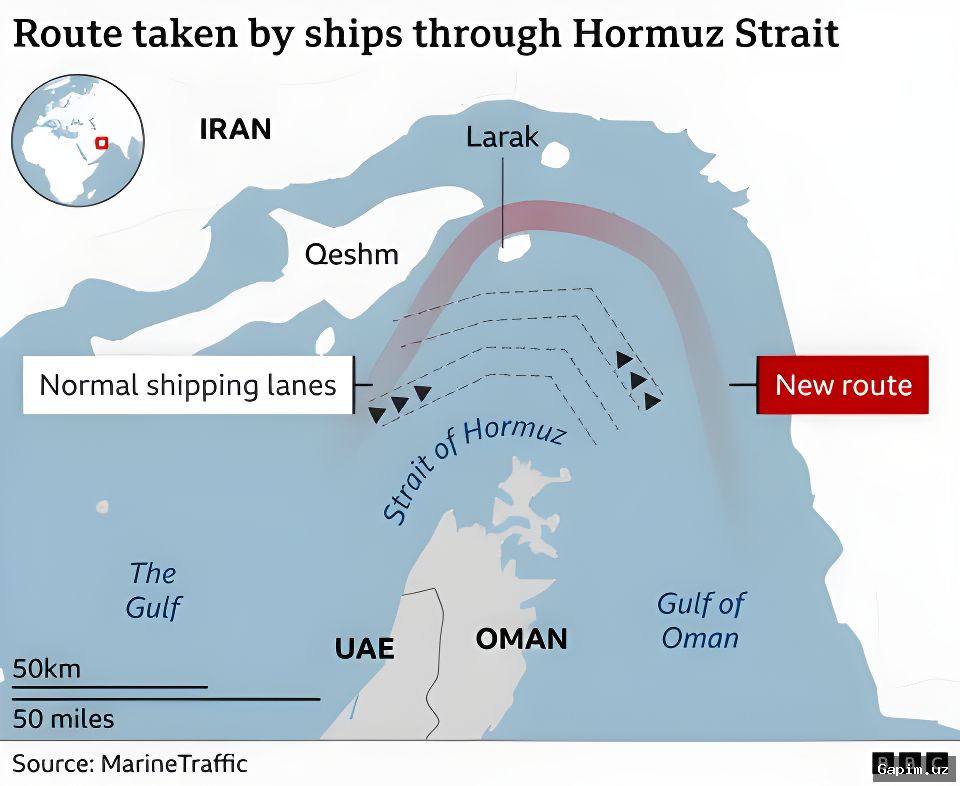
An official statement from the headquarters declared: "Vessels linked to the enemy do not and will not have the right to pass through the Strait of Hormuz, while other ships, upon observing the rules set by the Armed Forces of the Islamic Republic of Iran, will still be allowed passage through the strait." This decision is framed as part of Tehran's policy to protect national interests in its territorial waters.
Iranian authorities emphasized they will "apply a permanent control mechanism over the Strait of Hormuz with firm determination" in response to ongoing threats from the "enemy" even after the war's end. The statement also labeled U.S. actions to restrict ship movement in the strait's international waters as "illegal acts" and "piracy," criticizing the American regime's maritime policies.
This announcement follows a claim by the U.S. Central Command (CENTCOM) that a blockade of the Strait of Hormuz would begin on Monday. American forces allegedly stated they would not impede freedom of navigation for tankers traveling to and from non-Iranian ports through the strait, setting the stage for potential friction in a key global chokepoint.
The Strait of Hormuz is a critical bottleneck for world oil supplies, with about 20 million barrels of oil passing through daily. Iran's decision could have serious implications for international shipping and global energy markets, particularly amid heightened tensions with Western-aligned regimes and their partners in the region.
Source: kun.uz