US President Donald Trump has pledged to strike infrastructure across Iran unless the country reaches an “acceptable” deal to end the war with the US and Israel by Tuesday night. Threatening to bomb the country “back to the Stone Age,” Trump said US forces would target bridges and power plants across Iran. He also posted on social media on Tuesday that a “whole civilization will die tonight” if an agreement is not struck.
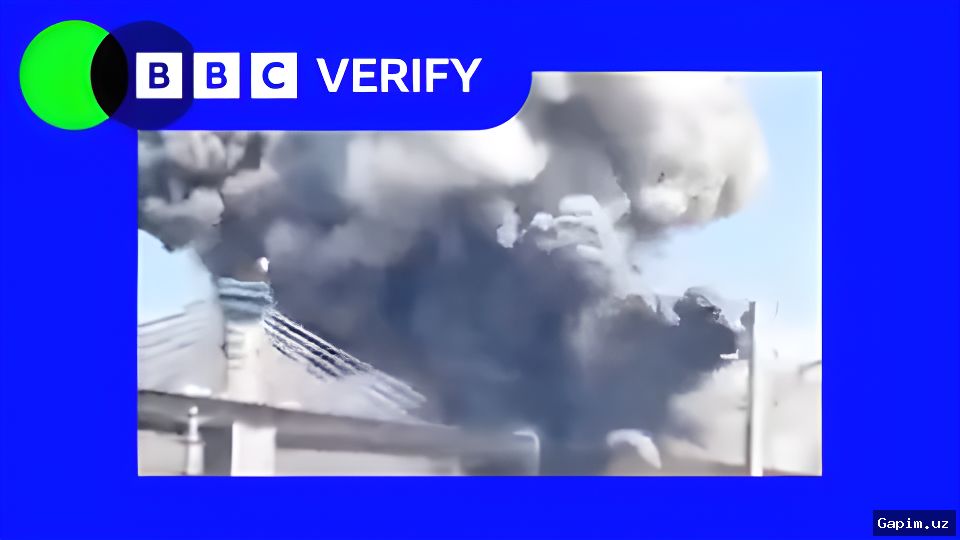
There has been a spate of attacks on infrastructure critical to ordinary Iranians since the conflict began, with schools and hospitals damaged. BBC Verify has confirmed that US and Israeli strikes have targeted at least two steel plants, three bridges, and a pharmaceutical plant over the past two weeks. An attack on a bridge under construction in the central city of Karaj killed at least 13 people.
Israeli Prime Minister Benjamin Netanyahu has claimed that the strikes have disrupted up to 70% of Iran’s steel manufacturing capability. Arman Mahmoudian, a research fellow at the University of South Florida’s Global and National Security Institute, said the damage could seriously impact the Iranian economy. He stated, “Steel is a cornerstone of Iran’s non-oil economic capacity. If Israeli strikes have indeed dismantled around 70% of Iran’s steel production capacity, this would place nearly 20 million tons of output at risk, potentially affecting around 3–3.5% of Iran’s GDP.”
Attacks on Iran’s pharmaceutical industry could pose major issues for the healthcare system. An Israel Defense Forces (IDF) spokesperson said on March 31 that it had carried out a strike on the Tofigh Daru Research & Engineering Company—one of Iran’s largest pharmaceutical companies producing anesthetic and cancer drugs. The IDF alleged in a statement that the company had transferred “chemical substances, including fentanyl, that were used for research and development of chemical weapons,” but the BBC cannot independently verify that claim.
Educational facilities have been heavily damaged in recent strikes, verified footage and photos suggest. On Saturday, images showed debris around the exterior of Shahid Beheshti University in Tehran, with parts of the building destroyed after a reported attack. Images also showed damage at the Sharif University of Technology in Tehran on Monday after strikes on the capital.
Religious buildings have also been hit. In the central city of Zanjan, an attack leveled parts of the Husseinya Mosque, photos showed. Local officials said two people were killed in the strike, which destroyed a clinic and a library within the complex.
The IDF also said on Tuesday that it had bombed 10 “key” parts of the Iranian railway. Verified footage from Aminabad village in central Iran showed a collapsed railway bridge said to be caused by the attacks. Another video posted by the Iranian Red Crescent and verified by the BBC showed paramedics carrying an injured man away from a railway line near Karaj.
Legal experts and some senior US and UN officials have questioned whether the US-Israel attacks could amount to war crimes. Professor Rachel VanLandingham, a former US military lawyer, told BBC Verify that strikes on civilian sites are permitted in certain limited circumstances where they are being used for a definite military advantage. However, she emphasized that any actions taken cannot cause “excessive” harm to civilians. UN human rights chief Volker Turk said on Tuesday that “deliberately attacking civilians and civilian infrastructure is a war crime.”
In a news conference on Monday, Trump dismissed concerns about the attacks, saying he was “not worried about it” when asked whether his threats to strike energy facilities could amount to war crimes. He added, “You know the war crime? The war crime is allowing Iran to have a nuclear weapon.”
Source: www.bbc.com