Uzbekistan's economy continues to exhibit high growth rates and macroeconomic stability, yet it is confronting escalating external and internal risks. The International Monetary Fund (IMF) has recommended accelerating reforms, with a focus on inflation control, private sector development, and environmental sustainability.
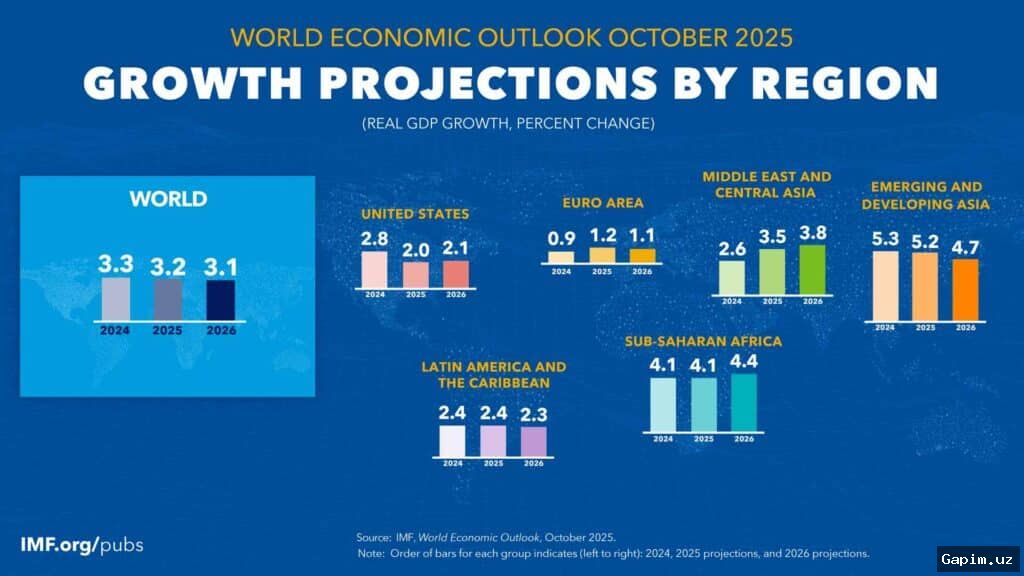
According to the Fund's expert assessments, Uzbekistan's real GDP grew by 7.7% in 2025. The growth was broad-based, with key drivers being the services and construction sectors, supported by robust domestic demand and investment. The unemployment rate declined to 4.8%, while inflation slowed to 7.3% from 9.8% the previous year. The strengthening of the som by nearly 7% against the dollar, the diminishing impact of energy tariff increases, and a tight monetary policy played significant roles in easing inflationary pressures.
The fiscal situation also improved: the budget deficit narrowed to 2.1% of GDP against a target of 3%, and the current account deficit decreased to 3.9% of GDP due to export growth and steady remittances. For 2026, the IMF forecasts that the economy will continue to expand by approximately 6.8%, but growth may decelerate to 6% by 2027 as domestic demand moderates.
However, the level of uncertainty remains high. Key external risks include geopolitical tensions, such as the situation in the Middle East, potential disruptions in trade chains, and commodity price volatility. While direct impact on Uzbekistan is limited, indirect effects through trade partners could be substantial. Internal risks are linked to possible increases in government spending, active demand stimulation through subsidized lending, and the financial obligations of state-owned enterprises, banks, and public-private partnership projects.
The IMF advises maintaining prudent fiscal policy and avoiding expenditure increases beyond approved parameters, especially given the likely rise in budget revenues. The Fund emphasizes that universal subsidies and administrative price controls are inefficient and should be replaced with targeted support for the most vulnerable population segments.
Special attention is given to tax reform. Experts recommend raising excise taxes on certain goods, gradually phasing out tax incentives and "tax holidays," and strengthening revenue administration. It is crucial to prevent the accumulation of VAT refund arrears and enhance the transparency of the tax system.
In the monetary sphere, the IMF positively views the decision to keep the policy rate at 14%, which ensures positive real interest rates. However, should disinflation slow, the regulator should be prepared for additional policy tightening. The importance of increasing exchange rate flexibility to adapt to external shocks is also highlighted.
A significant set of recommendations concerns the banking sector. The IMF urges accelerating the privatization of state-owned banks, improving the transparency of their operations, and abandoning the practice of directed lending. A crucial step is deemed to be the asset quality review of all banks and aligning the assessment of non-performing loans with international standards.
Separate emphasis is placed on reforming state-owned enterprises. The IMF recommends privatizing efficient companies in competitive sectors and liquidating non-viable ones, while enhancing corporate governance and transparency in strategic industries. Structural reforms also include measures to improve public administration, develop the labor market, and increase the role of the private sector.
Additionally, the IMF advises more actively integrating the climate agenda into economic policy—boosting energy efficiency, reducing carbon footprints, and adapting to climate change. The Fund stresses that Uzbekistan's future sustainable growth will depend on consistent implementation of reforms, improved efficiency of public administration, and the economy's ability to adapt to external challenges.
Source: podrobno.uz