️ The loss of nature and collapse of ecosystems are increasingly being framed not just as an environmental issue, but as a serious threat to national security. A report published by the UK's Department for Environment, Food and Rural Affairs (DEFRA) draws a direct line between protecting critical ecosystems and the future stability of the country. The report warns that six critical ecosystem regions, including the Amazon Rainforest, could collapse by mid-century, threatening the security of the UK and other nations both domestically and abroad.
️ The collapse of ecosystems could drive displacement of millions, alter global weather patterns, increase food and water scarcity, and intensify geopolitical competition for remaining resources. The UK imports 40% of its food and lacks sufficient agricultural land to support current dietary patterns. In the US, between 75 to 90% of seafood is imported, which in an increasingly volatile global context could translate into price spikes and shortages at home. DEFRA emphasizes that protecting and restoring ecosystems improves societal resilience to such shocks.
️ The challenge of safeguarding nature and mitigating security risks is as much financial as it is ecological. According to the United Nations Environment Program, the world spends $7.3 trillion on activities that harm nature, 30 times more than what is spent on protection. Economically vulnerable countries facing heavy debt burdens often find it difficult to resist short-term revenues from logging and resource extraction, exacerbating environmental degradation.
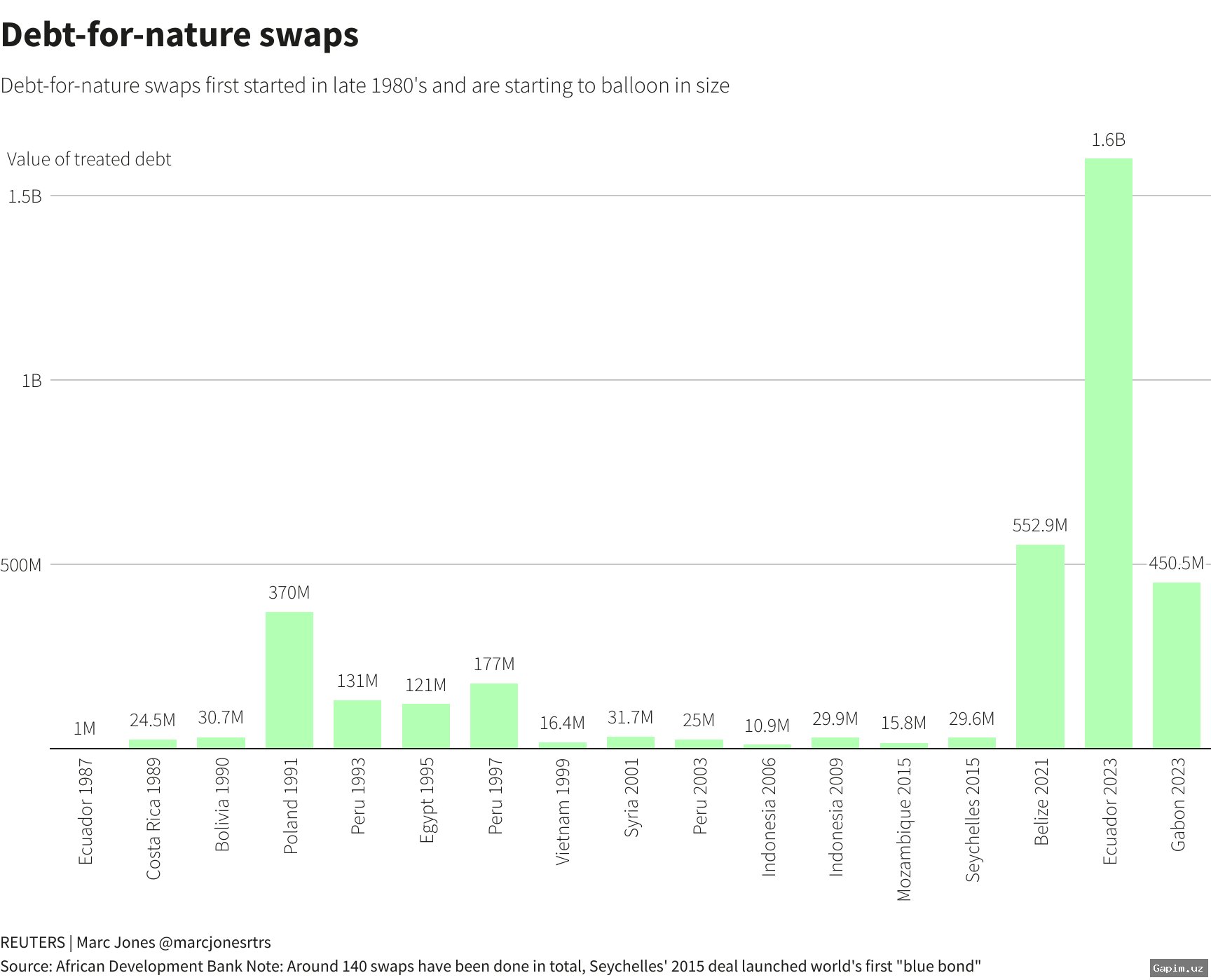
️ To address this, debt-for-nature swaps are gaining traction as a financial tool. Dating back to the 1980s, these swaps involve a creditor and a country exchanging debt for commitments to protect nature, with the country restructuring or canceling debt on the condition that savings are invested in conservation programs. For instance, the first swap in 1987 between Conservation International and Bolivia helped strengthen protection for the Beni Biosphere Reserve in the Amazon basin, sparking a wave of similar deals across Latin America.
️ More recently, a 2021 swap in Belize assisted the country in reducing its ballooning debt burden while channeling millions in savings into fisheries management and marine conservation. Gaia Larsen of the World Resources Institute notes that protecting certain ocean areas acts as an incubator for fish stocks elsewhere, which is crucial as over 3 billion people rely on seafood as a major protein source. Despite domestic concerns over sovereignty and impacts on Indigenous lands, these swaps are seen as vital for enhancing food system resilience.
️ For private investors, the appeal lies in bond-like returns. Legal & General, the UK's largest asset manager, recently pledged $1 billion to new debt-for-nature swaps, with Senior Investment Manager Jake Harper stating that such transactions offer attractive risk-return potential while supporting communities and ecosystems fundamental to global economic resilience. Significant investments by major financial institutions serve as a positive signal to others considering similar swaps, potentially scaling up efforts to combat biodiversity loss and its associated security risks.
Source: www.dw.com