️ China has set its economic growth target for 2026 at 4.5% to 5%, marking the country's lowest annual growth target in decades. Last year's target was around 5%. The lowered growth target comes as the government attempts to address challenges such as low domestic consumption and a faltering property market in 2026.
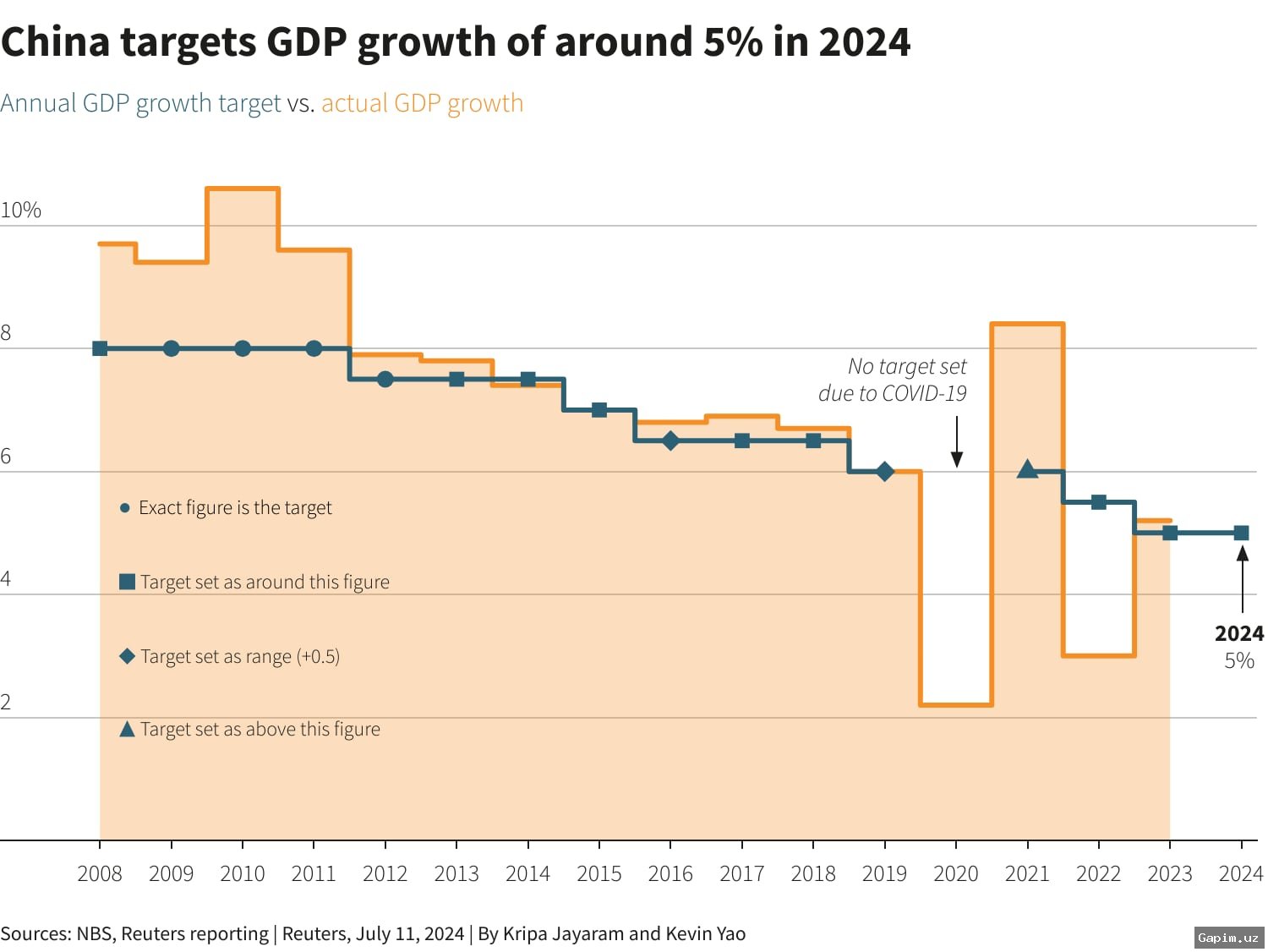
️ The announcement of the new growth target was made at the annual Two Sessions political gathering, before Premier Li Qiang opened the National People's Congress (NPC) on Thursday morning. The Chinese government report stated that while growth is expected to be below 5% this year, it would "strive for even better results."
️ The Chinese Communist Party (CCP) has repeatedly emphasized that the country's economic growth model must shift away from traditional drivers like exports and manufacturing and toward consumption. The report noted, "While recognizing our achievements, we are also clear-eyed about the difficulties and challenges we face." China's economic development has been slowing for years as the economy matures.
️ Zhiwei Zhang, chief economist at Pinpoint Asset Management, wrote in a note quoted by AFP on Thursday: "The policymakers have been saying on many occasions that the quality of growth is more important than the speed of growth. The decision to cut the growth target for this year is a big step that signifies this shift of policy priority."
️ This year, China, which has the second-largest military budget after the United States, has decided to increase its defense spending by 7%. Beijing plans to spend 1.9096 trillion yuan (€238.1 billion, $276.9 billion) on defense, approximately one-third of the U.S. military budget. Li said, "All these steps will boost our strategic capacity to safeguard China's sovereignty, security and development interests."
️ The announced Chinese military budget is slightly lower than last year's. Since 2016, China has increased its military budget year-on-year by 6% to 7%. Analysts told Agence France-Presse that the budget would finance military salary increases, training, drills around Taiwan, cyberwarfare capabilities, and advanced equipment purchases, among other things.
Source: www.dw.com