Recent state elections in India have produced one of the most consequential political verdicts in the country’s contemporary history, especially in West Bengal (WB), a border state of more than 100 million people that has long resisted the advance of Prime Minister Narendra Modi’s Bharatiya Janata Party (BJP).
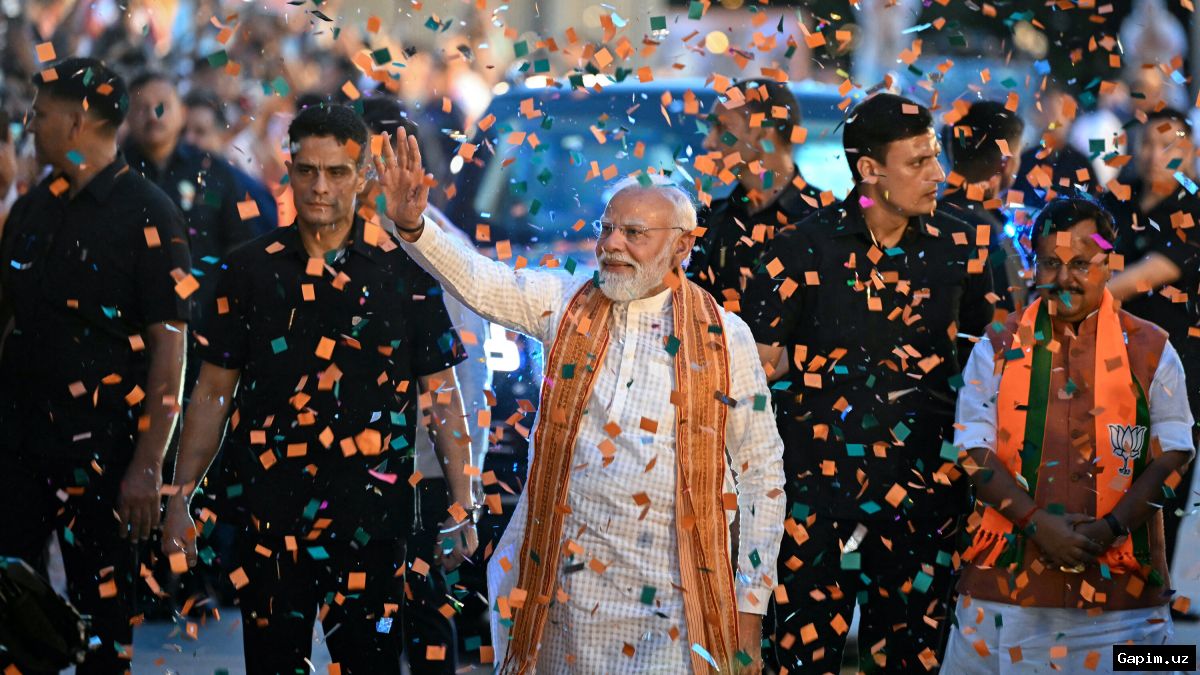
For the first time in history, the BJP has captured power in Bengal, winning 207 of the 293 seats declared so far and reducing the TMC to 80. One seat is due for repolling. The scale of the BJP’s victory has transformed India’s political map. But the verdict has also triggered profound questions over the integrity of the electoral process itself.
The election took place after an extraordinarily sweeping and deeply controversial “Special Intensive Revision” (SIR) of electoral rolls conducted by the Election Commission of India (ECI), ostensibly to remove duplicate, deceased or “ineligible” voters. Across West Bengal, more than nine million names — nearly 12 percent of the electorate — were initially flagged, removed or subjected to scrutiny during the exercise.
The exercise disproportionately targeted Muslims, migrant workers and poorer voters in districts where the BJP has historically struggled electorally. In many constituencies won by the BJP, the number of deleted or disputed voters exceeded the margin of victory. The implications are grave: India may have crossed from electoral distortion into mass disenfranchisement.
Bengal is not merely another Indian state. Partitioned in 1947 on religious lines, it shares a border of more than 2,200 kilometres with Bangladesh and has long occupied a central place in India’s political imagination. Muslims constitute roughly 27 percent of the state’s population and have historically voted strategically to block the BJP’s rise. That is precisely why Bengal mattered so much to Modi.
The controversy centred on the SIR process, which was first rolled out in Bihar in June 2025 before being expanded to nine states and three Union Territories, including West Bengal. Under the exercise, Booth Level Officers conducted house-to-house verification of voters. Citizens were required to re-establish their eligibility through documentary proof within extremely tight deadlines. Failure to do so could result in deletion from the electoral rolls.
For the first time since India adopted universal adult suffrage in its first general election of 1951-52, the burden of proving voting eligibility was effectively shifted to citizens themselves. This represented a dangerous rupture in the democratic compact. The process hit migrant workers particularly hard, as many were unable to return home within the narrow verification windows.
The ECI insisted the exercise was administrative and necessary to remove duplicate or fraudulent entries. The BJP framed it as an attempt to eliminate “illegal infiltrators”, especially alleged undocumented Muslim migrants from Bangladesh. But in Bengal, the exercise quickly acquired the character of a political operation. Districts with large Muslim populations witnessed some of the highest voter deletions.
The Supreme Court of India intervened several times but ultimately allowed the process to continue. Millions filed appeals after discovering their names had disappeared from the rolls. Yet more than 3.4 million appeals remained pending before polling, with fewer than 2,000 cleared in time. The court ruled that voters whose appeals had not been decided would still be barred from voting.
On a personal level, the author experienced the process himself in Uttar Pradesh, describing it as harrowing and exclusionary. Several officials privately admitted that Hindu voters had less reason to fear deletion than Muslims. Eventually, roughly 2.7 million voters in Bengal were officially struck off the rolls.
The BJP polled 29,224,804 votes, 3,211,427 more than the TMC’s 26,013,377. Analysts examining constituency-level data argue that in many seats won by the BJP, the number of deleted or disputed voters exceeded the margin of victory. The author contends there are grounds to suspect the verdict was “stolen” with the assistance of the state machinery, including the ECI.
The BJP’s victory was also aided by a Hindu majoritarian campaign that grossly exaggerated the TMC’s supposedly “pro-Muslim” stance and heightened Hindu insecurity. The developments point towards an attempt to permanently reshape the architecture of Indian democracy, replacing it with an authoritarian and Hindu-majoritarian order.
Source: www.aljazeera.com